
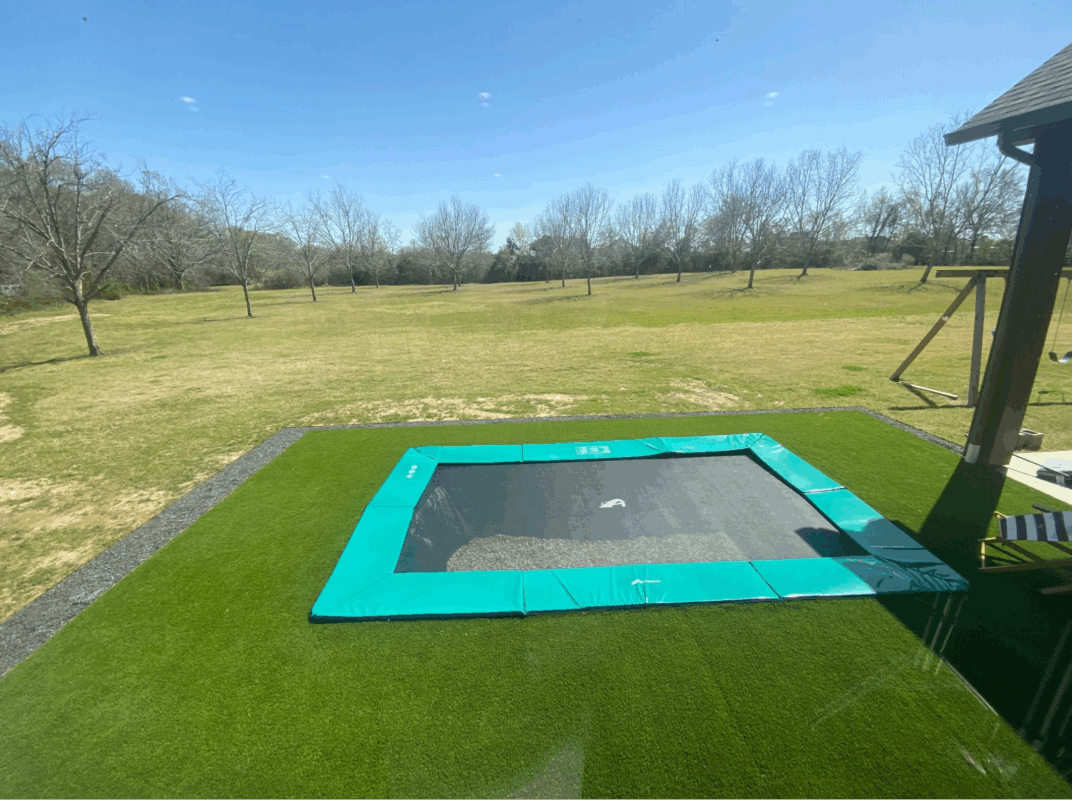
Trampolines are all about fun. The fun can’t start until you find a safe place to install your in-ground or above-ground trampoline.
The wrong spot can damage your lawn, lessen your bounce, and even pose risks. The right one? It keeps the fun going strong, year after year.
Don’t let a poor setup affect the fun. Let’s find the ideal spot for your trampoline; solid and jump-ready.
Choosing the Best Spot for Your Trampoline
Pick a flat, clear spot with room to breathe, and you’ll set the stage for joyful bouncing!
Flat and Clear: The Non-Negotiables
A trampoline needs a stable, even surface to perform ideally. Uneven terrain tilts the frame, throws off bounce trajectory, and creates unnecessary stress on the structure.
Using a trampoline on uneven ground, like a slope, can create imbalances. Even a slight incline can cause jumpers to gradually drift toward the lower side with every bounce, pulling their momentum off-center and increasing the chance of falling off.
Now, you might be asking: “Can you set up a trampoline on slightly slanted grass?”
Sure. One solution for an above-ground trampoline that we recommend for minor grades is to level the trampoline by digging shallow soil channels under the downhill legs until the frame sits evenly. It’s simple, effective, and preserves the integrity of your bounce.
Beyond the ground, it’s critical to make sure you have adequate space around your in-ground trampoline to give your trampoline enough breathing room. Allow at least 3 to 5 feet of clearance from fences, walls, trees, and sheds. Why? Added a measure of safety. Anything within reach is a potential hazard, whether it’s a scraped elbow on a fence or a collision with a shed wall. And don’t forget to look up: no branches, basketball hoops, or powerlines above.
Now, if you’re installing a trampoline with a full enclosure net, you can reduce that clearance to about 1 to 1.5 feet. The net acts as a protective barrier, keeping jumpers inside the bounce zone. But we always caution: a net is an important safety feature and it’s not optional if you’re short on space.
🛒Shop Akrobat’s Trampoline Enclosures → Find the Best Trampoline Enclosure Here
Grass, Concrete, or Something Else? Surface Options Explained
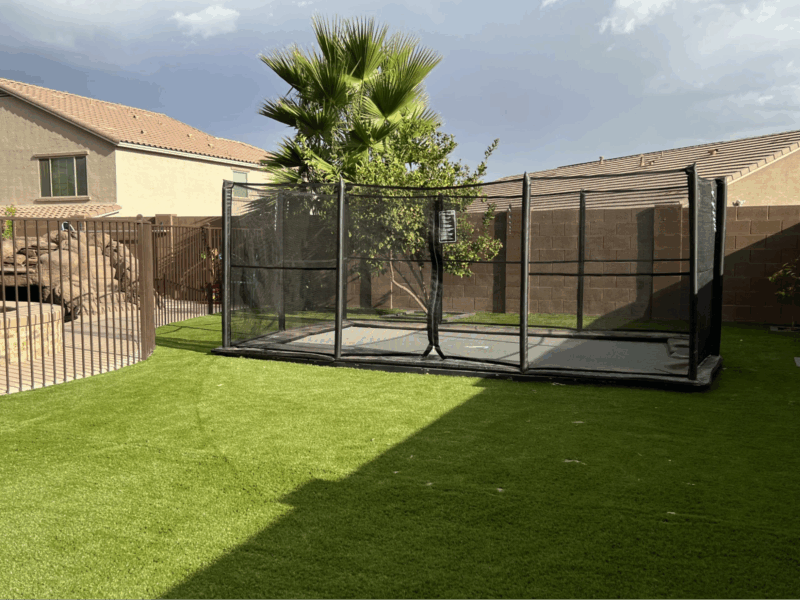
One of the most frequent questions we get is: “Can I put a trampoline on grass?”
Absolutely, and it’s an ideal natural surface you can choose. Grass provides soft, natural cushioning underfoot. It absorbs impact if anyone falls, protects the frame from scratches, and it’s simple to maintain. If you want your trampoline to blend into your yard, grass is an greatl choice every time.
But what if you’re working with a patio, concrete slab, or hard-packed dirt? Yes, you can place a trampoline on concrete, but it needs help. You should use rubber mats or padding under the legs to prevent slippage, reduce frame vibration, and absorb shock. Without this protection, you risk damaging the trampoline’s legs and creating a harder landing surface if someone falls off.
If you’re wondering whether it will affect the warranty, check your manufacturer’s policy. Our warranty stands as long as the trampoline is properly installed and protected with appropriate padding on hard surfaces. But not every brand offers that flexibility, so it’s worth confirming before setup.
Preparing the Ground for a Trampoline
A little prep now prevents wobbles, dead grass, and drainage headaches later because a trampoline is only as solid as what’s under it.
For Above-Ground Trampolines
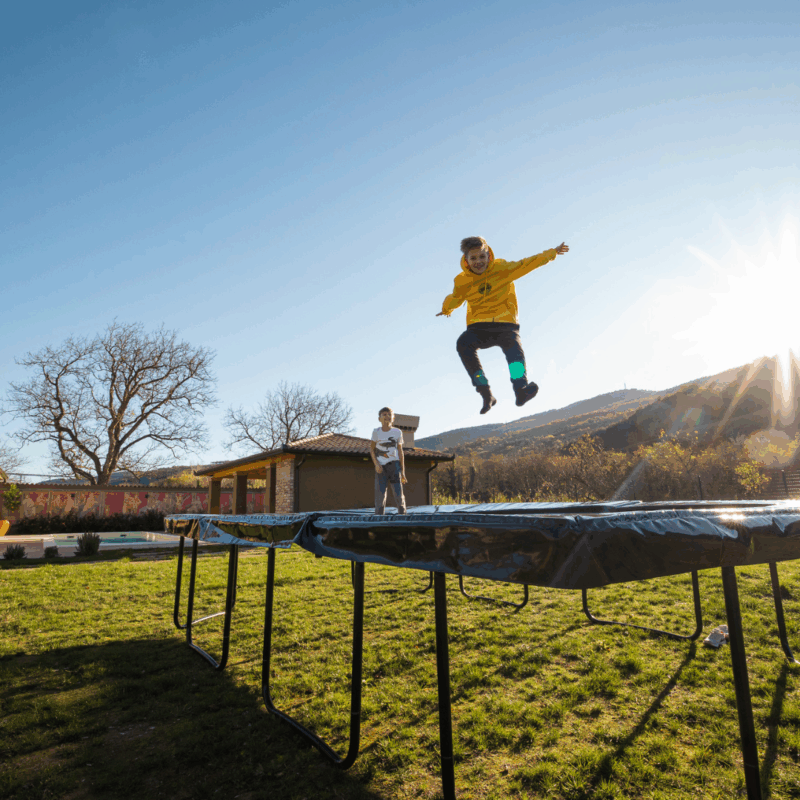
Once you’ve chosen your spot, prep the ground properly. Start by clearing any rocks, roots, or debris and mowing the grass as short as possible. A smooth, even surface helps the trampoline sit level and reduces wear on the frame.
If your yard tends to get soggy, we recommend adding rubber mats or temporary pads under the legs to prevent the trampoline from sinking into the wet soil. This not only keeps it level but extends the life of the frame by avoiding constant moisture exposure.
Here’s another tip we give families.
Rotate your trampoline every few weeks. Grass underneath tends to die from lack of sunlight and pressure. By shifting it slightly, you let the lawn recover and avoid creating a permanent dead patch.
Some families prefer a more permanent solution. In that case, we suggest creating a dedicated mulch bed or synthetic turf under the trampoline. It cushions any falls, and eliminates the need to keep moving it around the yard.
🛒Shop Akrobat’s Best Above Ground Trampoline → Find Trampoline That Fits Your Yard Here
For In-Ground Trampolines
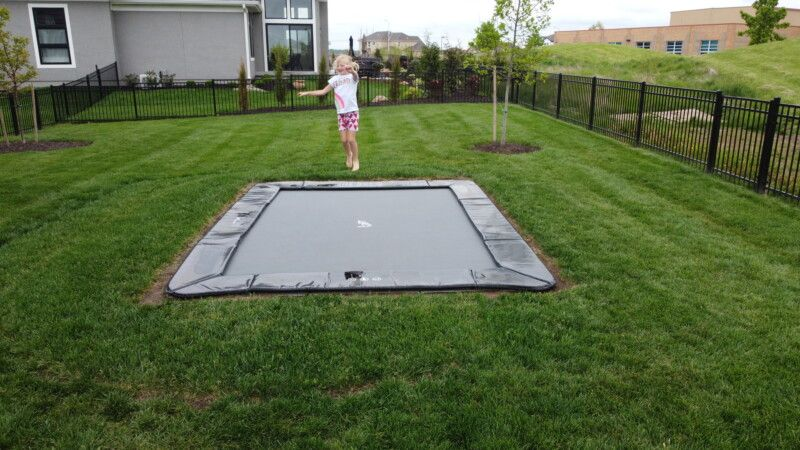
In-ground trampolines are a fantastic option if you want a lower profile look with a safer fall height. But installing one comes with a few extra requirements.
First, pay close attention to digging depth and diameter. Follow the installation specs for your trampoline model to ensure the frame sits flush with the ground and the bounce space below is deep enough for proper airflow.
Second, you may need a drainage system to prevent water pooling under the trampoline. Without drainage, if your ground does not percolate well, rainwater will collect in the pit, creating a muddy mess or even structural issues over time. We recommend installing a dedicated drainage pit or a sump pump system, depending on your local soil and rainfall.
To prevent weeds from growing back underneath, lay a weed protection under the trampoline before installation. This small step saves a lot of maintenance down the road and keeps the pit looking tidy. All Akrobat In-ground trampolines include this with the trampoline.
🛒Shop Akrobat’s Best In-Ground Trampoline → Find Trampoline That Fits Your Yard Here
Final Tips for a Durable Setup
Placing a trampoline is about creating a durable and practical jumping space. But before you roll out the mat and let the kids loose, there are a few final things to cover.
First, always check with your local HOA or city regulations. Some neighborhoods have setback rules, height restrictions, or fencing requirements for trampolines. A five-minute phone call now can save a lot of hassle later.
Second, if you’re going with an above-ground trampoline, invest in an enclosure net. (All Akrobat Above Ground Trampolines include this and stairs or ladder as well) Even with perfect clearance and the best supervision, kids get bold when they’re bouncing. A net adds that critical layer of protection, keeping jumpers inside the bounce zone.
Third, prioritize soft ground or added padding under and around the trampoline. If you’re not installing in-ground, use rubber mats, mulch, or other impact-absorbing materials beneath the frame. It protects both your jumpers and the trampoline’s structure.
Lastly, if you’re placing your trampoline on grass, remember to rotate it every few weeks. This simple step prevents dead patches and helps the lawn underneath recover.
Take the time to measure, plan, and prepare because doing it right the first time ensures every jump afterward is stronger and more fun.
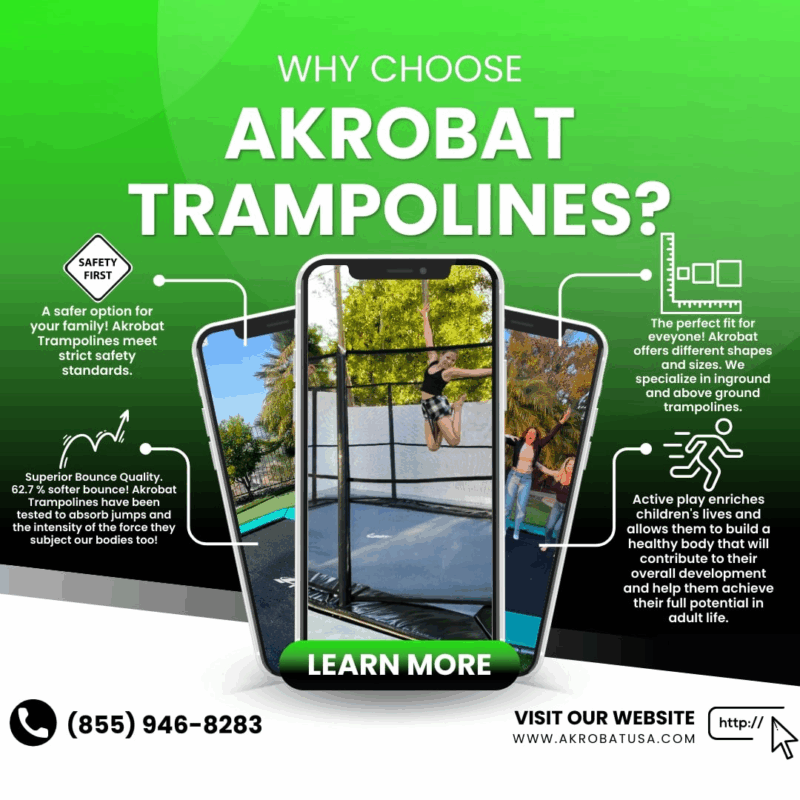
✅ Looking for a trampoline that blends safety, durability, and smart installation? Explore AkrobatUSA’s premium trampolines for worry-free backyard fun. Built to last, designed to perform, and engineered with the kind of care only we deliver.
