
Every trampoline is a sum of its parts, and those parts determine everything.
- How long it lasts.
- How it feels underfoot.
- Whether it becomes a family memory-maker or a backyard liability.
In this guide, we’re going to break it all down for you: what each part is made of, why the materials differ, and how those differences directly affect performance. You’ll walk away knowing exactly what to look for and why premium materials make all the difference.
Trampoline Frames: The Backbone of Strength
The frame is the structural backbone; the part that holds everything together and absorbs forces. So,
What Are Trampoline Frames Made Of?
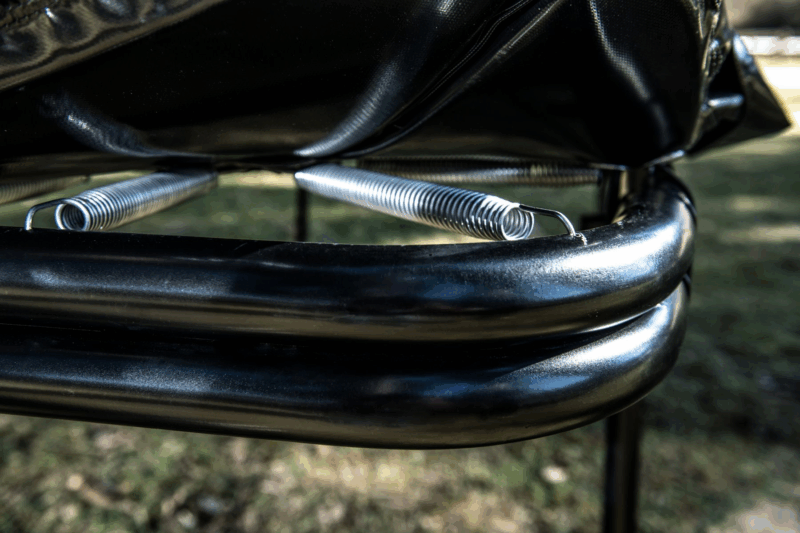
The frame is the structural backbone; the part that holds everything together and absorbs forces. That’s why nearly every high-quality trampoline uses galvanized steel as the material of choice.
Galvanized steel is a steel that’s been coated in zinc through a process called hot-dip galvanizing, where the steel is submerged in molten zinc to create a protective barrier. This process prevents rust, shields against corrosion, and ensures the frame can stand up to weather, moisture, and years of outdoor use. The level of zinc coating matters too.
AkrobatUSA doesn’t settle for the bare minimum, we use a 275 grams per square meter zinc coating, far exceeding typical industry standards for extra rust resistance and durability.
The reason galvanized steel resists rust better is simple chemistry.
The zinc coating sacrifices itself to protect the underlying steel from corrosion. Even if the surface gets scratched, the zinc continues to shield the steel underneath. That’s why trampolines made with high-grade galvanized steel stay strong season after season.
Why Frame Material Matters
A frame made from thin-gauge steel might be cheaper upfront, but it sacrifices weight capacity and structural integrity. Over time, thin steel can bend, warp, or even snap under stress.
That’s why we insist on heavy-duty steel tubing for AkrobatUSA trampolines. Our frames are engineered to exceed expectations. A thicker, stronger frame provides greater stability, holds weight capacities, and resists wear from constant bouncing and environmental exposure.
And if you live near the coast or in a humid environment? That’s where salt spray testing comes into play. Our premium frames undergo salt spray testing to ensure they won’t rust or degrade even in salty coastal air. It’s peace of mind that your investment will hold up, no matter the weather.
🏆Best Choice for Experienced Jumpers → 14ft x 10ft Primus Challenger Above Ground Trampoline
Trampoline Mats: Where the Bounce Happens
If the frame is the backbone of a trampoline, the mat is the heart. It’s where every jump begins and where every landing counts. That’s why the material of the mat makes a critical difference in safety, performance, and longevity.
What Are Trampoline Mats Made Of?
Some quality trampoline on the market today uses polypropylene for its jumping mat. Why? Because polypropylene offers a rare combination of strength, flexibility, and natural resistance to UV light and water. It’s woven tightly to handle the constant pulling forces from springs and the repetitive impacts of jumping, without stretching out or tearing.
But not all polypropylene mats are created equal.
Some are UV-treated, adding an extra layer of protection against the harsh effects of sunlight. Without UV treatment, mats exposed to daily sun can degrade quickly, becoming brittle and prone to cracking. That’s why AkrobatUSA uses enhanced UV treatments on all our mats.
Another factor that sets mats apart is weave density. A denser weave means a stronger mat that resists stretching and tearing. But there’s a trade-off.
Denser mats reduce airflow, increasing air resistance during jumps. That’s why competition trampolines use open-mesh mats, designed with up to 50% air permeability. The open weave allows air to pass through more freely, reducing drag and improving bounce height.
Why Mat Material Impacts Bounce & Longevity
The material and design of a mat directly affect how long the trampoline lasts. One issue we see too often in cheap trampolines is air resistance limiting bounce efficiency. When air can’t pass through the mat easily, it pushes back against the jumper, wasting energy and reducing lift.
It’s the same reason heavier mats cause more energy loss. A heavier mat moves more mass with every bounce, which creates additional drag and slows down the mat’s return to neutral. That extra weight may make the jump feel more “controlled” at first but it also tires you out faster and limits maximum height.
AkroVENT® Mat: A Game Changer
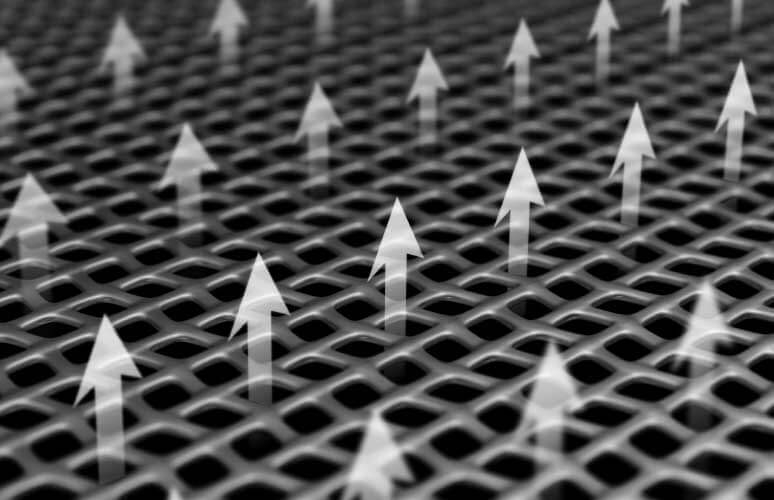
AkrobatUSA took trampoline mat design a step further with our exclusive AkroVENT® mat. It’s engineered for 62.7% softer bounce absorption, reducing impact forces on joints while maintaining responsive, powerful lift. For kids, teens, and athletes alike, this softer bounce protects growing bones and ligaments while still delivering a fun, thrilling jump.
By allowing more air to pass through the mat, it dries faster after rain, stays cooler under sunlight, and feels more responsive underfoot. And just like every material we use, it’s certified non-toxic, because safety starts with what you’re standing on.
Now, one question we hear from customers is: “Why does wetting a trampoline mat make jumps feel more controlled?”
It’s an interesting observation and it comes down to physics. When you wet a low quality woven mat, you’re adding a thin layer of water that increases the mat’s mass. That extra weight dampens vibrations and slows down the mat’s movement, giving a sense of control underfoot. But it’s temporary, and it also increases energy loss, meaning higher effort for less height. We always recommend choosing a mat designed for optimal airflow from the start, rather than trying to hack bounce quality with water.
🛒Looking For a Mat Replacement? We Got You Here
Trampoline Springs: The Secret Behind Every Bounce
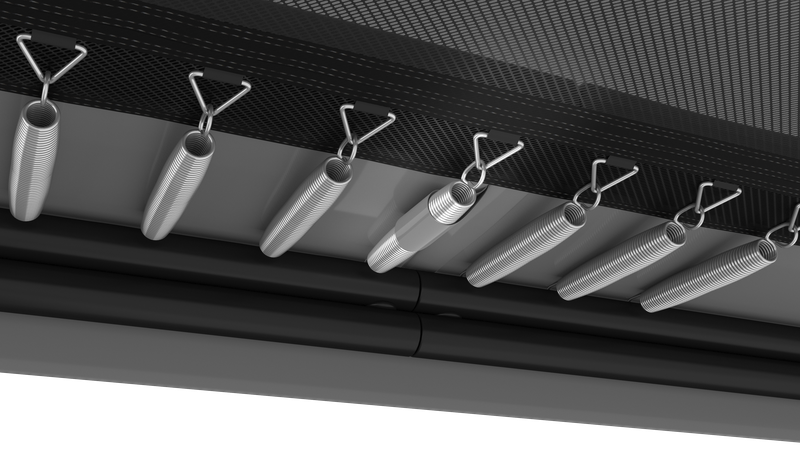
When people think about trampolines, they think about the bounce. And the bounce? That’s all about the springs.
What Are Trampoline Springs Made Of?
Most trampoline springs are made from galvanized steel coils.
No matter the material, every spring has an elastic limit, typically around 60% of its length. Beyond that, the steel starts to stretch permanently, losing strength and responsiveness over time. Once a spring passes its elastic limit, it won’t return to its original shape, weakening the trampoline’s bounce. That’s why materials matter because a trampoline with overstretched springs is no longer reliable or fun.
How Spring Design Affects Performance
Spring design is a science of balance. Shorter springs store less energy and release it faster, creating a tighter, harder bounce that can feel jarring, especially on cheaper trampolines that cut spring length to save costs.
In contrast, longer springs store more energy and release it over a longer stretch, creating a smoother, deeper bounce that’s easier on the body and allows higher jumps.
There’s also the spring constant, the stiffness of the coil.
Springs with a lower spring constant bend more easily, providing a softer bounce, while stiffer springs deliver a firmer, more athletic rebound. It’s a delicate dance between comfort and control. Too stiff, and you’ll feel like you’re bouncing on concrete. Too soft, and you’ll lose the height and energy that make trampolining exhilarating.
Here’s where throw distance comes into play.
The throw distance (the horizontal distance a jumper travels during a bounce) is directly tied to how much energy the springs return. A longer, more flexible spring increases throw distance, reducing the g-forces on landing and helping maintain control mid-air. Shorter springs limit that distance, increasing g-forces and making landings harsher on joints.
So why do cheaper trampolines often use shorter, stiffer springs? Simple: cost-cutting. Short springs are cheaper to manufacture, easier to pack into a smaller frame, and require less steel. But they compromise bounce quality, increase impact forces, and wear out faster.
🛒Replace Your Worn Out Springs With Our Durable 8.5-Inch Trampoline Springs Replacement
Safety Nets & Padding: Often Overlooked Materials
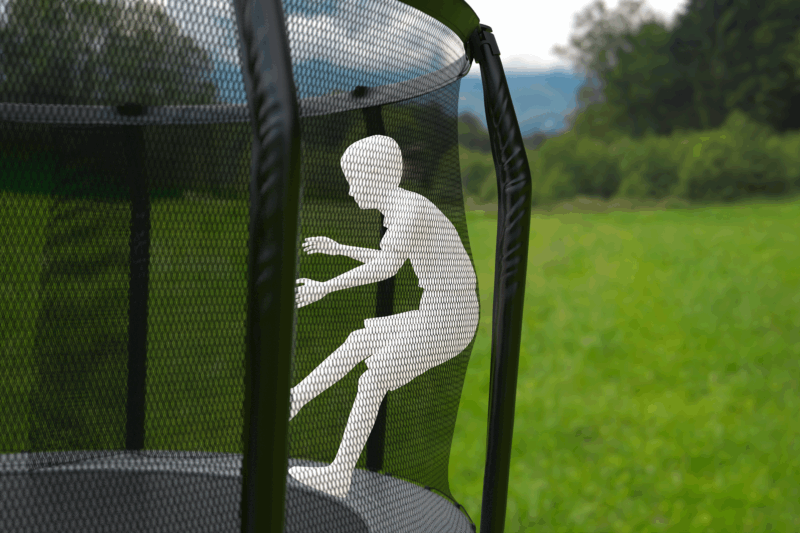
The safety net is just as key as the mat and springs. It’s your last line of defense, the barrier that helps prevent falls and serious injuries. And like every other part of the trampoline, the material of the net matters.
What Are Nets Made Of?
Most trampoline safety nets are made from polyethylene or polyester.
Both materials offer strength, flexibility, and durability. A high-quality safety net should be UV-resistant, meaning it’s been specially treated to resist breakdown under constant sun exposure. A net without UV protection may look fine when you install it, but after a few summers? It weakens, frays, and loses its integrity, just when you need it most.
Another critical factor is weave strength. A well-designed net uses a tight enough weave to prevent fingers or toes from getting caught, while still allowing airflow and visibility. Cheap nets cut corners here with thin fibers or loose weaves that can tear on impact. AkrobatUSA makes sure every enclosure net is engineered with the right weave density, tensile strength, and UV protection to hold up to real-world use.
🏆Find Akrobat’s Best Trampoline Enclosures Here
What Are Padding Materials?
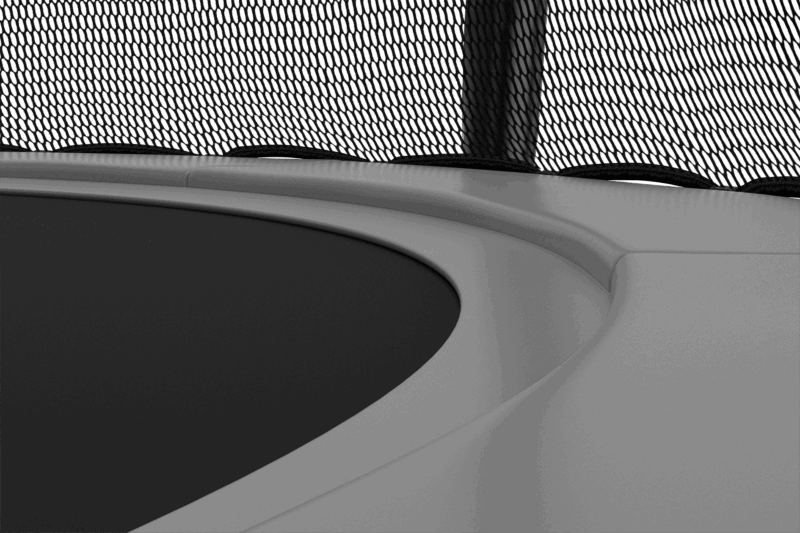
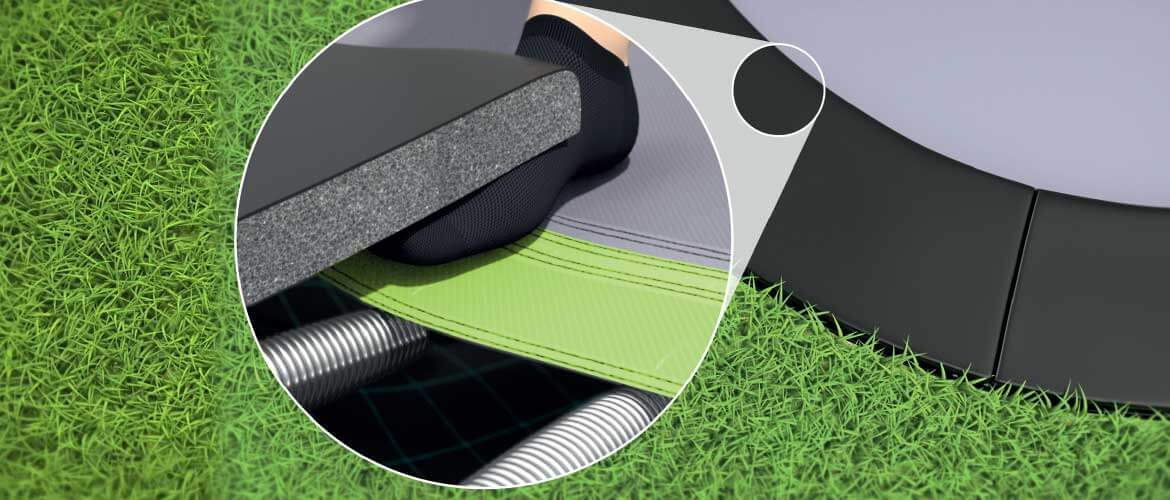
If the net keeps you from falling off, the padding keeps you safe on the trampoline itself. The padding covers the springs, frame edges, and any exposed hardware to reduce the risk of injury during a bad landing.
At the core of good padding is thick, high-density foam. This foam acts as a shock absorber, reducing the impact if someone falls onto the springs or frame. But it needs to be protected from water, UV rays, and wear. That’s why premium trampolines cover their foam in a layer of PVC or vinyl, creating a waterproof, UV-resistant shield that keeps the foam intact for years. Without that outer layer, the foam absorbs water, deteriorates, and loses its ability to cushion impacts.
We had a parent ask, “Why does padding matter if you’ve got a net?” Because accidents don’t follow rules. A net won’t stop every fall. Padding is there for the slips, trips, and missed landings that happen right inside the jumping zone.
We’ve also heard a very valid worry about cheap trampolines where the padding slips and exposes the metal underneath. That’s exactly why we use full-coverage, high-density foam with secure attachment systems. We design our padding to stay firmly in place, covering every inch of metal, even after thousands of jumps.
🏆Find Akrobat’s Best Trampoline Pads Here
Comparing Trampoline Materials: Cheap vs High-End
If you’ve ever wondered why one trampoline costs $300 and another costs $3,000, the answer is simple: materials. The materials used in a trampoline don’t just affect how it looks, they also determine how long it lasts and how well it performs every single jump.
Let’s break down the differences between cheap and high-end trampolines:
| Component | Low-Cost Trampoline | Premium Trampoline (AkrobatUSA) |
| Frame Material | Thin-gauge galvanized steel | Heavy-duty galvanized steel (275g/sqm zinc coating) |
| Mat Material | Standard polypropylene, low-density weave | High-density polypropylene, UV-treated AkroVENT® |
| Springs | Short, stiff galvanized steel | Long, premium galvanized steel |
| Padding | Thin, low-density foam, basic vinyl cover | Thick, high-density foam, UV-resistant vinyl cover |
When you see the differences side by side, it’s clear: a trampoline is a product of engineering, materials, and integrity.
Choosing the Right Trampoline for You
Every material, from the frame to the mat, from the springs to the padding, plays a role in performance and longevity.
- Start with the frame. If you want stability, strength, and a trampoline that won’t buckle under years of use, look for a heavy-duty, thick-gauge galvanized steel frame with a high zinc coating. Avoid thin steel or bare coatings.
- Next, consider the mat. A high-density polypropylene mat with UV treatment and airflow optimization (like our AkroVENT®) will last longer, provide a smoother bounce, and protect joints better than standard mats. Avoid mats that feel slick, flimsy, or stretchy out of the box.
- Springs? Longer is better. High-quality springs create a softer, more controlled bounce while minimizing impact on your body. Short, stiff springs may save money, but they rob you of height, comfort, and safety.
- And don’t overlook the padding. Thick, high-density foam with a UV-resistant vinyl cover is essential for absorbing impact and preventing injuries on the springs and frame. Thin padding or padding that slides around puts your family at risk.
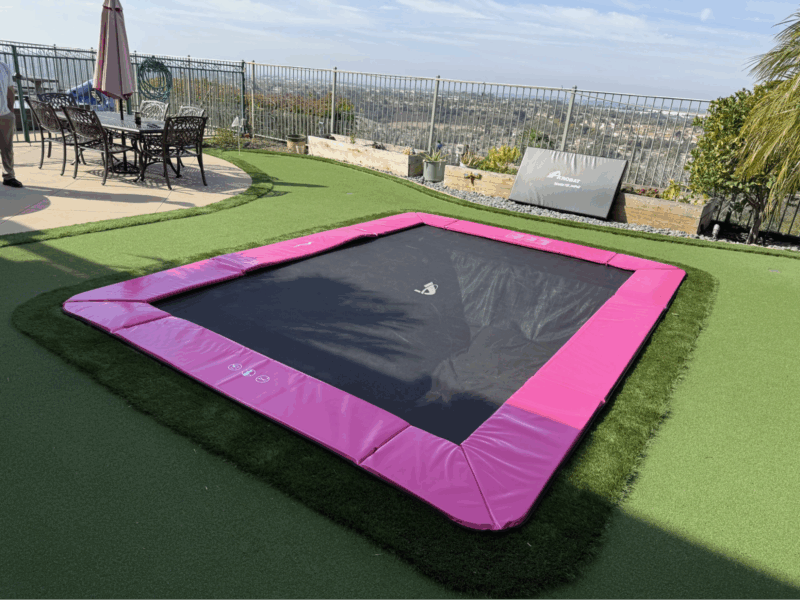
And if you’re deciding between in-ground vs. above-ground? In-ground trampolines blend into your yard, reduce fall height, and are easier to access which is ideal for families wanting an aesthetic. Above-ground options offer portability and easier installation. We build both to the same uncompromising material standards, so it’s a question of space and preference, not quality.
✅ Looking for a trampoline that combines premium materials, safety certifications, and durability? Explore AkrobatUSA’s lineup for unmatched quality and peace of mind.
