
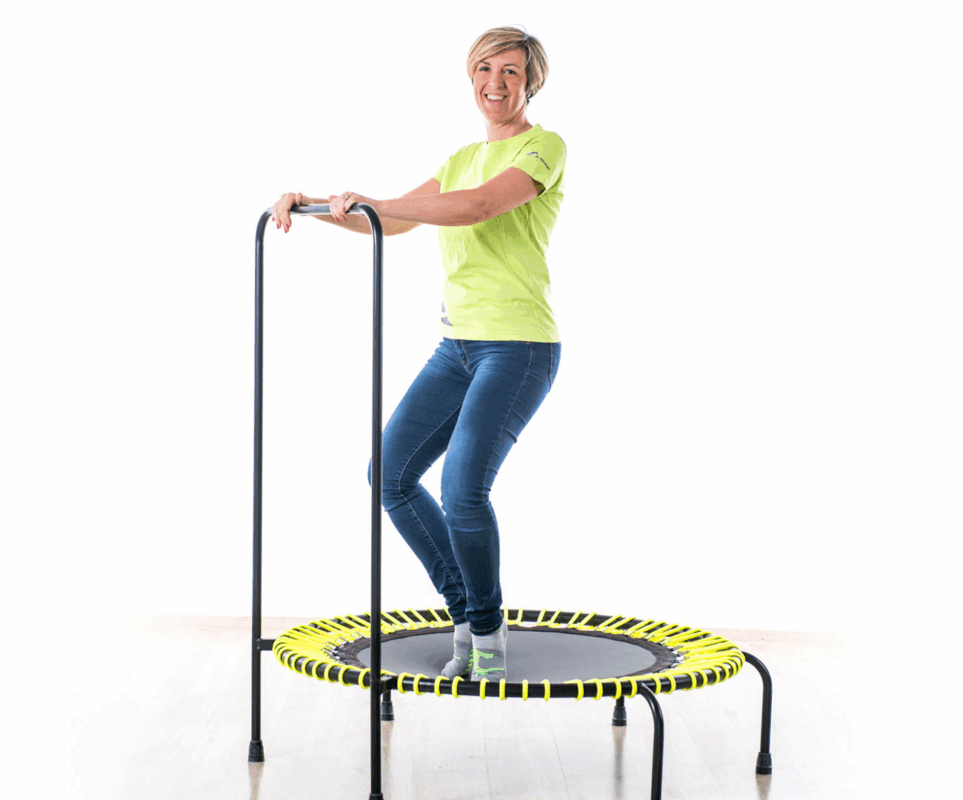
Trampoline yoga combines rebounding with yoga poses for better balance, core strength, and joint health. It’s low-impact, fun, and works for all ages. Akrobat USA explains how to choose the safest trampoline, key poses, gear tips, and how to avoid common worries for a mindful bounce.
Looking for a fresh way to energize your yoga practice? Trampoline yoga, sometimes called Bounce Yoga, combines classic yoga poses with gentle, low-impact bouncing that improves circulation, stress relief, and a new sense of play that makes you want to show up on the mat (or trampoline) every day.
Whether you’re practicing alone, with kids, or as part of your rehab or recovery routine, rebounding yoga can fit right in. But it’s only as good as the surface you choose. At Akrobat USA, we offer trampolines built for longevity, certified non-toxic, and tested to withstand up to 2.5 million jumps. Our AkroVENT® mats, in-ground models with 62.7% softer landings, and tool-free AkroCLICK® frames are just some of the features that make our trampolines a safe, stable foundation for mindful movement.
If you want a detailed breakdown, how to pick the best trampoline for your space, gear tips, beginner poses, and how to stay safe while bouncing, keep reading. But if all you needed was the confidence to get started, you’re ready to jump in.
What Is Trampoline Yoga & Why Is It Trending?
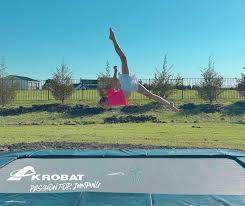
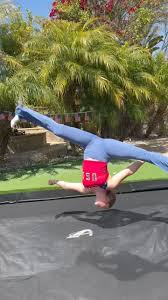
Trampoline yoga, sometimes called Bounce Yoga, takes everything people love about traditional yoga, balance, strength, and mindful movement, and adds a rhythmic, low-impact bounce. This gentle rebound motion brings in light cardio without pounding your joints, helping you sweat, smile, and stay motivated long-term. The subtle bounce boosts circulation and lymphatic drainage, adding a natural detox element that’s missing from static floor poses.
Who’s it for? Just about everyone. Beginners appreciate the joint-friendly impact. Athletes and seasoned yogis enjoy the extra challenge to core stability and balance. Parents find it’s an engaging way to bond with kids, while older adults value how forgiving the surface is on knees and hips.
It’s no surprise many people now choose a rebounder over the living room floor. The added fun keeps you showing up. The bouncing makes breathwork feel dynamic. And that sense of lightness can help turn a rigid practice into a meditative, playful ritual you’ll actually stick with.
Real Benefits of Trampoline Yoga
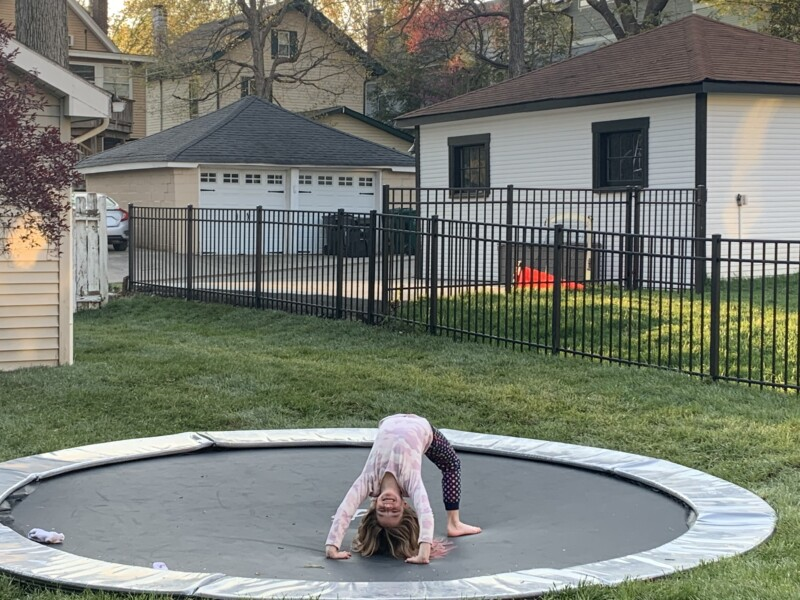
- Boosts natural detox: Gentle bouncing activates your lymphatic system and improves circulation, helping your body flush out toxins more efficiently than static floor poses.
- Elevates your mood: Each bounce releases endorphins, turning your session into a natural stress reliever that helps ease daily tension.
- Strengthens family connection: Many Akrobat USA families find that a backyard trampoline becomes the go-to spot for playful yoga sessions that get everyone moving together.
- Easy on joints: The soft, elastic surface cushions your knees, hips, and spine, perfect for those managing arthritis, recovering from injuries, or avoiding hard floor impact.
- Stable, safe bounce: A quality trampoline like Akrobat delivers a consistent, secure bounce that stays gentle on the body while still giving you an effective workout.
Unique Insights You Won’t Find Elsewhere
- AkroVENT® mat: Our signature mat design provides superior airflow and balanced tension, so your bounce stays smooth and your footing stable, even during challenging poses.
- Softer landings: Akrobat’s in-ground trampolines offer 62.7% softer bounce absorption than typical models, protecting joints and making transitions feel fluid.
- Heavy-duty build: Every frame is made from hot-galvanized steel with a 275 g/sqm zinc coating, so you don’t have to worry about rust, even if you practice outdoors year-round.
- Certified safe materials: All components are EU-certified non-toxic, supporting a mindful lifestyle that puts family safety first.
- Quiet bounce technology: No squeaks or flapping to break your focus, our trampolines are engineered to keep your flow peaceful and distraction-free.
How to Choose the Right Trampoline for Yoga
Choosing the best setup for trampoline yoga isn’t one-size-fits-all. Start with placement: our in-ground trampolines blend seamlessly into your yard, lowering the jump height and naturally adding stability. They’re especially popular with families who value safety and a sleek look. Above-ground models, on the other hand, are easy to relocate if you prefer flexibility or want to and have room and height to practice indoors during colder months.
Size matters too. For solo flows, a mini rebounder might suffice. But for families or anyone wanting more freedom to move, Akrobat’s larger outdoor models provide ample space for multiple people without sacrificing bounce consistency.
Don’t overlook the environment. Outdoor yoga fans will appreciate our built-in drainage recommendations and lifetime guaranteed rust-resistant frames, so your trampoline stays ready for practice in any season. And when it’s time to assemble, our AkroCLICK® system means no screws or tools, just a secure, precision fit that’s ready to handle every bounce, pose, and stretch.
Keep reading for practical gear tips, pose ideas, and how to make your trampoline yoga routine safe, inspiring, and sustainable.
Must-Know Tips

Let’s make sure your trampoline yoga sessions feel comfortable from day one.
- First up: footwear. While some yogis love practicing barefoot for better grip and grounding, many find that grip socks add an extra layer of safety, especially on cooler days or slicker mats.
- For added balance, consider using stabilizing bars or an enclosure. Beginners and those with limited mobility often appreciate the security of having something to hold while transitioning poses.
- Regular maintenance checks are simple but smart. Inspect your mat, springs, and padding before each session.
- If you’re practicing outdoors on an above-ground trampoline, anchoring your trampoline is worth it, especially in windy areas. Our frames are heavy-duty by design, but staking or securing your setup keeps everything firmly in place.
Beginner Poses to Try
New to rebounding yoga? Start with poses you already know, then layer in gentle bouncing as you gain confidence.
- Standing poses like Warrior II and Tree Pose are solid starting points. The slight bounce challenges your core, making balance more dynamic and engaging.
- For seated work, try gentle twists and forward folds. The trampoline’s soft surface naturally supports your hips and spine, giving you room to relax deeper into stretches.
- Always transition carefully, shift your weight mindfully when moving from seated to standing to avoid wobbling.
- To elevate your session, sync breathwork with your bounce. Inhale as you rise, exhale as you settle.
- Some practitioners add calming background music to create a rhythmic, meditative feel.
This simple combo turns your trampoline into a space where movement and mindfulness flow together.
Yoga Tricks to Try on a Trampoline
Once you’ve mastered the basics, your trampoline becomes the perfect playground for exploring new moves that blend strength, balance, and flow. Here are a few ideas to expand your practice safely:
- Dynamic Balance Poses: Start with classics like Tree Pose, (Tree Pose, also known as Vrksasana, is a balancing yoga posture that involves standing on one leg while bringing the other foot to rest against the inner thigh of the standing leg. It is a popular standing pose in yoga known for its benefits in improving balance, strength, and focus.) Warrior III, (Warrior 3 pose, also known as Virabhadrasana III, is a balancing yoga pose where one leg extends back, torso folds forward, and arms extend to form a “T” shape with the body. It’s a challenging pose that strengthens the legs, core, and back while improving balance and focus) or Eagle Pose. (Eagle Pose, or Garudasana, is a balancing yoga posture that involves wrapping your arms and legs around each other while standing on one leg. It’s a full-body pose that requires strength, flexibility, and focus) The gentle bounce forces your core to work harder to maintain stability — turning familiar poses into a playful challenge.
- Low Transitions: Try flowing from seated twists (Seated twists in yoga are beneficial for improving spinal flexibility, promoting digestion, and relieving lower back pain. These poses involve rotating the torso while seated, engaging the core and obliques. Some popular seated twist variations include the Half Lord of the Fishes pose (Ardha Matsyendrasana), Bharadvaja’s Twist, and simple seated twists with legs extended or crossed.) to supported bridge (Supported bridge pose, also known as Salamba Setu Bandhasana, is a restorative yoga posture that involves using props like blocks or bolsters to support the hips and back.This variation allows for a deeper backbend and promotes relaxation by easing pressure on the lower back. It’s a beginner-friendly pose that offers several benefits, including opening the chest, stretching the front of the body, and potentially improving circulation.) or boat pose The Boat Pose, also known as Navasana in Sanskrit, is a yoga posture that strengthens the core and improves balance. It involves sitting on the buttocks with legs lifted and extended, and arms outstretched, creating a V-shape with the body. This pose is considered a full-body exercise, engaging the core, legs, hip flexors, back, shoulders, and arms. The rebound effect helps lift your hips or spine naturally, so you can explore new transitions with less strain.
- Core Flips & Mini Inversions: Advanced yogis sometimes experiment with safe, low-height handstands or donkey kicks on larger Akrobat trampolines — always supervised and with proper landing space. The springy mat gives you lift, but remember: soft landings are key.
- Pelvic Floor Strengtheners: Gentle bounces while holding wide-legged squat variations can boost stability in your hips and core — a clever twist on traditional floor drills.
- Breath-Linked Flows: Combine tricks with intentional breathwork. Sync inhales with light jumps and exhales with steady poses to keep your mind engaged and your body relaxed.
A few reminders: tricks should always match your comfort level. Use stabilizing bars or an enclosure if you’re still building balance. And if you’re practicing outdoors, Akrobat’s quiet bounce and stable frame give you the confidence to explore without distractions.
Ready to see how far your yoga can go? Take your time, have fun, and let the trampoline add a spark of adventure to your daily flow.
Why Choose Akrobat USA
When you’re bouncing into a new yoga practice, every detail matters, and that’s where Akrobat USA stands apart. We sell trampolines designed for decades of safe, satisfying use.
Each Akrobat trampoline is made in Europe to exacting safety standards, with certified non-toxic materials and a frame guaranteed to handle millions of jumps without compromising performance.
We back this build quality with industry-leading warranties, including lifetime coverage on frames and extensive guarantees on mats and springs.
Final Tips: Bounce Mindfully, Flow Freely
A mindful practice starts with small, repeatable habits. Commit to short sessions at first, ten minutes of gentle bouncing, a few familiar poses, a chance to breathe deeper and smile wider.
As your confidence grows, your trampoline becomes more than equipment, it’s your daily ritual for balance and stress relief.
Keep your gear clean, check your mat and frame regularly, and don’t be afraid to get the family involved. Trampoline yoga’s real magic happens when everyone’s bouncing together, connecting through movement, laughter, and a healthy boost for both body and mind.
Ready to Try Trampoline Yoga?
Your next step is simple. If you want a rebound yoga setup that lasts for years, feels good on your joints, and supports the way you want to move, Akrobat USA has you covered.
Why wait?
- Choose the bounce that fits: In-ground models for softer landings and a seamless backyard flow.
- Trust our tech: From AkroVENT® mats to tool-free AkroCLICK® assembly, every feature supports your safety and comfort.
- Get real support: Industry-best warranties and a team that treats your investment like our own.
