
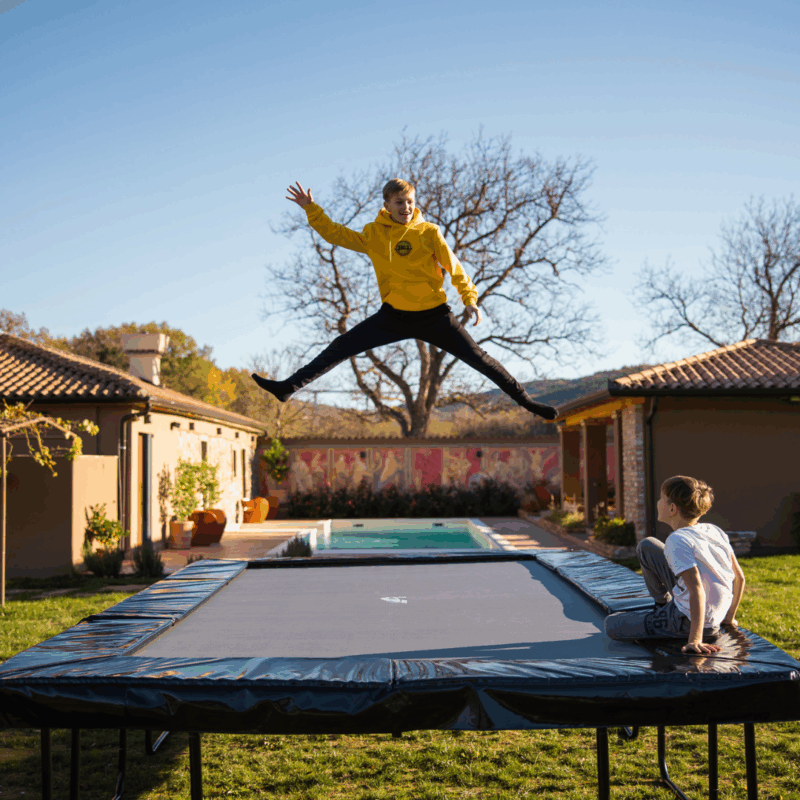
For years, people dealing with joint pain, limited mobility, or frustration with traditional workouts have found themselves stuck between uncomfortable high-impact exercises and low-impact options that often feel too light to be effective. Trampolining is quickly emerging as a powerful alternative combining safety, efficiency, and enjoyment in one low-impact movement.
Today’s trampolines are designed with advanced engineering to absorb shock, protect the body, and deliver real fitness results. Whether it’s for cardio, coordination, strength, or rehabilitation, more people are discovering how effective rebounding can be.
In this article, you’ll learn:
- What makes trampolining a truly low-impact workout
- How it compares to high-impact exercises like running
- Whether it can help with weight loss, endurance, and muscle tone
- Who benefits most from trampoline training and who should be cautious
- How to get started safely, even in small spaces
- The most common myths and concerns about rebounding, addressed clearly
If you’re looking for a smart, joint-friendly way to move more and feel better, this guide will help you decide if trampolining is the right fit.
Let’s bounce into the facts.
Section 1: Is Trampolining Really a Low-Impact Exercise?
✅ What “Low-Impact” Actually Means
In fitness, low-impact exercise refers to movements that avoid jarring the joints. It’s not about effort level, low-impact workouts can be incredibly challenging, but about protecting knees, hips, ankles, and the spine from repetitive stress.
Classic examples? Swimming, cycling, and now, trampolining & rebounding.
✅ How Trampolining Fits In
When you run on pavement, every stride hits your joints with up to 3x your body weight in force. Trampolines, by contrast, absorb much of that impact. In fact, spring-based trampolines can absorb up to 80% of landing force, cushioning the joints while still engaging muscles and cardiovascular systems.
✅ What About High-Impact Concerns?
Let’s clear something up. Trampolining can be high-impact if you’re launching yourself aggressively, doing flips, or landing hard. But that’s not what we’re talking about here.
Controlled bouncing, especially with proper form, makes trampolining one of the safest and most joint-friendly workouts available today.
Trampolining vs. Running , What’s 10 Minutes of Jumping Equivalent To?
For years, people have cited a NASA study that claims 10 minutes of rebounding is as effective as 30 minutes of jogging. While the study showed impressive results, especially in oxygen uptake and muscle engagement, it focused on astronauts and used large, custom-built trampolines.
That’s where some skepticism is valid.
Modern mini-trampolines and backyard rebounders vary widely in quality. Some retail versions don’t provide the same spring tension, bounce dynamics, or support, which can affect performance and safety.
🔥 Realistic Comparison:
Let’s break it down with real-world numbers:
| Activity | Duration | Calories Burned |
| Jogging | 30 mins | ~200–300 calories |
| Rebounding | 10 mins | ~80–160 calories |
That’s still impressive, and it gets even better when you combine bouncing with upper-body movements, like:
- Knee lifts
- Arm punches with light dumbbells
- Twist jumps or jumping jacks
Pro Tip: A short rebounding session can be a full-body interval workout. Think 20 seconds of bouncing, 10 seconds rest, for 5 rounds. It’s efficient, scalable, and fun.
Can You Get Fit Just by Jumping on a Trampoline?
The short answer: Yes. Absolutely. When done properly, trampoline workouts offer comprehensive physical benefits while maintaining a low-impact profile.
✅ Full-Body Benefits Backed by Research:
- Heart & Lungs: Trampolining increases oxygen uptake, heart rate, and cardiovascular endurance.
- Core & Balance: Because you’re constantly adjusting your posture, rebounding improves stability and strengthens deep core muscles.
- Bone Density: The controlled impact stimulates osteoblast activity, crucial for fighting osteoporosis, especially in older adults.
- Motor Skills: Studies show children develop better coordination and motor planning through trampoline use.
- Mental Clarity: The rhythmic motion helps release endorphins, decrease cortisol, and reduce anxiety. It’s part workout, part therapy.
- Bonus: Muscle groups engaged include:
- Glutes
- Quads
- Calves
- Abs
- Lower back
- Shoulders and arms (when combined with movement)
Who Should Use a Trampoline (And Who Shouldn’t)?
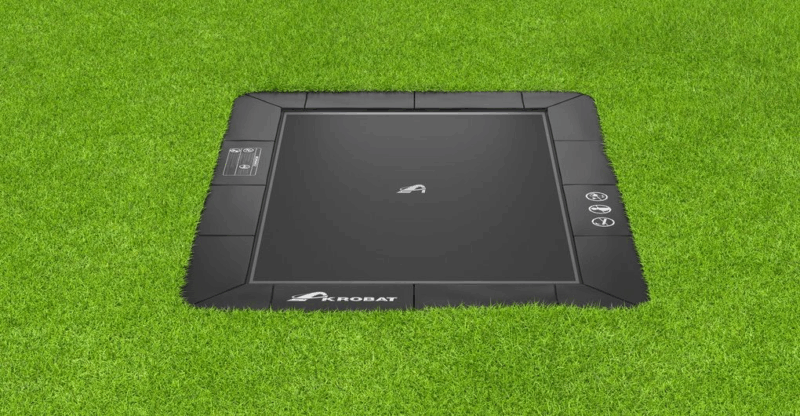
Trampolines have come a long way from backyard fun, they now serve as powerful wellness tools for people across age groups, abilities, and lifestyles. But like any form of exercise, they’re not a one-size-fits-all solution.
✅ Best For:
✔ People with arthritis or chronic joint pain
Thanks to spring-supported bounce and cushioned impact, trampolining offers movement without strain.
✔ Seniors working on balance and mobility
Low-impact rebounding improves proprioception and reduces fall risk. Many models include stability bars for added safety.
✔ Overweight individuals seeking joint-safe cardio
Unlike running, rebounding won’t punish your knees or hips. Even light bouncing gets your blood flowing.
✔ Busy professionals and parents
You don’t need a gym, a membership, or hours of free time. Just a few feet of space and 15 spare minutes.
✔ Kids with sensory or developmental needs
The rhythmic motion of trampolining promotes neuromuscular coordination, balance, and emotional regulation.
⚠️ Use With Caution If:
✖ You’ve had recent ankle, knee, or spinal surgery
Check with your doctor before starting any bouncing. Healing joints are vulnerable to instability.
✖ You have significant balance or neurological issues
While trampolining may improve coordination over time, it’s best to begin under supervision or with physical therapy guidance.
✖ You live in a low-ceiling space
We’ve heard more than a few stories of jumpers meeting ceiling fans mid-bounce. Ensure you have at least 8 feet of vertical clearance.
Step-by-Step: How to Start Trampolining Safely at Home
Ready to get started? Here’s a beginner-friendly guide to launching your trampoline fitness routine:
1. Choose the Right Trampoline
- For small spaces: Try a rebounder (mini-trampoline).
- For stability & aesthetics: Consider an in-ground trampoline, which sits flush with the lawn and eliminates fall risk.
- Set Up Safely
- Indoor use? Minimum 8-foot ceiling clearance is essential.
- Place your trampoline on a non-slip surface.
- For extra safety, keep it near a stable object (e.g., couch, wall) or install a support bar.
3. Start with Basic Moves
- Health bounce: Keep feet lightly in contact with the mat, ideal for joint warm-up and beginners.
- Twist jumps: Engage your core by rotating hips gently side to side.
- Marches or jacks: Lift knees slightly or step side-to-side to raise heart rate without losing control.
4. Progress Slowly
- Add resistance bands or light dumbbells once your balance improves.
- Try interval formats: 20 seconds of bouncing, 10 seconds rest, repeat.
- Increase bounce height only if you feel stable and pain-free.
5. Be Consistent
- Aim for 10–20 minutes, 3 to 5 times per week.
- Morning or evening, it’s up to you. Just stay consistent.
Addressing the Top 5 Worries About Rebounding
Let’s tackle the five biggest fears that stop people from giving trampolining a real shot, because when you solve for fear, you unlock potential.
1. “I’ll fall off and get hurt.”
A valid concern, especially for beginners or those with balance issues.
Solution: Choose an in-ground trampoline that sits flush with your lawn, or a model with a safety enclosure. AkrobatUSA offers both, with frames built for stability and reinforced padding for peace of mind.
2. “I have bad knees or ankles.”
The last thing you want is to trade one pain for another.
Solution: Our AkroSPRING® system provides a smooth, controlled bounce that minimizes joint stress. Combined with our 62.7% softer AkroVENT® mat, it’s designed to protect, not punish, your body.
3. “Marketing claims are overhyped.”
You’re right to be skeptical. The “3x more effective than running” stat is everywhere, but often misused.
Solution: At AkrobatUSA, we don’t chase clickbait. Our trampolines are engineered around real-life outcomes, better balance, stronger muscles, safer movement, not inflated numbers.
4. “I can’t do pools or bands, and I’m out of options.”
Whether it’s a skin condition, a coordination issue, or just limited access, trampolining can fill that gap.
Solution: Rebounding is a standalone fitness solution. No cords, no chlorine, no machines. Just bounce.
5. “Will this actually help with weight loss?”
Only if you do it. But it works.
Solution: Use interval-style workouts, engage your upper body, and stay consistent. We’ve seen users burn up to 400 calories in 30 minutes, and more importantly, keep doing it because it’s fun.
Is Trampolining Worth It as a Low-Impact Sport?
Without question, yes.
Trampolining delivers a rare combination of cardio, strength, flexibility, and fun, all while protecting your joints. It’s one of the few workouts that’s safe for your body and sustainable for your lifestyle. From kids to seniors, beginners to athletes, it meets you where you are and takes you where you want to go.
If you’ve been looking for a fitness solution that’s gentle, effective, and actually enjoyable, you just found it.
Why AkrobatUSA Is the Right Fit for Your Low-Impact Fitness Goals
If trampolining sounds like the solution you’ve been waiting for, then you’ll want a trampoline that’s built to support your goals, not compromise them.
🎯 Why Choose Akrobat?
- Engineered for Joint Protection: Our AkroVENT® mat and AkroSPRING® system absorb shock and support controlled movement, perfect for knees, hips, and spines that can’t take a pounding.
- Trusted by Athletes and Families Alike: Whether you’re rehabbing, cross-training, or just trying to move more without pain, Akrobat trampolines are certified safe, built in Europe, and tested for 2.5 million jumps.
- Designed for Real People, Real Spaces:From in-ground trampolines that blend into your backyard to compact rebounders for apartment living, we’ve got a setup for every user.
Imagine This…
You wake up, bounce for 15 minutes, and your body feels alive, not sore. Your joints don’t ache. Your mind is clear. You’re fitter, stronger, and more energized than you’ve felt in years.
👉 Explore AkrobatUSA Trampolines Now → Invest once. Bounce for years. Feel better every day.
