
Yes, trampolining strengthens knees, joints, and legs. It builds stabilizer muscles, supports cartilage, and protects joints with low-impact bounce. In just 10 minutes, you can get cardio and strength benefits equal to 30 minutes of running, without stressing your knees.
Trail wear and tear starts showing up for even casual walkers. But what if we told you that a low-impact, joint-friendly workout done in your own backyard could help reverse that discomfort and build strength where it counts most?
Trampolining is emerging as one of the most effective ways to condition your legs, knees, and joints without the repetitive pounding of traditional training. Whether you’re prepping for long-distance trails, rehabbing from injury, or just trying to stay active without pain, this often-overlooked tool could be your ticket to stronger, more resilient movement.
Let’s dig into why trampolining is more than just kid’s play, and why your knees will thank you.
Why Hikers and Walkers Need Stronger Legs and Healthier Knees
- Trail Pain Isn’t Just About Age: The real culprits behind trail-related pain are muscular imbalances, poor joint tracking, and accumulated stress, especially during downhill segments where your body absorbs more force than you think.
- When Traditional Training Falls Short: Squats, lunges, or treadmill walking don’t always target the muscles that matter most for joint health. These exercises often overload the front of the knee while ignoring the deep stabilizers and posterior chain, the muscle groups that help protect you on steep descents or unstable ground.
- The Downhill Dilemma > Eccentric Overload: Going downhill may feel like less work, but it’s a biomechanical stress test. Your knees act as shock absorbers, controlling your descent through eccentric contractions, where the muscle lengthens under tension.
How Trampolining Builds Leg Strength Without Impact
Muscle Activation You Won’t Get from Walking
Every bounce on a trampoline fires up more than just your quads. Your glutes, calves, hip stabilizers, and deep core all engage to control movement and maintain balance. These are the exact muscles hikers rely on to navigate roots, rocks, and slopes. Traditional walking doesn’t recruit these muscles at the same intensity or frequency.
Even a basic standing bounce activates stabilizers in a way that simulates unpredictable trail terrain. Jogging bounces, on the other hand, elevate heart rate and build concentric strength, making both styles useful in your pre-hike conditioning plan.
Controlled Load = Stronger Joints
What sets trampolining apart is the way it builds joint strength through controlled eccentric loading. As you land from each bounce, your knees, hips, and ankles absorb force in a gentle, repeatable motion, essentially training your body to handle downhill strain without pain.
We’ve had customers who couldn’t bike or even walk uphill without discomfort. After jumping consistently, they returned to their outdoor passions with better strength and balance than they had before their injury.
Joint Support That Goes Beyond Muscle
Ligament & Tendon Conditioning
Muscles often get all the attention, but it’s your tendons and ligaments that carry the burden of impact. Trampolining uses light, repetitive movements that condition these connective tissues gradually, unlike heavy lifts or hard pavement running.
This kind of loading improves elasticity and resilience, two key traits for pain-free movement on and off the trail.
Cartilage Nourishment & Lymphatic Benefits
Cartilage health depends on movement. Rebounding promotes cyclic compression and decompression, which encourages nutrient delivery to cartilage tissue and supports joint lubrication. It’s a motion you simply can’t replicate with static floor exercises.
Additionally, bouncing supports lymphatic flow, reducing inflammation and fluid buildup that can exacerbate arthritis symptoms.
10 Minutes on a Trampoline = What?
Ten minutes of trampoline training is a full-body session. Research shows that bouncing for ten minutes can deliver cardiovascular and muscular benefits equivalent to 30 minutes of running.
The difference?
A trampoline absorbs up to 80% of the impact your joints would typically endure on pavement or trail.
During those 10 minutes, your heart rate climbs steadily, your muscles stay engaged from calves to core, and your joints move through full, dynamic ranges, without pounding.
The metabolic burn is real too.
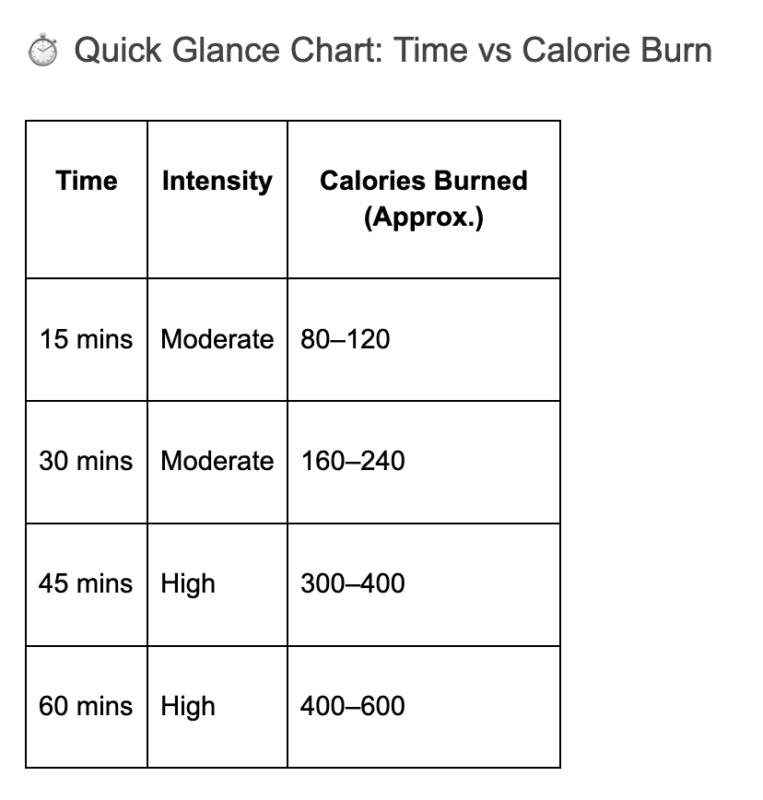
Users can expect to torch 160–240 calories (give or take) with 30 minutes of moderate exercise, all while strengthening the very muscles that support joint alignment. That makes it one of the few cardio routines that actively reinforces knee health while reducing risk.
And for hikers and walkers? That’s a game-changer. You’re preparing your joints to move better, last longer, and recover faster.
How Trampolining May Help With Knee Rehab
Unlike hard floors, treadmills, or stair machines, trampolines offer joint-friendly resistance with minimal compression. The upward force created by the mat cushions each landing, making rebounding an ideal modality for those rehabbing from knee injuries like ACL or meniscus tears.
This is why physical therapists increasingly include trampoline drills in rehab programs. The bounce phase helps rebuild quad and hamstring coordination, while the landing phase loads the joint without shearing force.
For conditions like patellar tendinitis or IT band syndrome, modifications, such as mini-bounces or static holds, allow targeted strengthening without flare-ups. The bounce-to-pause technique is especially effective for retraining knee stability, helping individuals regain trust in their movement without overloading sensitive tissue.
Addressing Your Concerns: Trampoline Training Myths
“Will I Look Silly Bouncing as an Adult?”
We get it. The trampoline still carries that “backyard playtime” reputation. But let’s set the record straight, today’s trampolines are engineered tools for adult fitness, rehab, and performance.
Professional skiers, dancers, adaptive athletes, and yes, serious hikers, are using them to stay strong and mobile.
“Does This Really Help Me Descend Better?”
If you’ve ever dreaded the downhill, you know it’s where knees take the biggest hit. Trampoline training specifically builds eccentric control, strengthening your muscles during the “braking” phase of movement.
That’s exactly what your knees need for steep descents.
Pairing blunted pole use with bounce training enhances lateral stability and balance, simulating uneven trail conditions. It’s one of the most efficient ways to prep your legs for the realities of hiking, without the post-hike soreness.
In-Ground or Above-Ground Trampolines: What’s Best for You?
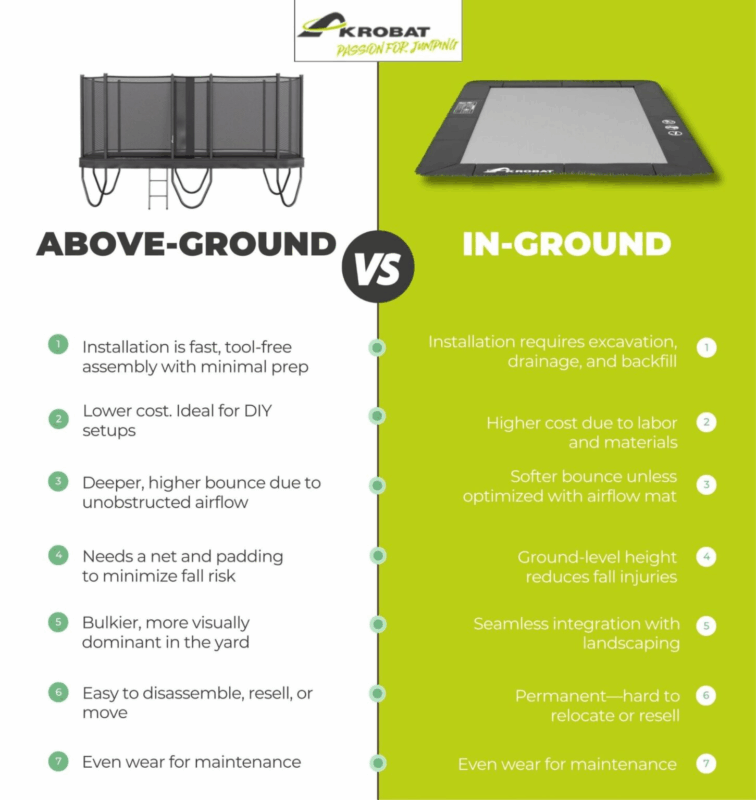
Selecting between an in-ground and above-ground trampoline comes down to your terrain, usage goals, and the overall experience you want. Both styles can support joint-friendly, low-impact training, but for some they serve different needs.
In-ground trampolines are built flush with your yard. This design offers easier access, especially for older adults or those with mobility concerns, and delivers a smoother, quieter bounce. Because they sit level with the ground, there’s no need to climb up or worry about high fall zones. The result is a safer, more natural training experience that integrates beautifully into your landscape.
Above-ground trampolines, on the other hand, are more portable and typically quicker to install. They can work well in settings where in-ground installation isn’t feasible, such as rental properties or rocky terrain. However, they may require safety enclosures and often involve climbing up, which could be a consideration for users with balance limitations.
Whether you install in-ground for performance and aesthetics or go with an above-ground unit for flexibility, the most important factor is quality.
The Ideal 10-Minute Pre-Hike or Walking Routine
You don’t need to spend an hour training to protect your joints before a hike or your walking routine. This short, highly effective trampoline sequence activates key muscles, primes your joints, and enhances your sense of balance, all in 10 minutes:
- Standing Bounce (2 min): Begin with a gentle, upright bounce to get your heart rate up and activate the entire posterior chain.
- One-Leg Hold (2 min each leg): Stand on one foot while lightly pulsing to engage glutes and test stability. Switch legs halfway.
- Lateral Step Bounces (4 min): Step side to side across the trampoline, driving through the outer foot. This strengthens hip abductors and lateral knee stabilizers.
This simple routine wakes up your glutes, quads, and calves while warming the ligaments and improving proprioception, setting you up for better performance and fewer aches post-hike.
How Trampolining Improves Posture & Confidence
Good posture isn’t just about standing tall, it’s about how well your muscles support your frame under dynamic conditions. Trampoline training naturally engages the core, shoulders, and hips in every jump, promoting a neutral spine and aligned movement.
Fewer stumbles. Less second-guessing foot placement. For aging people or those returning after injury, this confidence can be just as valuable as the physical strength they gain.
This isn’t just fitness. It’s function.
Ready to Train Smarter with AkrobatUSA?
If you’re a walker, hiker, or even a dancer, looking to strengthen your legs and protect your joints, your training surface matters more than you think. Akrobat trampolines are designed and manufactured in Europe with unmatched bounce quality and impact absorption, making them ideal for anyone needing low-stress, high-performance movement.
At AkrobatUSA, we don’t sell toys, we deliver athletic-grade equipment engineered for serious use. Our in-ground trampolines offer:
- AkroVENT® mats for superior airflow and 62.7% softer landings (joint-friednly for every age)
- AkroSPRING® systems for smoother, controlled bounce that reduces ligament strain
- Balance bar options for seniors, beginners, and those recovering from injury
Don’t settle for flimsy big box or lightweight trampolines or rigid gear that punishes your knees. Invest in equipment that supports your body and your goals. Compare Akrobat to any of the other trampolines on the market today and you will see why Akrobat has the reputation for being the world’s best trampolines.
👉 Browse AkrobatUSA’s Performance Trampolines and discover how we’re redefining what rebound training can be.
