
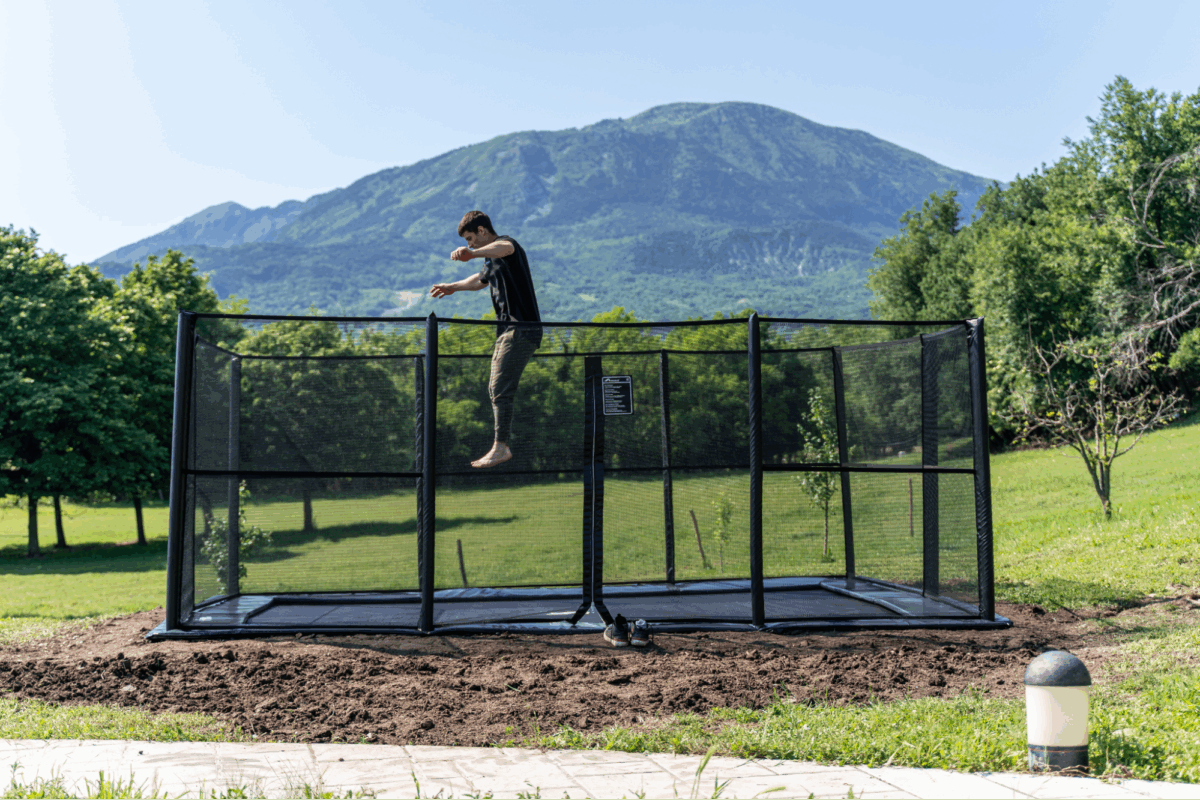
Stroke rehabilitation is undergoing a quiet revolution. While traditional physical therapy remains a foundation of recovery, many stroke survivors are exploring dynamic, engaging ways to retrain the body and restore confidence.
One approach that’s gaining traction? Trampolining.
In conventional rehab, progress often stalls due to repetitive, low-stimulus routines that can disengage both the mind and body. By contrast, trampolining provides a unique combination of physical stimulation, neuromuscular coordination, and emotional renewal.
With every bounce, stroke survivors reengage their core, reawaken spatial awareness, and rebuild movement patterns, all in a format that feels playful, not clinical.
Is Trampolining Effective After a Stroke?
Numerous studies confirm that trampoline-based training can support post-stroke rehabilitation in measurable ways. Participants in supervised programs have shown consistent gains in:
- Balance control and gait performance: Measured improvements in tests like the Berg Balance Scale and Dynamic Gait Index reveal better walking stability and posture alignment.
- Trunk stability and proprioceptive feedback: Jumping activates the deep core muscles that are essential for maintaining upright posture and reducing overcompensation on one side of the body.
- Symmetrical leg engagement: Trampoline routines encourage balanced limb use, helping to restore coordination between the affected and unaffected sides.
- Lower fall risk and increased balance confidence: Survivors who trained on trampolines reported greater trust in their own movement, reducing the hesitation that often limits progress.
These physical benefits are made possible by Akrobat’s AkroVENT® jump surface, which absorbs 62.7% more bounce energy than traditional mats. This means reduced impact on joints and greater motion control during early and late-stage recovery.
Cognitive & Mental Health Gains
Recovery from stroke is more than a physical journey. It’s also deeply emotional. The act of rebounding offers psychological rewards that go beyond numbers on a test sheet.
- Mood elevation and motivation: Trampolining stimulates the release of serotonin, dopamine, and endorphins, neurochemicals that improve mood and reduce post-stroke anxiety.
- Sensory integration and focus: Coordinating bounce patterns with movement and breath engages both hemispheres of the brain, promoting neuroplasticity and mental clarity.
- Mental reset through rhythmic motion: Survivors often describe trampoline sessions as calming, even meditative, a welcome break from frustration and fatigue that can accompany rehab.
These gains aren’t theoretical. I’ve seen them in my own life. Years ago, I couldn’t ride a bike because of pain in my knees. Now, I jump every day, and that renewed strength changed everything. For many stroke survivors, bouncing is the first time they’ve moved freely in years.
Stroke Survivors Speak: Real-World Recovery Stories
Rehabilitation is personal, and nothing is more powerful than seeing what’s possible through the lens of real people.
- From vertical limits to vertical leaps: One survivor, a dedicated climber, used trampolining to retrain his upper body and reengage his grip strength. The arm that once hung limp is now reaching again.
- Five years, one jump: Another user couldn’t jump for half a decade after their stroke. But through steady, guided progression on a trampoline, they took their first airborne step, and haven’t stopped since.
- Healing through connection: A foster parent shared how daily bouncing became a ritual with their child, bringing joy, bonding, and trust to a home that desperately needed all three.
These are not outliers. They are everyday people unlocking movement through bounce-based rehabilitation. Their progress speaks to what’s possible with the right equipment, environment, and mindset.
What Makes Trampolining Stroke-Friendly?
Low-Impact, High-Reward Movement
The surface you train on matters. That’s why Akrobat trampolines are engineered to deliver maximum bounce control with minimum strain.
- AkroVENT® mats absorb over 60% more impact: This softer surface cushions every landing, making it easier on sensitive joints and neurological systems recovering from stroke.
- No jarring impact or unstable flex: Unlike hard ground or low-grade trampolines, our performance mats reduce harsh rebound and promote better body awareness.
- Designed for gradual progression: Whether you’re early in rehab or working toward more advanced movement goals, Akrobat trampolines support you with reliable, even bounce response across the entire surface.
Adaptive Training Modes
Stroke recovery isn’t one-size-fits-all. That’s why a trampoline must support a spectrum of needs, from grounded postures to dynamic motions.
- Start with supported stance drills: Exercises like standing balance with a handrail or light weight shifts begin to reactivate stability muscles without requiring a jump.
- Progress to dynamic engagement: Light bouncing, coordinated arm movement, and gentle object tosses build coordination and full-body control.
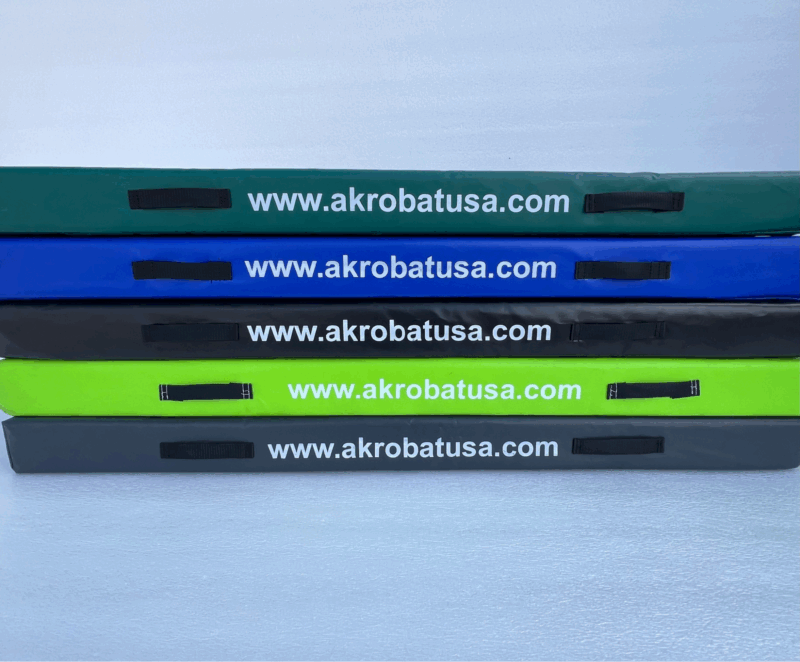
- Scale complexity with safety: Our in-ground and above-ground models can be outfitted with safety enclosures and grab bars to provide a secure recovery space.
Whether you’re regaining balance, building confidence, or chasing your next milestone, trampolining with the right structure can meet you exactly where you are.
Step-by-Step: How to Start Trampolining Post-Stroke
Trampolining should never be rushed. Progress builds with consistency and proper structure. Here’s a simplified way to get started.
Step 1: Assess Your Readiness
- Talk to your neurologist or physical therapist, particularly if they’ve worked with athletes or adaptive training.
- Rule out any uncontrolled blood pressure, vision issues, or other medical conditions that may affect coordination or safety.
Step 2: Choose the Right Equipment
- Select a high-quality in-ground or above-ground trampoline, not a portable rebounder. Akrobat trampolines feature tool-free safety systems and enclosure options that help eliminate tipping and instability.
- Avoid retail rebounders or worn-down equipment. They can cause unpredictable surface feedback and may actually delay progress.
Step 3: Start With Foundational Exercises
Begin with simple routines that activate core muscle groups and rebuild movement control:
- Stand on the trampoline with light support.
- Shift your weight forward and back, then side-to-side.
- If able, try very light bouncing without leaving the mat, using hand support as needed.
Step 4: Gradually Progress
- Incorporate upper-body movement: toss a soft object, reach across midline, or practice controlled arm raises.
- Move toward small vertical hops, scissor steps, or supported jogging in place.
- Track your results with tools like the Berg Balance Scale or Dynamic Gait Index to measure week-over-week progress.
What to Avoid When Rebounding After a Stroke
Trampolining is highly adaptable, but that doesn’t mean anything goes. To keep the experience productive:
- Don’t trampoline unsupervised, especially early on. Even advanced users benefit from coaching and cues.
- Avoid jumping with others on the mat. One jumper at a time prevents balance disruptions that could throw off posture or control.
- Skip intense cardio routines unless cleared by a medical professional. Trampolining can elevate heart rate quickly, even during low-impact sessions.
- Never use poor-quality or uneven equipment. Bounce consistency is vital for retraining motor control. Uneven surfaces can trigger compensations or regressions.
The AkrobatUSA Advantage for Stroke Recovery
When it comes to trampolining as part of stroke rehabilitation, quality isn’t a bonus, it’s the baseline. At AkrobatUSA, every trampoline is engineered to meet the unique demands of recovery, safety, and long-term performance.
- Competition-Level Bounce Feel: Designed to mimic the responsive control of elite training equipment, without harsh landings or unpredictable spring tension.
- Certified Non-Toxic Materials: Every surface, spring, and pad is certified, meeting the most rigorous EU standards. Ideal for families, caregivers, and clinical settings.
- Quiet, Smooth Jumping Experience: Engineered for silence and stability. No squeaking. No distractions. Just fluid movement that lets you focus on balance, rhythm, and control.
- Optimized for Brain and Body Recovery: Our proprietary AkroSPRING® system delivers precise rebound with just the right amount of give. Combined with the AkroVENT® mat, which absorbs 62.7% more impact than traditional surfaces, it creates an experience that supports neurological feedback and joint-friendly performance.
Should You Try Trampolining After a Stroke?
Yes, if you’re searching for a way to reconnect with your body in a way that’s progressive and genuinely motivating. Whether you’re just beginning your journey or trying to break through a plateau five years post-stroke, trampolining has the potential to awaken strength, coordination, and joy that once felt out of reach.
Here’s what we offer at AkrobatUSA:
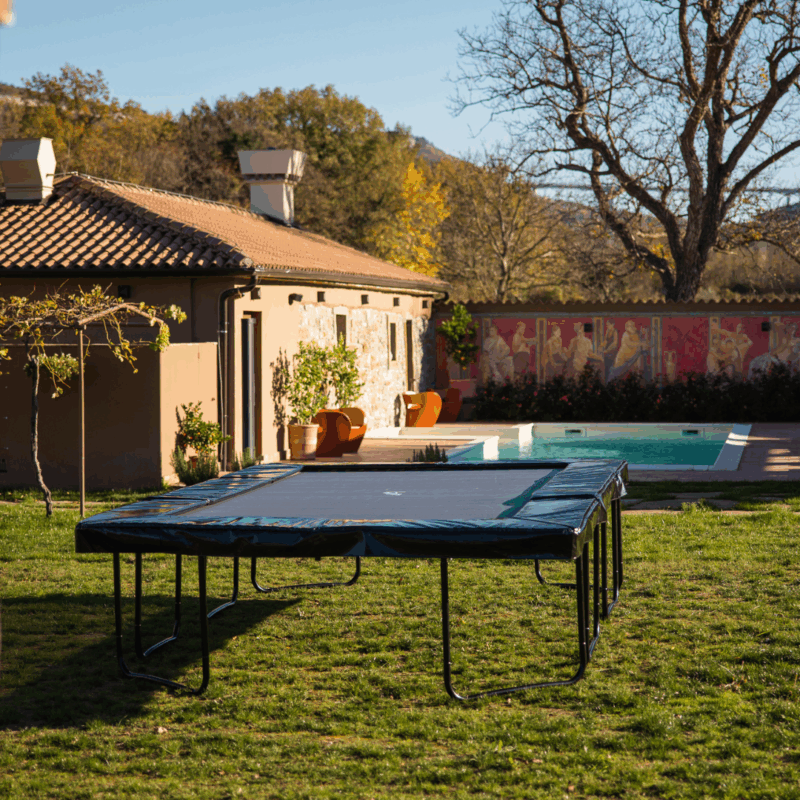
- High-Performance Trampolines for Real Progress: Our in-ground and above-ground trampolines are built for serious use, whether it’s for post-stroke balance work or cross-training with a coach.
- Supportive Safety Accessories: From grab bars to safety enclosures, we provide add-ons that create a controlled, secure space for recovery, without sacrificing performance.
- Expert Craftsmanship, Built to Last: Made in Europe with galvanized steel and premium materials. No rusting. No sagging. No “retail trampoline” shortcuts.
Who This Is For
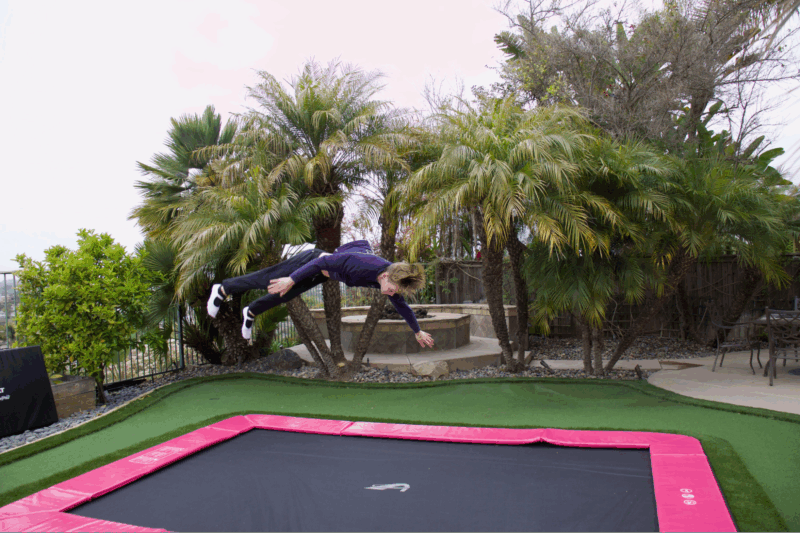
- You’re recovering from a stroke and looking for a training solution that protects your joints while rebuilding balance and coordination.
- You want a bounce experience that feels stable, smooth, and not wobbly or jarring.
- You or your loved one are ready for a long-term solution, not a temporary rehab tool.
You move with more ease. You feel stable when stepping out of bed. You have the energy and confidence to walk across a room, or even play with your kids or grandkids outside. Your body is reawakening, your coordination is returning, and you’re finally enjoying the movement again.
👉 Explore AkrobatUSA’s in-ground trampolines and safety accessories, because recovery deserves more than a makeshift setup.
