
Trampolining improves soccer players’ agility, balance, reaction time, and joint health through low-impact, high-performance training. It enhances jumping power, tackling form, and recovery, making it an ideal complement to traditional soccer drills.
Elite athletes across multiple disciplines are embracing unconventional training methods to push their performance beyond traditional limits.
Trampolining is one such approach that has moved from recreational fun to a serious athletic tool. Soccer players, with their constant need for power, precision, and resilience, are now recognizing trampolining as a legitimate complement to their regular training.
Read this article and get ready to take on challenges like this:
Why Soccer Players Are Turning to Trampolining
In recent years, professional soccer programs have begun integrating trampolines as part of strength and conditioning regimens. These setups go beyond traditional chutes or resistance sleds by offering a dynamic, responsive surface that enhances multiple athletic capacities at once.
Strength coaches recognize that trampolining not only develops raw power but also fosters neuromuscular efficiency, a vital asset on game day.
Addressing Core Performance Needs
Soccer requires an athlete to combine explosiveness, precise coordination, and resilience against injury. Trampolining answers all three:
- Explosiveness: The repetitive load of jumping recruits fast-twitch muscle fibers, directly improving take-off strength.
- Coordination: The trampoline’s unstable surface forces constant micro-adjustments, enhancing footwork precision.
- Joint Protection: Unlike concrete or turf, trampolines cushion the joints, making it ideal for both conditioning and recovery.
Benefits of Trampolining for Soccer Players
Enhanced Explosive Power and Vertical Leap
Soccer players rely on vertical explosiveness, whether it’s a receiver leaping for a contested catch or a defensive lineman timing a snap.
Specific trampoline drills, like tuck jumps, pike jumps, and split jumps, allow players to refine their take-off mechanics safely and repetitively.
Consider how volleyball players use these drills to perfect their spiking form. Similarly, soccer players can use trampoline-based jumps to improve their leaping ability for receptions, interceptions, and defensive blocks.
Improved Agility, Reaction Time, and Coordination
Trampolines are inherently unstable surfaces. Each jump requires the body to react and adjust, sharpening reflexes essential for quick game-time decisions.
Agility drills on a trampoline, such as lateral shuffles or sudden directional changes, simulate real defensive maneuvers or offensive evasions. This type of neuromuscular training is invaluable for developing the split-second reactions that separate elite players from the rest.
Safe Low-Impact Conditioning
Traditional plyometric exercises, while effective, place considerable stress on joints. For athletes recovering from injury or managing chronic conditions, this can be a limiting factor.
Trampolining provides a safe alternative. The cushioned surface significantly reduces joint impact while still allowing for high-intensity conditioning.
Strengthens Core Stability for Blocking and Tackling
Core stability is non-negotiable in soccer, particularly for linemen engaged in blocking or tackling. Every bounce on a trampoline recruits the abdominal and lower back muscles to stabilize the body.
This continuous engagement builds functional core strength, directly enhancing an athlete’s ability to maintain position and control in physically demanding situations like the trenches.
Unique Ways Soccer Players Use Trampolining
Refining Hand-Eye Coordination
Soccer is as much about precision as it is about power. Trampolining enhances hand-eye coordination by forcing athletes to time their catches or ball-handling moves while contending with the trampoline’s dynamic surface.
This is particularly beneficial for wide receivers and defensive backs, who must execute precise ball skills while maintaining body control during aerial plays.
Mental Resilience and Recovery
Competitive soccer seasons are mentally taxing. The repetitive, rhythmic motion of trampolining releases endorphins, which help mitigate stress and anxiety. For players seeking an active recovery method that supports both their body and mind, trampolining is ideal.
Additionally, its low-impact nature makes it a joint-friendly recovery tool after intense games or practices, promoting circulation and facilitating muscle repair.
Social and Team-Building Exercises
Beyond individual performance, soccer is about teamwork. Incorporating trampoline games like “Horse” into practice sessions can foster camaraderie among teammates.
These playful yet challenging activities strengthen team bonds, making players more cohesive on and off the field, while also reinforcing competitive instincts in a low-pressure environment.
The Best Trampoline Exercises for Soccer Players
Basic Bounce and Balance Training
The foundation of trampoline conditioning begins with simple vertical bounces. These repetitive movements are deceptively powerful, they train proprioception, teaching the body how to sense and adjust position in space. This is critical for soccer players who must maintain control during rapid directional changes or when absorbing contact.
Moreover, basic bounce work naturally strengthens core stability, providing a base of support for more complex athletic maneuvers.. Every successful soccer-specific trampoline routine starts here.
Jump Variations for Explosiveness
Once foundational balance is established, players can move on to specific jump variations that target fast-twitch muscle fibers essential for explosive plays.
- Tuck Jumps: Drive the knees towards the chest mid-air, simulating the vertical leap needed for receptions or defensive blocks.
- Pike Jumps: With legs extended straight forward, pike jumps build hamstring and hip flexor strength.
- Star Jumps: Explosive spread-eagle jumps that engage the entire lower body, ideal for enhancing general power output.
These exercises mimic the kinetic demands of soccer, especially in scenarios requiring sudden, maximal exertion such as breaking through a defensive line or contesting a pass.
Aerial Maneuvers for Spatial Awareness
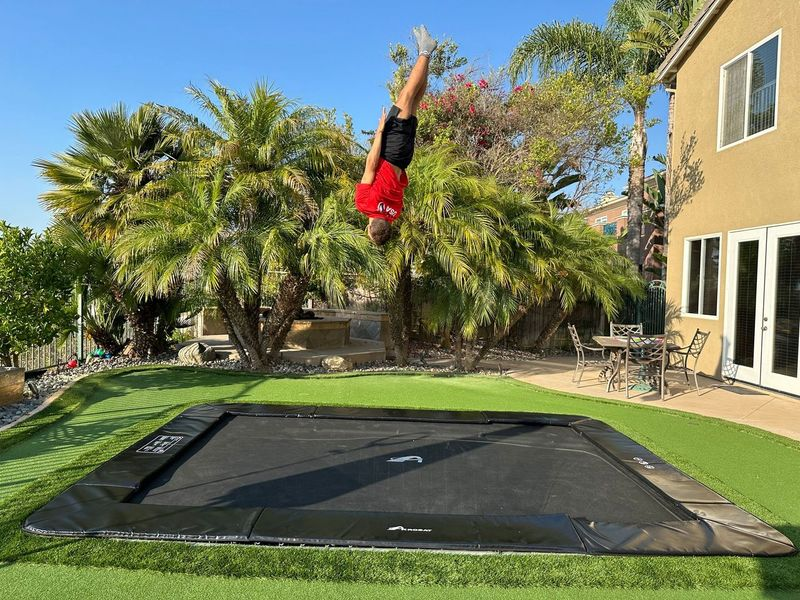
Progressing to aerial maneuvers introduces another layer: spatial awareness. Safe, progressive flips and twists on the trampoline refine an athlete’s ability to orient mid-air, vital for players making acrobatic catches or evasive jukes.
Expanding Your Routine: Trampoline Exercises and Techniques
Once you’ve mastered foundational moves, you can begin integrating more dynamic exercises into your trampoline sessions. These progressions not only challenge your body but also sharpen focus, coordination, and emotional control, key for both athletes and anyone using trampolining as a mental wellness tool.
1. Plyometric Power Jumps
Purpose: Builds explosive strength, enhances cardiovascular endurance, and elevates mood through intense movement.
- From a slight squat, explode upward as high as possible.
- Land softly, absorbing the impact through bent knees.
- Repeat for 5-8 repetitions, focusing on controlled landings.
Why it helps: This high-energy move engages fast-twitch muscle fibers and promotes a surge of endorphins, helping to combat stress and mental fatigue.
2. Lateral Skater Hops
Purpose: Develops lateral strength, balance, and agility while promoting cognitive engagement.
- Start on one side of the trampoline.
- Push off laterally, landing softly on the opposite side.
- Swing the non-landing leg behind for counterbalance.
Why it helps: This movement pattern mimics real-world athletic demands and enhances proprioception, a critical element of body awareness for emotional regulation.
3. Single-Leg Stability Bounce
Purpose: Builds unilateral strength and challenges core stability.
- Stand on one leg and perform small, controlled bounces.
- Keep the non-supporting leg elevated and core engaged.
- Switch legs after 30 seconds.
Why it helps: Strengthens stabilizing muscles, sharpens mental focus, and improves balance, important for both physical confidence and stress resilience.
4. Tuck Jumps
Purpose: Increases cardiovascular endurance and coordination.
- Jump vertically while pulling knees toward the chest.
- Extend legs for a smooth landing.
- Perform 5-10 repetitions.
Why it helps: This dynamic movement enhances neuromuscular control and acts as a vigorous mood booster through elevated heart rate and endorphin release.
5. Box Squat Bounces
Purpose: Strengthens glutes and quads while reducing joint stress.
- Lower into a squat position on the trampoline.
- Perform small, controlled bounces without fully extending the knees.
- Maintain a strong core and upright posture.
Why it helps: This variation provides strength-building benefits while preserving joint integrit.
6. Mindful Cool-Down Bounces
Purpose: Transitions body and mind from active movement to rest.
- Perform gentle, slow-paced bounces.
- Focus on deep, diaphragmatic breathing.
- Continue for 2-3 minutes.
Why it helps: Promotes relaxation, lowers heart rate, and reinforces the meditative benefits of trampolining for stress and anxiety management.
Integrating Advanced Moves Safely
As with all forms of physical activity, progression should be gradual and aligned with your fitness level. Mastering control and form before increasing intensity ensures that your trampoline routine remains both safe and effective.
Akrobat design trampolines to support every stage of your journey, from foundational mental wellness practices to advanced athletic conditioning. Our superior mat technology and frame strength offer the perfect balance between performance and safety, allowing you to push your limits with confidence.
What Are the Best Jumping Exercises for Soccer Players?
The key exercises include:
- Tuck and Pike Jumps: For improving vertical leap.
- Lateral Shuffles: To simulate on-field agility requirements.
- Balance Drills: Fundamental for stabilizing core and improving reaction time.
These form the core of a well-rounded trampoline regimen that translates directly to soccer performance. Check out ‘Does Jumping On A Trampoline Increase Your Vertical’ for more tricks and insights on how trampoline exercises can boost your jumping ability!
Could Trampolines Replace Sled Pushes?
No. Sled pushes and trampolining serve different purposes. Where sled pushes build raw power and drive, trampoline drills enhance explosiveness with significantly less joint strain. They should be viewed as complementary tools within a diversified training program.
Trampoline Training Setup for Soccer Programs
Effective trampoline training hinges on the right gear:
- Safety Enclosures: Prevent accidental falls during dynamic drills.
- Grip Socks: Enhance foot traction, reducing slip risk.
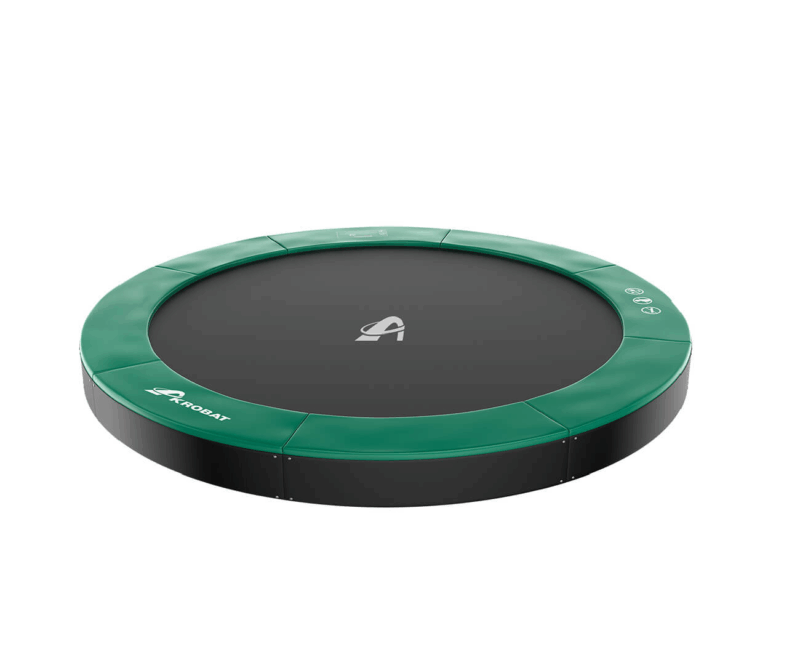
- Professional-Grade Trampolines: Investing in quality products ensures durability and optimal performance. Akrobat trampolines, for instance, incorporate AkroVENT® mats that offer superior airflow and a softer, more responsive bounce, ideal for athletic training.
Step-by-Step Guide to Incorporating Trampolining Into Soccer Training
- Assess Goals: Are you aiming to boost agility, build explosiveness, or support injury rehabilitation?
- Choose the Appropriate Trampoline: Select size, shape, and installation based on training needs and available space.
- Warm-Up Thoroughly: Always begin with dynamic stretches to prepare muscles and prevent strain.
- Start With Basic Bounces: Develop proprioception and balance before attempting more complex drills.
- Progress to Advanced Drills: Incorporate jump variations and reaction-based exercises as proficiency increases.
- Integrate Game Scenarios: Simulate ball-catching or blocking drills to translate skills directly to the field.
- Cool Down and Stretch: Finalize the session with static stretches to promote recovery and maintain flexibility.
Take Your Soccer Training Higher with AkrobatUSA
If you’re serious about elevating your soccer performance through trampolining, then choosing the right equipment is non-negotiable. The core issue most athletes face isn’t just adding another tool to their regimen, it’s ensuring that tool delivers measurable gains in explosiveness, coordination, and joint protection without sacrificing safety or durability. That’s exactly where AkrobatUSA steps in.
Solutions from AkrobatUSA That Meet Soccer Players’ Needs
- Professional-Grade In-Ground Trampolines: AkrobatUSA’s in-ground trampolines offer a seamless, stable surface perfect for soccer-specific drills like jump variations and balance training. With advanced AkroVENT® technology, these trampolines provide superior airflow and a softer, more controlled bounce, ideal for safe, progressive conditioning.
- Portable Trampolines for Versatile Training: For teams needing flexibility at camps or rotating practice facilities, AkrobatUSA’s portable options provide uncompromising quality and performance. Coaches can easily set up functional fitness stations that integrate trampoline drills with traditional strength work.
- Safety-First Accessories: From durable safety enclosures to grip-enhancing socks, AkrobatUSA offers all the critical accessories to ensure athletes train with confidence. These additions prevent common trampoline injuries and enhance training efficiency.
Picture this.
Your athletes are more explosive off the line, recover faster from games, and show better control in the air, all while reducing joint strain and injury risk. Training sessions feel innovative and engaging, with athletes pushing their limits safely on a trampoline engineered for high performance.
With AkrobatUSA, you’re not just buying a trampoline. You’re investing in a tool that supports your athletes’ long-term development, resilience, and competitive edge.
And as someone who obsesses over doing things right, I can confidently say: this is the right move for anyone who takes soccer performance seriously.
👉Explore AkrobatUSA’s premium trampolines today, because your athletes deserve equipment that works as hard as they do.
