
Trampoline training helps snowboarders build air awareness, practice tricks safely, and improve balance. Learn here:
- How to train
- What equipment to use
- Best trampoline types for practice,
- Benefits of trampolining for snowboard training
- Common mistakes to avoid
You can’t always count on snow. But you can count on gravity. And gravity makes trampolining one of the most effective off-season tools for snowboarders serious about landing bigger tricks and progressing their style.
Why Trampolines Work for Snowboarding
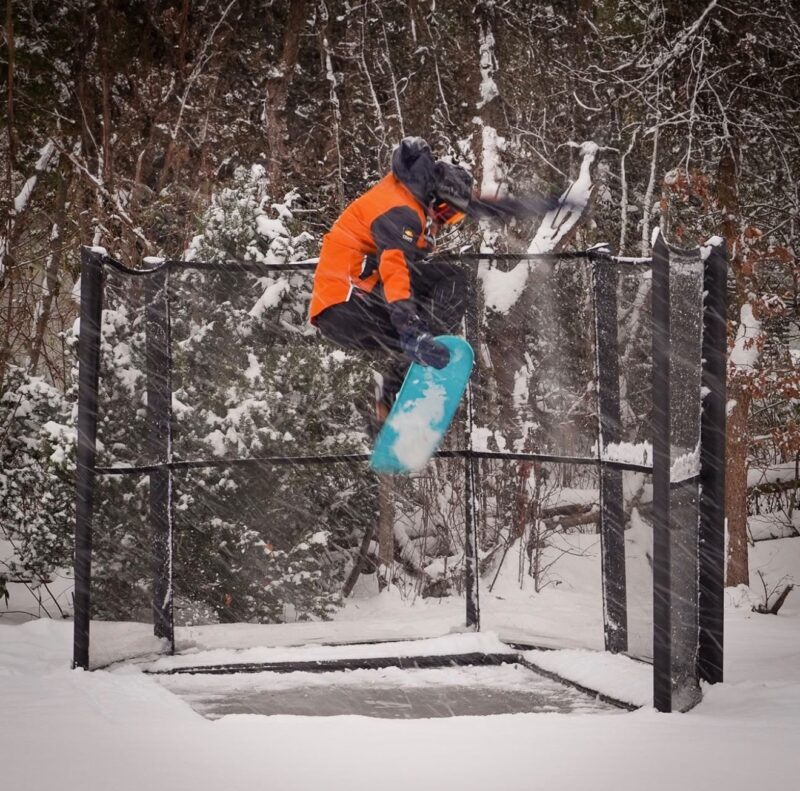
So, why do trampolines help snowboarders? Simple: they allow you to isolate the trick from everything else. There’s no slope. No edge. No wind. No distractions. Just your body in the air, and what you do with it.
Snowboarding tricks rely on three things: timing, coordination, and spatial awareness. All three can be trained on a trampoline.
Snowboarders Are Training on Trampolines On-Season and Off-Season
Off-season shouldn’t mean off-progress. When the snow melts, snowboarders looking to keep their edge are turning to trampolines, and for good reason. Trampoline training builds aerial instincts, refines body control, and gives you the muscle memory needed to execute complex tricks when winter returns.
You can drill trick mechanics, like rotation speed, body positioning, and landing awareness, without the risk of catching an edge or slamming on ice. The trampoline isolates the airborne portion of a trick, allowing athletes to focus on movement without distractions.
There’s no better way to lock in your tricks than with unlimited, safe airtime. No icy landings. No waiting for park features to reset. Just pure, focused progression.
Step-by-Step: How to Train for Snowboarding Using a Trampoline
Step 1: Start with Body Control & Basic Bounces
The first goal is to own your bounce. Before you even think about spins or flips, get comfortable jumping straight up, landing stable, and staying in control.
Focus on:
- Staying centered and aligned on takeoff and landing.
- Training your eyes to spot landing points, this head movement becomes muscle memory.
Don’t overlook this stage. It’s where your body learns to stay calm in the air, something even experienced snowboarders struggle with when trying new tricks.
Step 2: Add Spins Without Equipment
Once you’re stable, introduce rotation. Start with:
- 180° and 360° spins using your shoulders and head to initiate movement.
- Tracking how long it takes to complete each spin in the air.
Tape a line down the center of the trampoline and practice landing with that line under your feet. This simulates board control on rails and is a drill used by competitive riders to develop aerial alignment.
Step 3: Practice Grabs
Grabs add style, but they also help with rotation control and balance. Try:
- Safety grabs, nose grabs, tail grabs
- Tweak each grab by pulling the board in different directions, mimicking how you’ll stylize tricks on snow
Practicing on a trampoline lets you explore different tweaks without consequence, giving you style options when you hit the jump line again.
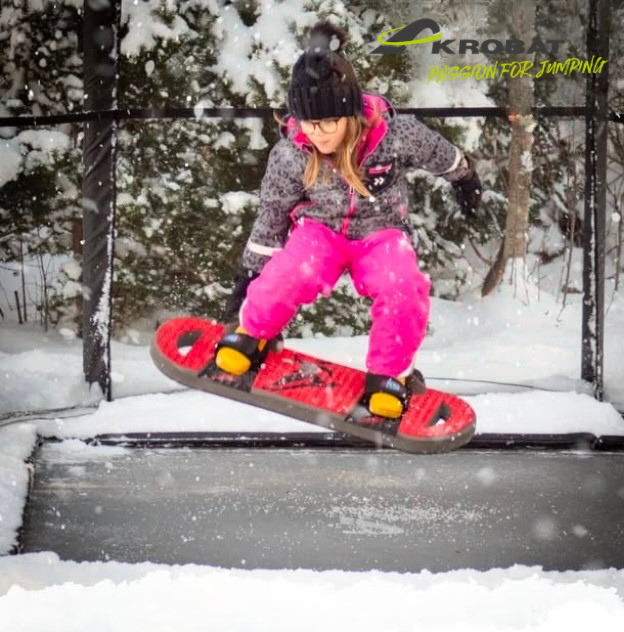
Step 4: Use a Tramp Board (or DIY Alternative)
Strapping in changes everything. Without the ability to split your legs mid-spin, your body learns commitment and control.
If you don’t want to buy a dedicated tramp board, many riders use:
- An old snowboard with edges fully taped
- A skate deck with shoelaces or soft bindings
“Is it okay to use an old snowboard with taped edges?”
Yes, but it will kill some of your bounce. Keep the board light, fully pad the edges, and use soft bindings to avoid damaging the mat, or your body.
We’ve also found that smaller, stiffer boards preserve bounce better, especially when training spins or flips where height matters.
Does Trampoline Training Actually Improve Snowboarding?
Trampolines are unmatched for one thing: dialing in your movements mid-air. Want your 360s to snap harder? Trying to bring a shiftie into your frontside spin? These skills are built in the air, not on the snow. A trampoline gives you the room to:
- Refine your rotation timing, learning when to initiate 180s, 360s, 540s, even corks, without over- or under-rotating.
- Experiment with grabs, tweaks, and shifties, and develop signature style elements that are hard to explore during a high-speed session.
- Sync your head, arms, and core, developing the muscle coordination that controls how you spin, stabilize, and land tricks.
These are the same skills top riders rely on when it counts, whether they’re throwing down in a competition or progressing in the park.
What Trampolines Can’t Simulate
Trampoline training won’t make you a complete snowboarder. It’s a powerful tool, but it doesn’t replicate everything you need to ride confidently on snow.
- You won’t learn edge control, that means knowing how to load your board and initiate tricks from a carve or transition.
- You won’t feel forward momentum, so spins and flips initiated from speed will still feel different.
- And you won’t absorb terrain impact, the unique pressures of landing on sloped snow, with real consequences, can’t be fully simulated
Choosing the Right Trampoline for Snowboard Practice
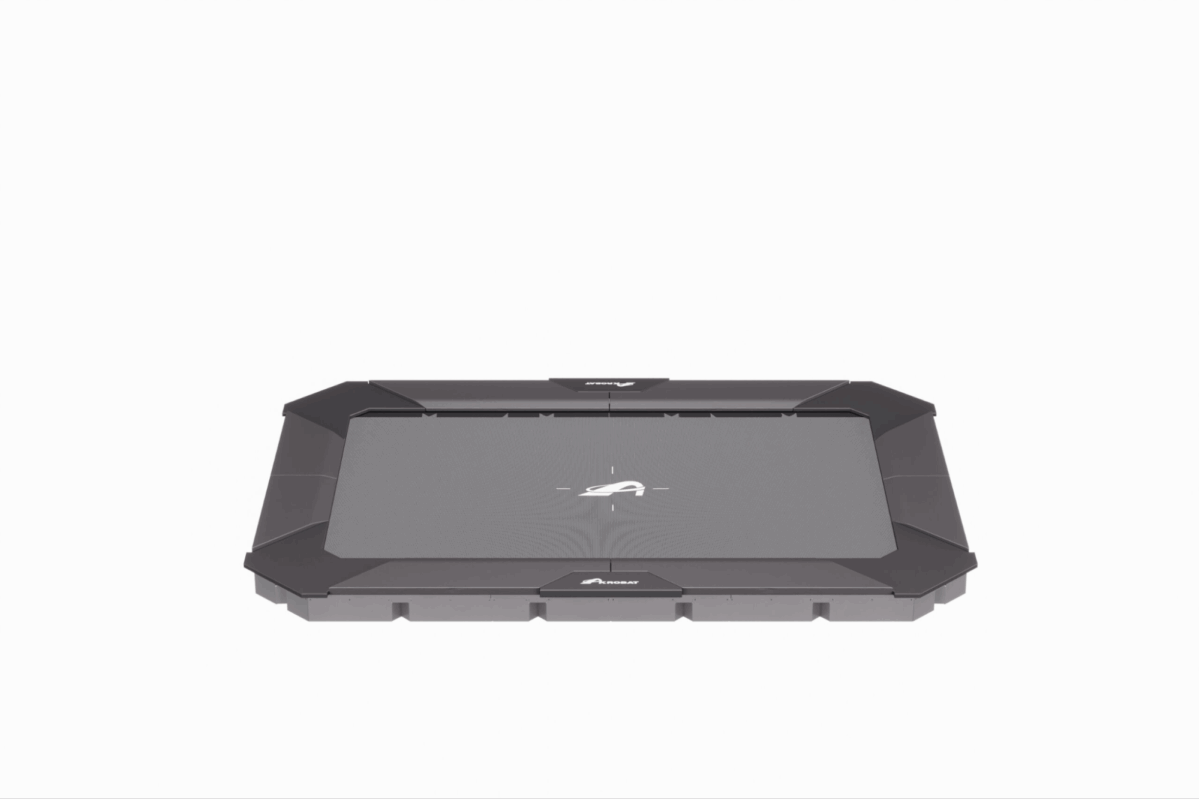
🛒Shop Akrobat’s 17ft x 12ft XCITYX AAkrobat In-Ground Trampoline As Seen In Picture Here
If you’re training for gymnastics, snowboarding, parkour, or any aerial sport, a trampoline can improve skill, control, and aerial awareness. Not all trampolines are built for high-performance training, so choosing the right size and shape is crucial.
- Best Sizes: 12x17ft (Rectangular), 14ft (Round for general fitness)
- Why? Rectangular trampolines provide a consistent bounce and are used by gymnasts, snowboarders, and parkour athletes.
- Best for: Training aerial awareness, flips, and improving balance.
What Makes a Trampoline Ideal for Training
There are dozens of backyard trampolines on the market, but very few are built with snowboard training in mind. A trampoline suited for real progression needs to do more than just bounce.
- Frame strength matters. Look for hot-galvanized steel construction that’s designed to resist rust and withstand impact.
- Bounce performance starts with the mat. Akrobat’s AkroVENT® technology improves airflow through the surface, delivering 62.7% softer landings without sacrificing height. That makes it easier on knees and joints, and safer for repeated aerial drills.
- Consider an in-ground setup. By bringing the jumping surface closer to ground level, you reduce fall risk, especially for flips or off-axis spins. In-ground trampolines also offer more stability and make recovery bails less intimidating.
We don’t sell cheap toys. We build performance gear that lets snowboarders train like pros without putting their bodies on the line every session.
Pro Tips to Maximize Your Off-Snow Progress
Every great training routine is built on purpose, not just repetition. Here’s how to make your trampoline time more productive:
- Record your sessions. Use a phone or tripod to spot what your body’s actually doing mid-air. Watching footage will reveal flaws you won’t notice while jumping.
- Focus on one skill per session. Don’t chase every trick. Instead, dedicate a session to 360s, grabs, or cork attempts. Your body learns faster with isolated objectives.
- Train barefoot when possible. Going shoeless increases proprioception, your body’s awareness of position and movement, which sharpens control during flips and spins.
Small improvements in body control add up fast. And if you’re using your trampoline year-round, you’re stacking hundreds of reps that pay off the second your board hits snow.
Should You Add Trampolining to Your Snowboard Training?
Yes. Trampoline training won’t replace time on snow, but it will transform how productive that time is. When you show up to the park already confident in your spins, flips, and grabs, you don’t waste runs wondering “what if.”
If you’re serious about progression, it’s the smartest thing you can add to your routine.
Whether you’re chasing your first backflip or refining your 720, a trampoline lets you:
- Build safe, repeatable habits.
- Discover your style.
- Build the confidence that snow alone can’t give you.
Train Like You Ride, With a Trampoline That Keeps Up
Most snowboarders hit a ceiling in their off-season. You either lose the muscle memory you spent all winter building, or you take shortcuts with gear that doesn’t perform.
That’s the gap AkrobatUSA was built to close.
If you’re serious about improving your spins, dialing in flips, and mastering air control without risking your body, it’s time to upgrade your training surface to match your goals.
What We Offer:
- Pro-Level Bounce Without the Impact: Our AkroVENT® jump mats deliver 62.7% softer bounce absorption, ideal for trick repetition without joint fatigue. They give you the air you need, and the forgiveness you want.
- Real-World Durability That Outlasts the Seasons: Engineered to withstand 2.5 million jumps, every Akrobat trampoline features hot-galvanized steel frames, tool-free AkroCLICK® assembly, and best-in-class materials that handle everything from heavy training to coastal weather.
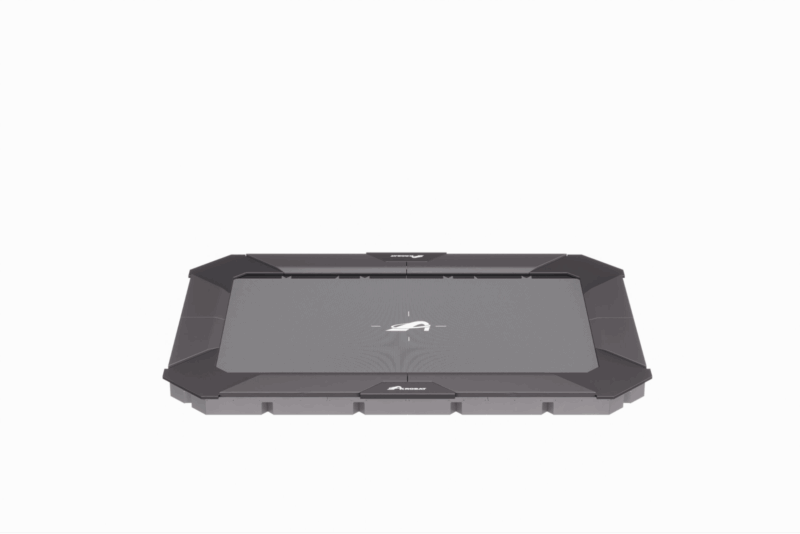
- In-Ground Trampolines That Feel Natural: Our in-ground designs lower bounce height for safer progression, reduce risk during flips, and keep your backyard looking clean and functional.
Ready to Build Your Backyard Snowboard Lab?
✔ Find your trampoline today and make your off-season count.
