
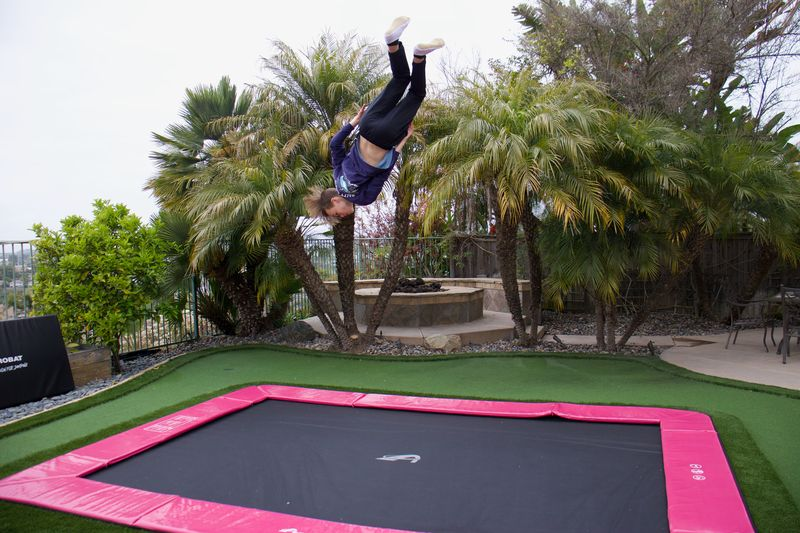
Trampolining enhances aerial control, core strength, and joint safety for skateboarders and BMX riders. It builds muscle memory, improves confidence, and supports trick progression, while reducing injury risk. Plus, it’s ideal for off-season training and low-impact recovery.
Skateboarding and BMX riding demand more than guts, they demand control, timing, and relentless practice. But let’s be honest: the process of learning aerial tricks can be brutal.
- Every failed rotation means another hard slam on concrete.
- Every awkward landing risks tweaking an ankle or bruising a hip.
For many athletes, that’s the tradeoff, progress at the cost of pain. Whether you’re working on your first tailwhip or dialing in a switch 360 flip, trampolines offer something unique. Extended airtime, soft landings, and an environment designed for high-rep skill building without high-consequence injuries.
Let’s break down how it works.
Key Physical Benefits of Trampoline Training
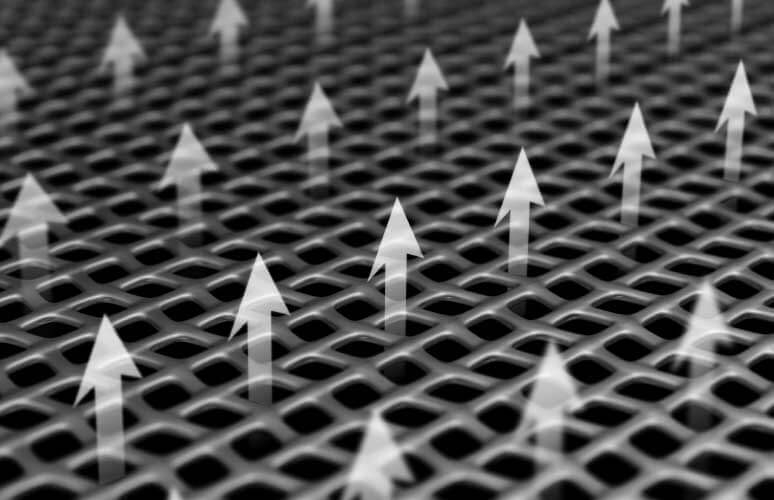
High-impact landings are one of the leading causes of injury in both skateboarding and BMX. Ankles, knees, and lower backs take the brunt of repeated hard impacts. Akrobat trampolines, featuring the AkroVENT® mat, are engineered for a 62.7% softer bounce compared to standard rebound surfaces. That means less strain on joints, more sessions per week, and a longer athletic lifespan.
For riders managing shin splints, knee pain, or recovering from impact-related injuries, trampolines offer a low-risk way to stay active and maintain progress. Instead of skipping training days due to soreness, you keep building momentum.
Core Strength, Balance, and Stability
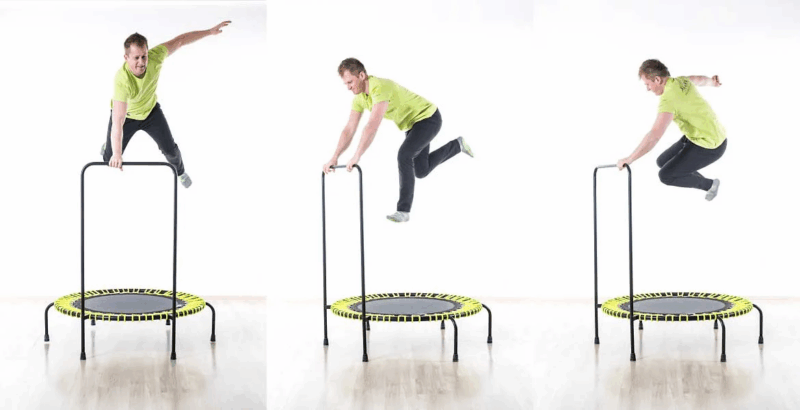
Product Featured -> Akrobat Speed Bouncer Trampoline
Every jump on a trampoline is a full-body negotiation with gravity. Even without tricks, your body works overtime to stay centered, engaging core stabilizers, hips, glutes, and back muscles. Over time, this repeated micro-adjustment develops a finely tuned sense of balance.
In air sports, balance is about being precisely where you need to be mid-rotation. Stronger core engagement leads to better posture in the air, smoother rotations, and cleaner landings on real setups.
Cardiovascular & Muscle Endurance Gains
Trampolining might look playful, but it’s deceptively demanding. A well-structured session builds cardiovascular stamina without punishing your joints the way hill sprints or street runs can. For BMX and skate athletes, endurance is about staying sharp on your fifth, sixth, or tenth attempt at a trick.
You’ll also activate fast-twitch muscle fibers in the legs, which directly translate to more explosive pop when you’re launching off ramps, stairs, or transitions. Think of it as leg day with a bounce, minus the soreness.
Helpful Resource -> What Muscles Does Jumping On A Trampoline Work?
Skill Development on the Trampoline
Skate and BMX tricks often come down to one variable: how well you know where you are in the air. Trampolines extend airtime, giving your body and brain more space to process movement. Whether you’re practicing a backflip, 360 tailwhip, or kickflip late shove, those extra split seconds make all the difference.
The result? Sharper spatial awareness. Cleaner execution. And a major reduction in hesitation when it’s time to take the trick to concrete.
Trick Timing, Foot Placement & Muscle Memory
Repetition builds mastery. But repetition without injury risk builds mastery faster.
Using a trampboard or bounce bike, riders can simulate the physical motions of ollies, flips, bar spins, and more, without worrying about rollaways, edge catches, or face plants. You can lock in the sequence of foot or hand placement, adjust your timing, and refine your commitment all within a controlled space.
The better your timing mid-air, the more consistent your landings on real terrain.
Visual & Vestibular Gains
Trampolines are neurological. The vestibular system, responsible for balance and spatial orientation, gets a serious upgrade during trampoline sessions. Each jump reinforces your sense of direction in air: where you are, where you’re rotating, and when to spot the landing.
This is especially helpful for tricks that involve blind rotations or inverted spins, those where a split-second misread can cost you the trick or worse. Consistent trampoline training reduces that risk by sharpening your internal compass.
Real-World Benefits for Skateboarders and BMX Riders
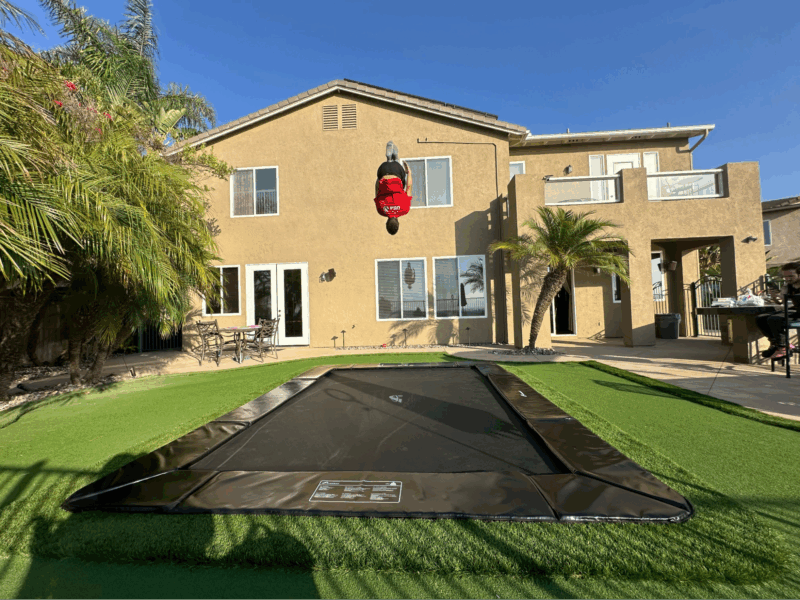
- Faster Trick Progression: Trampolines reduce injury risk, letting riders drill new tricks more safely and repeatedly. The ability to train, reducing consequences builds not just skill, but deep body confidence.
- Confidence Builder for Attempting Big Air Tricks: Trampolining offers a low-pressure environment to master complex movements. When you’ve landed a trick 50 times on a soft surface, your brain recognizes the motion, eliminating hesitation and improving commitment during high-stakes rides.
- Year-Round Training, Rain or Snow: Trampolines can be set up indoors outdoors and in sheltered spaces, allowing consistent aerial training through off-seasons. Riders who keep practicing during downtime come back sharper, stronger, and with better timing than those who pause.
Insights You Won’t Find Elsewhere
- Trampolines help build emotional bonds: One rider described how trampolining created a bond with his foster child. No instructions, just shared movement, trust, and freedom.
- Movement doubles as therapy: Jumping stimulates serotonin and reduces anxiety. It’s one of the simplest ways to improve mental well-being while staying active.
- Families use trampolines as a connection tool: Parents, siblings, and coaches all benefit from the social ease of bouncing. It’s inclusive, non-verbal, and naturally joyful.
- Low-impact movement is rehab-friendly: Trampolining offers joint-safer activity for those returning from injury. You rebuild strength and minimize risking setbacks.
- Comeback stories start on trampolines: One AkrobatUSA rider regained full mobility post-knee injury with the help of trampoline training. Controlled rebounding got him back on the bike stronger than before.
- Training isn’t always linear, but trampolines help: A trampoline gives athletes a flexible tool to move, build confidence, and return to form.
- Bounce quality affects skill development: Cheap trampolines feel soft but unpredictable. Akrobat’s AkroVENT® mat balances bounce response with shock absorption—key for real trick transfer.
- Mat design impacts your joints and timing: The AkroVENT® surface absorbs 62.7% more force, reducing strain on knees and ankles while preserving air control and timing precision.
- Setup speed changes how often you train: The AkroCLICK® tool-free system makes setup fast. When gear is easy to use, athletes use it more consistently.
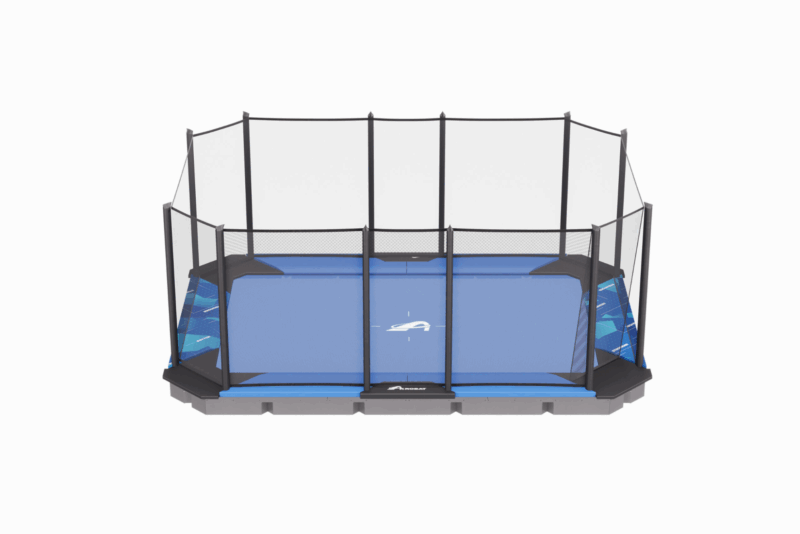
Check out the Akrobat Trampoline’s here.
BMX and Skateboarding Benefits Beyond Trampolining
What Are the Physical Benefits of BMX?
BMX riding builds some of the most well-rounded athletic capabilities in action sports. Grip strength from the bars, leg power from sprints and launches, and constant coordination under pressure. You’re not just riding, you’re calculating. Every transition, every obstacle demands quick, decisive movement.
It’s not just physical, it’s strategic athleticism in motion.
How Does Skateboarding Benefit the Body?
Skating trains power, posture, and poise. Repeated ollies and flips strengthen your lower body and build explosive agility. Ankles become more responsive. Balance improves with every push. But beyond the muscle gains, skating teaches mental toughness, resilience when you fall, patience when you fail, and focus when you’re about to land the trick you’ve been chasing all week.
These benefits go far beyond the park. They shape how you move, how you adapt, and how you recover.
Who Should Use Trampolines for Training
Trampolining is a dynamic platform that adapts to where you are in your journey.
- Beginners gain confidence in the air without the intimidation of hard landings. Whether you’ve never ollied or are learning to spin for the first time, a trampoline builds the body control and spatial awareness that every new rider needs.
- Intermediates can safely refine more complex tricks, like flips, grabs, or tailwhips, by repeating the motion minimizing risking injury. You learn the trick before you take the impact.
- Pros use trampolines to drill high-consequence tricks with low physical cost. That’s the difference between progression and plateau.
- Injured athletes find their way back into movement through gentle, controlled rebounding. It keeps you conditioned, motivated, and mentally connected to your sport while your body heals.
A Smarter Way to Train
Progress shouldn’t cost you your body. That’s the philosophy behind our approach at AkrobatUSA. We believe in smarter reps, better surfaces, and equipment that meets you at the level you’re chasing.
For riders who want airtime without downtime, trampolining is a training strategy.
Ready to Bounce Better?
You’re looking for performance gear, something that works as hard as you do, rep after rep.
At AkrobatUSA, we supply pro-grade trampolines built by Akrobat, one of the most advanced trampoline manufacturers in the world. Our systems are engineered for action sports athletes who demand better bounce, cleaner air control, and long-term durability.
Want to push your riding further? Start with the right surface. Whether you’re a skater perfecting flips or a BMX rider training rotations, AkroVENT® impact-absorbing mats reduce strain and keep you sharp.
Explore AkrobatUSA’s elite lineup of trampolines. Because when your body is the tool, the surface matters. Let’s build your bounce, on purpose.
