
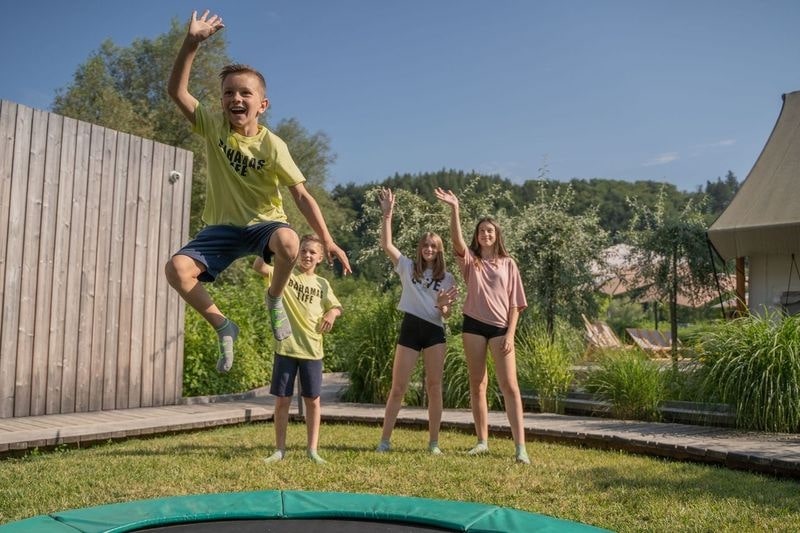
Raising a child with ADHD can be a wild ride; full of energy, constant movement, and endless searching for tools that actually help. If you’re looking for a fun, science-backed way to support your child’s focus and self-regulation, a trampoline might be your secret weapon.
In this article, we’ll break down how jumping helps the ADHD brain, boosts mood, and creates a calming, confidence-building outlet right in your backyard.
Let’s bounce into it.
Why Movement Matters for ADHD
When we talk about managing ADHD, most parents think first of medication, therapy, or structured routines and those can all play key roles. But what’s often underestimated is the incredible impact that movement has on the ADHD brain.
The Power of Movement on Brain Chemistry
When a child jumps, runs, or moves in a structured way, their brain releases key neurotransmitters: dopamine, serotonin, and norepinephrine. They’re the core chemicals responsible for regulating mood, attention, and impulse control.
Children with ADHD typically have lower baseline levels of these neurotransmitters, which is why they struggle to stay focused or manage emotional reactions. Physical activity, like bouncing on a trampoline, stimulates the release of these chemicals, giving their brains a natural boost. You can think of it as jumpstarting the system that helps your child regulate attention and emotions, all without the need for screens, pills, or lectures.
What the Research Shows
Studies have consistently shown that exercise enhances executive function; the brain’s “management system” that governs working memory, flexible thinking, and self-control.
For example, a study published in Pediatrics found that just 20 minutes of moderate aerobic activity improved attention, academic performance, and mood regulation in children with ADHD. Another 2019 review of multiple studies concluded that consistent exercise could significantly reduce core ADHD symptoms, especially when paired with other treatments.
How Trampolines Support ADHD Kids Beyond Just “Burning Energy”
When we look deeper, we see that trampolines provide layered, meaningful benefits that touch the sensory, emotional, cognitive, and social domains. Let’s break that down.
Sensory System Benefits
Jumping on a trampoline is a structured, rhythmic movement that activates two key sensory systems:
- Vestibular System: This is the system responsible for balance and spatial awareness. When your child bounces, flips, or even shifts their weight, they engage the tiny structures in the inner ear that help them orient their body in space. For ADHD kids, stimulating the vestibular system can improve body coordination, reduce restlessness, and help them feel more grounded and centered.
- Proprioceptive Input: ADHD kids often crave “heavy work” (activities that push or challenge their muscles and joints) because this input helps regulate their nervous system. Bouncing provides deep proprioceptive input with every landing, satisfying this sensory need in a joyful, non-disruptive way.
Emotional and Cognitive Boosts
When a child jumps, they’re literally altering their brain chemistry.
- Endorphin Release for Mood Regulation: Physical activity, especially something as fun as trampolining, releases endorphins, the body’s natural “feel-good” chemicals. This helps regulate mood, reduce frustration, and smooth out the emotional ups and downs in ADHD.
- Working Memory and Focus Improvements: Studies have shown that after movement breaks, children (especially those with ADHD) return to tasks with improved attention and working memory. That means trampoline time is a productivity tool.
- Natural Stress Relief: ADHD kids often live in a heightened state of frustration or overstimulation. Regular bouncing sessions help burn off tension, lower cortisol (the stress hormone), and promote a calmer, more regulated emotional state.
Social and Confidence Gains
While ADHD is often framed around focus or hyperactivity, one of the most painful aspects can be the social struggles; difficulty making or keeping friends, feeling “different,” or lacking confidence.
- Building Social Skills Through Cooperative Jumping: Shared trampoline time, especially with siblings or friends, offers opportunities to practice turn-taking, cooperation, and playful interaction in a low-pressure environment.
- Boosting Self-Esteem by Mastering Physical Skills: ADHD kids often feel clumsy or uncoordinated, especially in structured sports. But on a trampoline, they can master new moves, feel successful, and build physical confidence, reinforcing the belief that they can.
We design our trampolines as multi-sensory, multi-benefit platforms that help ADHD kids flourish. From the bounce system to the safety enclosures, every feature is crafted to support real outcomes; not just tired legs, but stronger focus, healthier emotions, and bigger smiles.
How to Incorporate Trampoline Time Into a Daily ADHD Routine
One of the biggest questions parents ask is, “How do I make trampoline time part of our day without it becoming a free-for-all?”
They can be integrated intentionally into your child’s daily routine to maximize focus, regulate energy, and improve emotional balance.
Here’s how we recommend approaching it:
Best Practices for Daily Use
- Morning Energy-Regulation Sessions
A short bounce session in the morning helps channel that surge of ADHD energy into something productive, making it easier for your child to sit still, focus, and engage in schoolwork. - Short Movement Breaks Between School or Homework Blocks
If your child is struggling with concentration, try using trampoline time as a reset button. A 5–10-minute bounce break between study sessions can sharpen attention, refresh working memory, and prevent frustration from building. - Evening Jump Sessions to Reduce Hyperactivity Before Bedtime
While you want to avoid overstimulation right before sleep, light physical activity in the early evening can help burn off excess energy, making bedtime routines smoother and more predictable.
How Long Should Kids Jump?
It is generally recommended 10–15-minute bursts, two to three times a day, for maximum benefit. For younger kids or those prone to hyperactivity spikes, shorter, more frequent sessions may work better.
The key is to watch your child’s cues: if they start to seem revved up instead of calmed, or if their focus declines after jumping, it’s time to dial things back. Remember, the goal is regulation, not exhaustion.
Structured vs. Unstructured Play
Both types of play have value and on a trampoline, they serve slightly different purposes.
- Free Bouncing for Self-Regulation
Sometimes, ADHD kids need to move in a way that feels natural to them. Free jumping lets them explore their sensory needs, blow off steam, and recalibrate their bodies and minds. - Guided Games for Cognitive Boost
Other times, adding structure (like counting jumps, spelling words) can provide an added cognitive challenge. These activities strengthen working memory, sequencing, and executive function, all while keeping your child engaged and smiling.
Trampolines for ADHD Adults and Teens
When most people think about trampolines and ADHD, they picture young children but teens and adults with ADHD can benefit as much from bouncing, maybe even more.
Can Adults Benefit?
Absolutely. Many adults with ADHD face the same core challenges they had as kids: restlessness, difficulty focusing, emotional ups and downs, and a constant need to self-regulate. Regular trampoline use offers a powerful, low-impact way to tap into the brain’s natural calming and focusing mechanisms, providing stress relief and mental clarity without requiring a gym membership or structured workout plan.
For adults managing ADHD alongside work, family, and life demands, this can be a game-changer.
Mental Health Benefits for Teens and Adults
Teenagers with ADHD often experience social pressures, academic challenges, and emotional volatility. A trampoline offers them a private, judgment-free space to move, release stress, and regulate emotions. Plus, it can be an alternative to screen time, providing a healthy, active outlet that’s both fun and physically beneficial.
For adults, bouncing can become part of a broader self-care routine, supporting mood regulation, boosting energy, and providing a meditative rhythm that helps calm racing thoughts.
Family Bonding Across All Ages

One of the things our team loves most about what we do is hearing stories from families who jump together; parents, teens, little kids, even grandparents. Jumping side by side encourages laughter, connection, and shared joy, helping strengthen family bonds. And let’s face it: when was the last time you all had fun outside together, without screens or distractions?
By investing in a trampoline, you’re creating a space where every family member (no matter their age or ADHD status) can join in, let loose, and experience the physical and emotional rewards of movement.
Choosing the Right Trampoline for Your ADHD Child
One of the most frequent questions we get from parents is, “Which trampoline is best for my ADHD child?” and honestly, there’s no one-size-fits-all answer. But with the right guidance, you can confidently choose a model that fits your child’s needs, your backyard, and your family’s long-term goals.
Let us walk you through the key considerations.
Round vs. Rectangular Trampolines
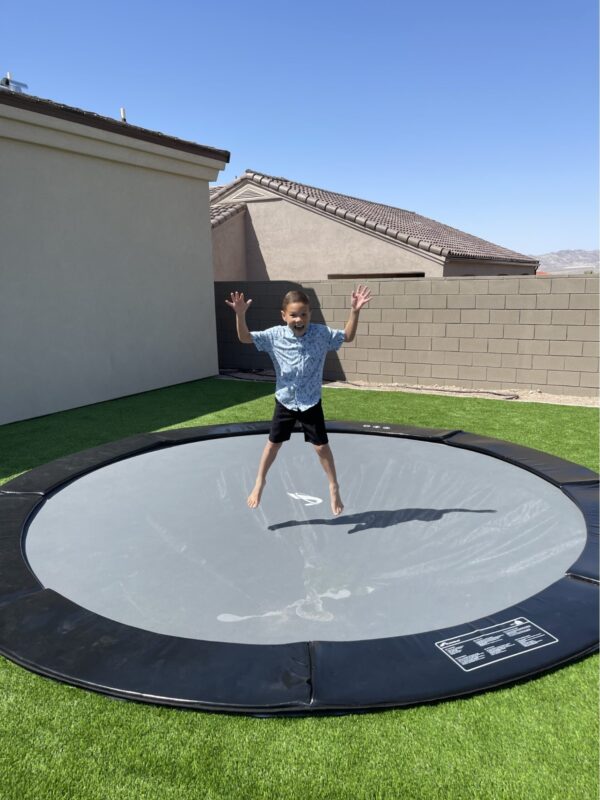
🛒As Seen on Picture : 14ft Round Akrobat Primus Flat In-Ground Trampoline
Round Trampolines are fantastic for general backyard fun. The circular design naturally directs jumpers back toward the center, offering an extra layer of safety, especially for younger kids. If your goal is to provide an outlet for free play, energy release, and sensory exploration, round models are a great fit.
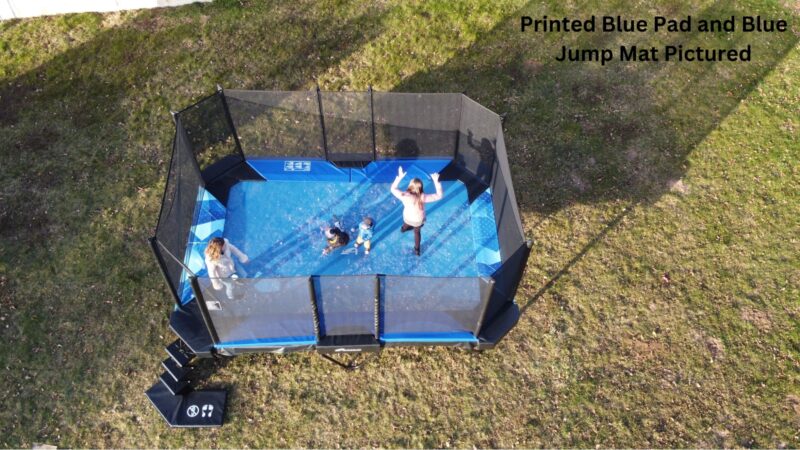
Rectangular Trampolines, on the other hand, offer a more controlled, performance-focused bounce. That’s why they’re often used in gymnastics and sports training. For ADHD kids who enjoy practicing specific moves, following structured jump routines, or who need a more predictable bounce pattern, rectangular models can be ideal.
🏆Best Pick:XCITYX 17ft x 12ft Akrobat Above Ground Trampoline
In-Ground vs. Above-Ground Benefits
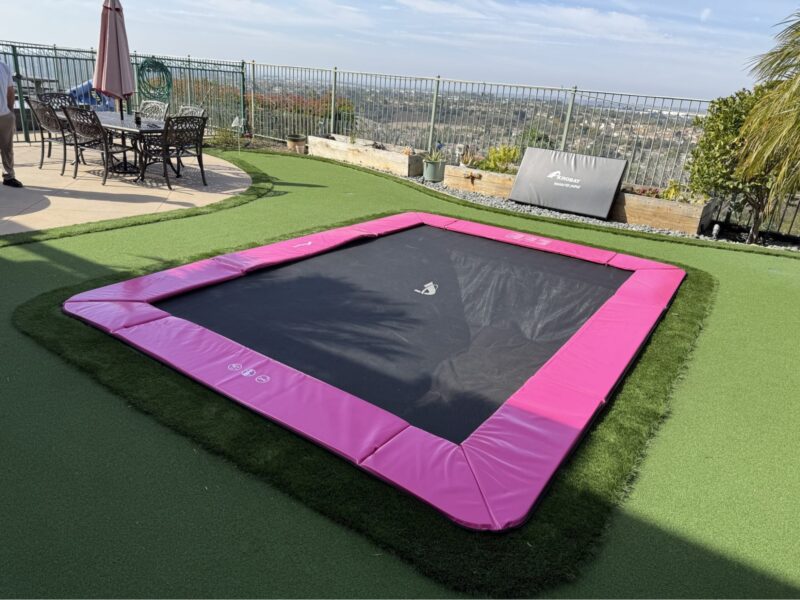
🛒As Seen on Picture : 14ft x 10ft Akrobat Primus Flat LIMITED EDITION PINK PAD
In-Ground Trampolines sit flush with your lawn, eliminating the need for ladders and reducing fall height. Many parents appreciate the sleek look and added safety, especially when managing impulsive or risk-prone ADHD kids. Plus, the reduced visual height can make the trampoline feel less intimidating for anxious or sensory-sensitive children.
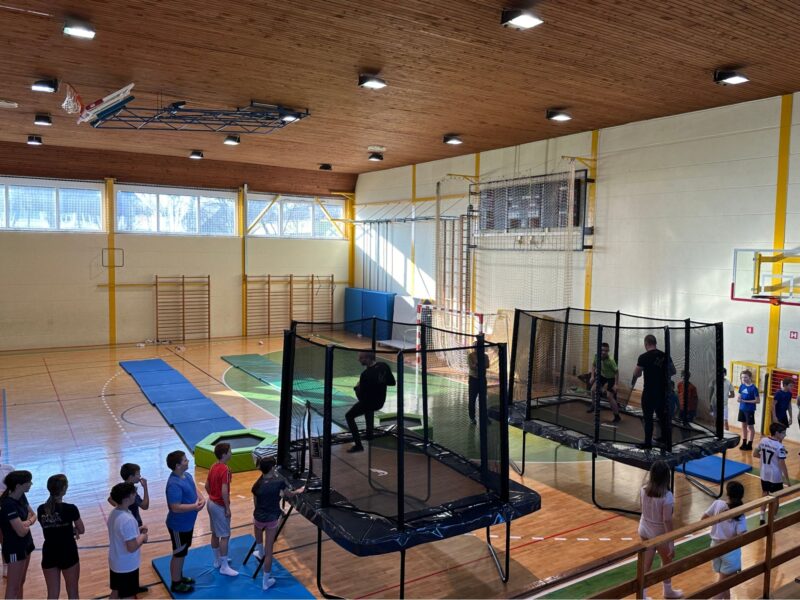
🛒Find Akrobat’s Best Above Ground Trampolines Here
Above-Ground Trampolines are more affordable upfront and easier to relocate if needed. With the right safety enclosures (which we provide), they’re also extremely secure. If you’re looking for flexibility or have uneven yard space, above-ground might be the better choice.
Why Akrobat’s Non-Toxic, Durable Designs Are Ideal for ADHD Families
Here’sanother area where AkrobatUSA stands apart and why we’re so passionate about what we build.
Every Akrobat trampoline is made from non-toxic, EU-certified materials, ensuring your child isn’t exposed to harmful chemicals during play. Our heavy-duty frames and mats are engineered to withstand 2.5 million jumps, meaning they hold up beautifully under daily ADHD-level energy. And our AkroVENT® technology offers a softer, joint-friendly bounce that’s gentle on growing bodies.
We also back our products with one of the best warranties in the industry. So, if you’re looking for a way to help your ADHD child thrive; to create a backyard space where they can jump, laugh, focus, and shine, we invite you to explore Akrobat’s premium trampoline line.
