
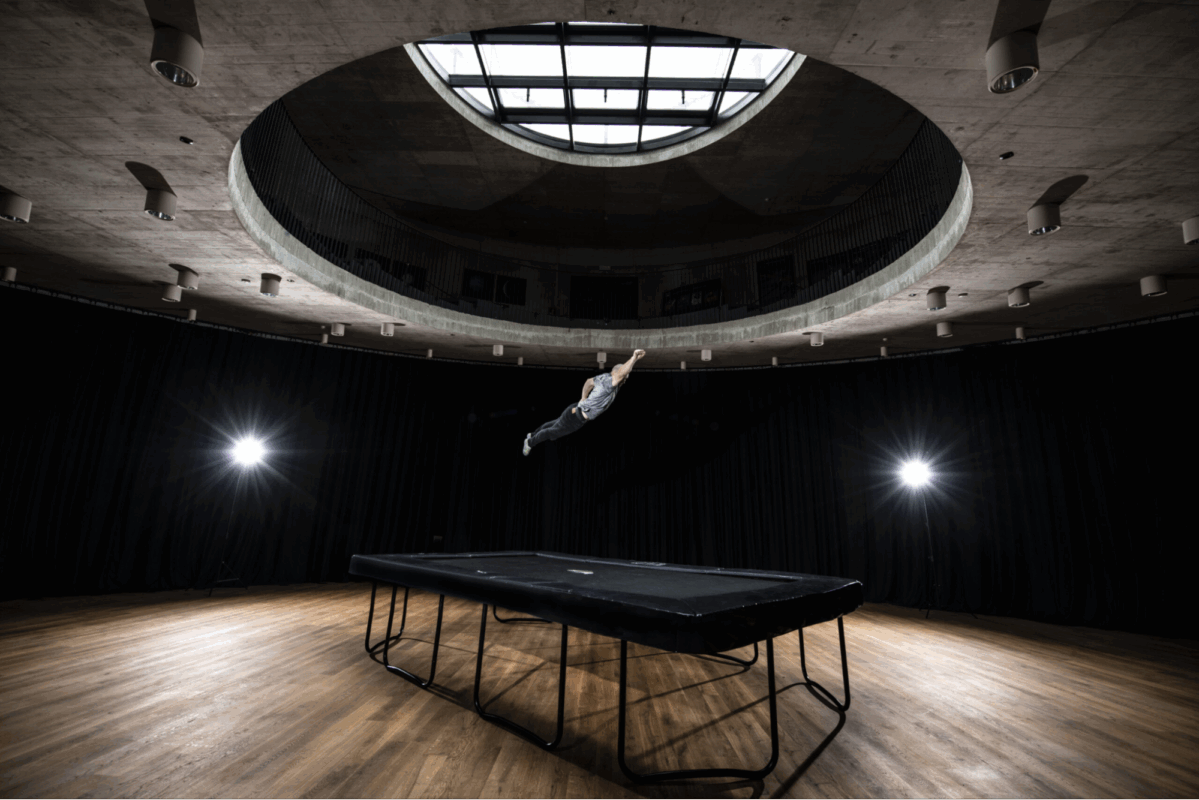
Let us share something that surprises a lot of people: trampoline jumping isn’t just play, it’s precision training disguised as fun.
Every bounce is a biomechanical symphony. Your legs generate explosive force during takeoff, your core fires up to keep you stable mid-air, and your stabilizers fine-tune your balance the moment you land. And here’s the kicker, it all happens on a forgiving surface that absorbs impact instead of punishing your joints. It’s one of the rare forms of exercise that builds strength, boosts heart health, and supports your body without breaking it down.
Why Trampoline Jumping Is More Than Just Fun
Every bounce on a trampoline is powered by a vertical jump, a plyometric movement that requires explosive strength. Your body loads and fires in rapid succession; from your glutes and quads during takeoff to your calves, core, and stabilizers as you control your landing. Unlike hard ground, which punishes your joints with each impact, the trampoline absorbs force and redistributes it across the surface. The result? You’re training muscles, improving cardiovascular endurance, and protecting your body all at once.
And yes, it tones. We heard the question all the time: “Does trampoline jumping actually tone or just burn calories?” The truth is, it does both, exceptionally well. Scientifically, studies (including research by NASA) show that rebounding activates more muscle groups and burns more calories per minute than running.
The beauty of it is that you don’t need an hour-long, high-impact gym routine. You need a smart, sustainable way to move your body. So, if you’ve underestimated the trampoline before, consider this your wake-up call.
Check Out 17ft x 12ft XCITYX Akrobat Above Ground Trampoline Here
Muscles That Work Hard While You Bounce
Jumping on a trampoline doesn’t just get your heart pumping, it triggers a symphony of muscle engagement throughout your body. From your core and quads to your calves and stabilizers, every bounce is a full-body recruitment mission.
Core Muscles (Abs, Obliques, Lower Back)
Your core does more than you think during every trampoline jump; it keeps you balanced, aligned, and in control. Whether you’re bouncing gently or going all out, your abs, obliques, and even pelvic floor are working hard to stabilize your body with every jump and landing.
Worried you’re only using your legs? Don’t be. Core engagement is all about intention. Stay upright, pull your belly in, and focus on control, not just height. Want to level up? Add high knees or twists to hit those obliques.
Our AkroVENT® jump mats are made to support this, with just the right bounce to activate your core with every hop.
Quadriceps & Hamstrings (Front & Back of Thighs)
Every trampoline jump starts with hip extension and knee flexion aka your quads and hamstrings doing their thing. Your quads power your lift-off, while your hamstrings take charge on the landing, helping you stay in control and absorb impact. That stretch-under-tension move? It’s why rebounding builds real strength and stability.
Wondering if trampoline workouts can replace leg day? Absolutely, if you’re intentional. Mix in squat jumps, tuck jumps, and big explosive bounces to hit those key muscles with less joint strain and better balance.
Glutes (Your Power Center)
Your glutes aren’t just for looks; they’re the driving force behind every jump. They fire up during takeoff and help stabilize you on the way down, keeping your body aligned and shock-absorbed.
We’ve seen trampoline training seriously boost glute power. It’s plyometric strength training, minus the joint strain.
Think squats are the only glute builder? Not quite. Jump with good form, squeeze your glutes on lift-off, and stay hip-aligned, you’re basically doing glute reps on repeat, just way more fun.
Calves (Gastrocnemius & Soleus)
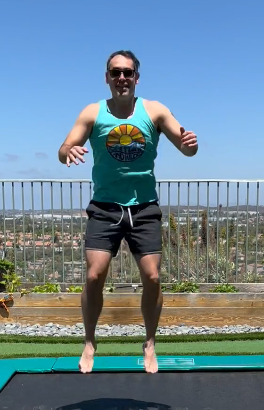
Don’t sleep on your calves, they’re the final push in every powerful jump. That toe-pointing motion (aka ankle plantarflexion) activates your gastrocnemius and soleus, boosting height, landing control, and muscle endurance.
Thanks to the trampoline’s softer surface, you can get more reps in with less impact: hello, stronger calves and goodbye, shin splints.
If your knees hurt after bouncing, chances are it’s form—or a cheap trampoline. That’s why we created the AkroVENT® mat: 62.7% softer bounce to cushion your joints and still give your calves the challenge they need.
Stabilizers (Feet, Ankles, Hips, Spine)
Every bounce challenges your balance, activating the small stabilizer muscles in your feet, ankles, hips, and spine to keep you steady.
Unlike gym machines that guide your moves, trampolines demand constant micro-adjustments, helping you build coordination, balance, and body awareness (aka proprioception).
Can trampoline workouts fix muscle imbalances? Not instantly but they’re great at revealing weak spots and helping both sides of your body work in sync. Over time, your strong side chills out, and your weaker side steps up.
If you’re looking for an activity that strengthens the muscles others forget, this is it.
Comparing Trampoline Training to Other Workouts
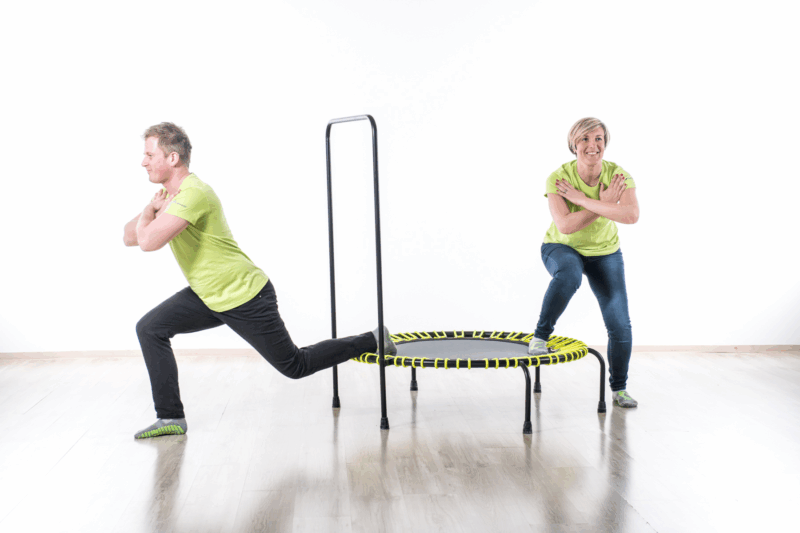
Too many workouts break you down before they build you up. That’s where trampoline training offers a serious edge. Let’s see how it stacks up against other popular forms of cardio and core work.
👉As Seen Here Picture: Akrobat Speed Bouncer Trampoline
Trampoline vs. Jump Rope or Running
Look, we’ve got nothing against jump rope. It’s great. But if we’re talking muscle activation, joint health, and sticking with a workout long-term, trampolines take the crown.
Jumping rope and running pound your joints with impact. Trampolining? It absorbs that shock, giving you a full-body workout without the wear and tear.
And fun fact.
NASA found trampolining to be 68% more efficient than running for burning calories. More muscle engagement, especially in your core and stabilizers with way less stress on your body.
So when people ask, “Which builds more muscle: trampoline or jump rope?” the answer could be for functional strength, balance, and long-term gains you’ll actually enjoy? Trampoline, hands down.
Why Rebounding Beats Crunches for Abs
Might be controversial, but doing endless crunches for core strength? Kinda missing the point and maybe wrecking your back.
On a trampoline, your core works through every phase: lift-off, airtime, landing. It’s not just your abs, it’s your obliques, lower back, and pelvic floor, all firing together while you stay upright and aligned with gravity.
Bonus: no spinal crunching, no neck strain. Just dynamic movement that trains your core and gives you cardio and coordination in one go.
The AkrobatUSA Advantage: Trampolines That Train Smarter
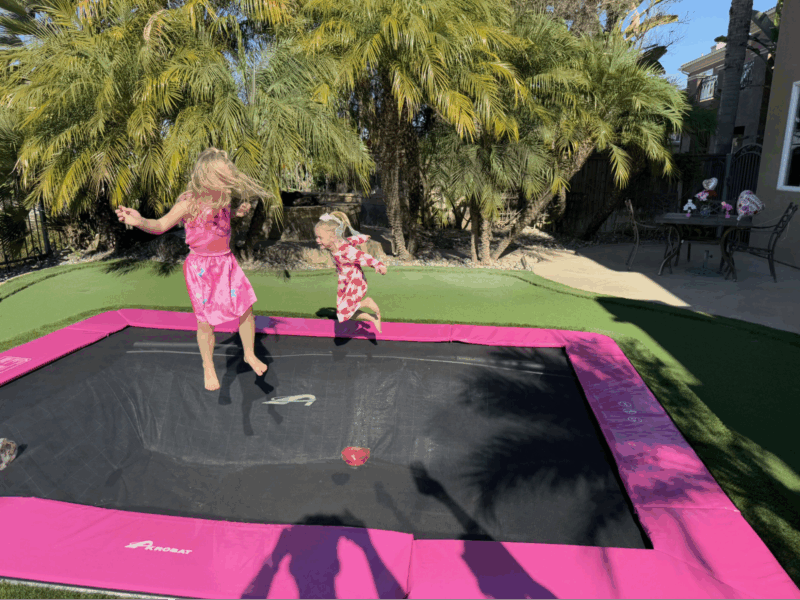
AkrobatUSA doesn’t just manufacture trampolines. We engineer performance platforms designed for real training and real longevity. Every jump on an Akrobat trampoline is backed by technology that maximizes muscle activation, enhances aerobic output, and reduces risk of injury.
Let’s start with the AkroSPRING® system. It’s a precision-calibrated suspension network that delivers the kind of bounce serious jumpers dream about. It’s responsive, controlled, and consistent, so whether you’re doing tuck jumps or balance drills, your body can move efficiently.
Then there’s our AkroVENT® jump mat, which is one of the amazing muscle-friendly innovations in this industry. With 62.7% softer bounce absorption, it reduces joint strain and keeps your muscles active for longer sessions without fatigue. That means more jumps, better conditioning, and faster recovery.
Our trampolines are also versatile. They’re used by professional gymnasts, adaptive athletes, rehab facilities, and everyday families who simply want a better way to stay active.
If you’re serious about getting more from every bounce; whether it’s strength or stamina AkrobatUSA is where that journey begins.
👉 Explore our collection of in-ground and above-ground trampolines, and discover what it feels like to train smarter, bounce safer, and get more out of every movement.
