
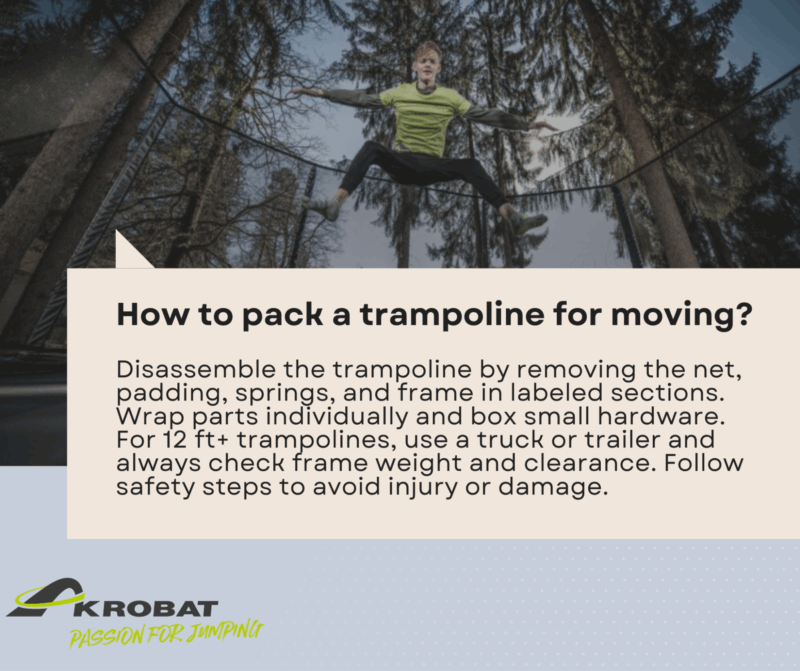
Disassemble the trampoline by removing the net, padding, springs, and frame in labeled sections. Wrap parts individually and box small hardware. For 12 ft+ trampolines, use a truck or trailer and always check frame weight and clearance. Follow safety steps to avoid injury or damage.
✔️ Quick Packing Checklist
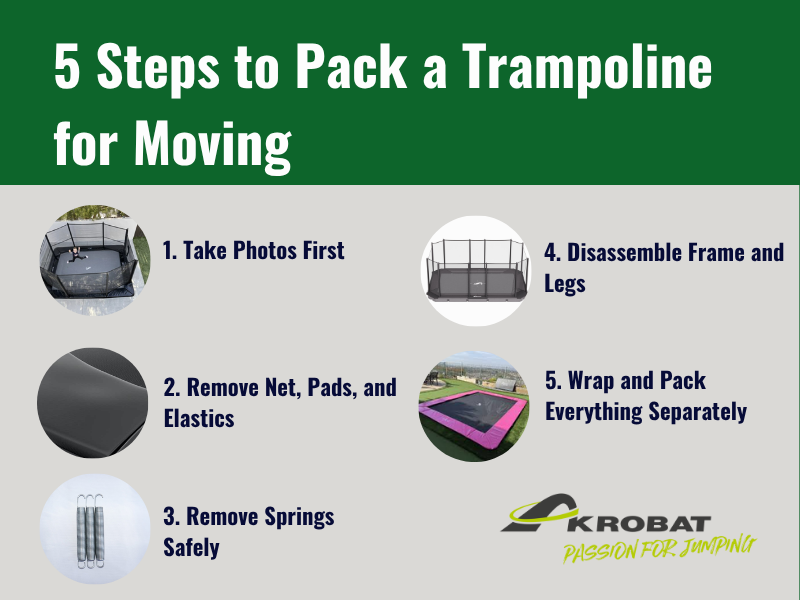
- Take photos of your trampoline from all angles before taking it apart.
- Remove the net, pads, and elastics carefully—untie, don’t cut.
- Use a spring tool to remove every 3rd spring first and release tension evenly.
- Disassemble the frame and legs with a partner; label and bag all hardware.
- Wrap metal parts in blankets; pack the mat, net, and pads separately.
- Transport in a truck or trailer, secured with straps; don’t stack anything on top of soft parts.
Packing a trampoline for moving starts with one non-negotiable rule: disassemble it in labeled sections, wrap every part for protection, and never toss soft and metal components in the same box.
Use a spring puller tool, ziplock bags for hardware, and moving blankets to protect every component. Whether you’re moving across the yard or across the country, the goal is to keep the trampoline intact, functional, and ready for safe reassembly.
At AkrobatUSA, we work with families moving high-quality trampolines every season.
Whether you’re relocating an in-ground model, hauling a full-size rectangle trampoline, or just need advice on how to avoid tearing the mat mid-move, we’ve seen it all, and we’ve got a solution.
If you’re just looking for a quick how-to, you have every step here. And if you want to avoid the most common pitfalls, and understand why trampoline weight, frame design, and material condition matter so much, we’ll walk you through it. Keep reading.
Why Trampoline Moving Requires Planning
- Moving a trampoline involves handling a large, irregularly shaped piece of equipment designed for stationary use.
- High-performance models, such as those from Akrobat, require a specific approach due to their design.
- Trampoline construction varies; entry-level models can be bent or squeezed through tight spaces.
- Models with heavy, hot-dip galvanized steel frames (like Akrobat’s) necessitate strategic disassembly and packing.
- A 12 ft+ rectangle trampoline from Akrobat can weigh significantly more than typical alternatives, providing stability and durability but requiring a detailed moving plan.
- Adequate clearance (4–6 ft) around the trampoline is crucial for maneuvering parts, whether through a gate or into a trailer.
- For in-ground models, drainage and panel removal must be considered.
- Addressing these details ensures a smooth relocation and prevents damage.
Tools & Supplies You’ll Need
Before you begin, gather everything you need in one place. You don’t want to pause halfway through disassembly because you’re missing the right tool.
Here’s what we recommend for trampoline packing:
- Spring puller tool (also called a trampoline hook)
- Ziplock bags for bolts, nuts, and small parts (label each by section)
- Furniture blankets or moving pads
- Bungee cords for bundling frame parts
- Ratchet straps if using a truck or trailer
- Optional but helpful: gloves, safety glasses, moving dolly
You won’t need specialized tools if your trampoline uses AkroCLICK® connections, our no-screw, tool-free system lets you disassemble the frame securely without added hardware.
It’s one of the ways we reduce complexity and risk during setup and breakdown.
Step-by-Step: How to Disassemble a Trampoline
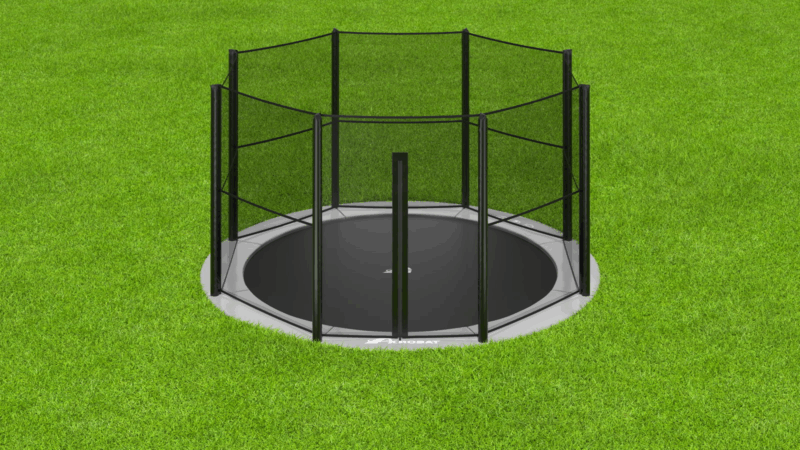
Featured Product: 12ft Round Akrobat Primus Flat In-Ground Trampoline – Anthracite Grey
1. Take Photos First
Before you touch a single bolt, walk around the trampoline and take reference photos from every angle, top, underneath, frame corners, net attachments.
These will be invaluable when you’re staring at a pile of parts in your new backyard, wondering how it all fits back together.
2. Remove the Net and Enclosure Poles
Start with the net system. If your model allows it, keep the poles intact to save time later. Otherwise, detach each component carefully. Be sure to untie or unhook all connection points, don’t force or bend any part out of place.
Pro tip: store foam padding separately from the metal poles to avoid compression marks or punctures during the move.
3. Remove Frame Pads and Mat Elastics
Once the enclosure is down, unfasten the frame pads and mat elastics.
Untie all toggles or elastic loops, cutting them might feel faster, but it adds cost later.
Clean the pads with water (avoid detergent, which can damage fabric coatings) and let them dry before boxing.
4. Safely Remove the Springs
Now it’s time for the most delicate step, removing the springs. This is where people get hurt if they rush or skip precautions.
Use a spring puller and remove every third spring first to reduce tension across the mat. Always pull toward the center, not outward. Gloves and safety glasses aren’t optional here, springs under tension can snap back fast.
Clear kids and pets from the area before you begin.
As you remove the springs, store them in ziplock bags labeled by frame section. This makes reassembly faster and prevents uneven tension when you’re reinstalling the mat.
Never mix them into a loose box, springs can pierce or tear padding and netting during transport.
5. Disassemble the Frame and Legs
With the mat and springs removed, you’re ready to take down the frame. This is where the true weight of a trampoline reveals itself, and where the quality of your frame matters most.
Start by loosening the bolts or connectors at the leg junctions. If your trampoline uses AkroCLICK® tool-free fittings, the process will be much faster and cleaner, no hunting for the right wrench.
We recommend working with a partner when lifting off the circular frame or rectangular rails.
Even though Akrobat frames are engineered for precision alignment, they’re substantially heavier than standard retail models. That extra weight means fewer weak points, but it also means better balance and support are needed during takedown.
As you remove the legs, detach every second leg first to keep the structure from tipping. This staggered removal method ensures the frame remains balanced until you’re ready to lift the final sections.
Be sure to label each leg and connector as you go. Frames look symmetrical, but mix-ups can lead to alignment issues later.
6. Box, Bag, and Wrap Every Component
Now that your trampoline is fully disassembled, take time to pack each component with care. Don’t cut corners here, how you pack it will directly affect its lifespan.
- Wrap every metal part (frame rails, legs, connectors) in thick furniture blankets or padded moving wraps. Use bungee cords to secure each bundle.
- Keep netting, pads, and the mat separate from metal pieces. Do not stack anything soft directly against springs, bolts, or frame rails. That’s the fastest way to puncture or tear your padding.
- Use clearly labeled ziplock bags for all hardware, screws, bolts, washers, and tape them directly to the corresponding frame section or box.
If your mat folds easily, store it flat in a clean, dry box. For older mats that have lost flexibility, avoid aggressive folding that could crack the fibers. When in doubt, roll the mat loosely to preserve integrity.
This is also where most people worry:
Will I lose bolts or small parts?
You won’t, if everything is bagged and labeled right away. Skip this step, and you’re stuck matching mystery bolts to 12 ft rails at dusk.
How to Move a 12 Ft or Larger Trampoline
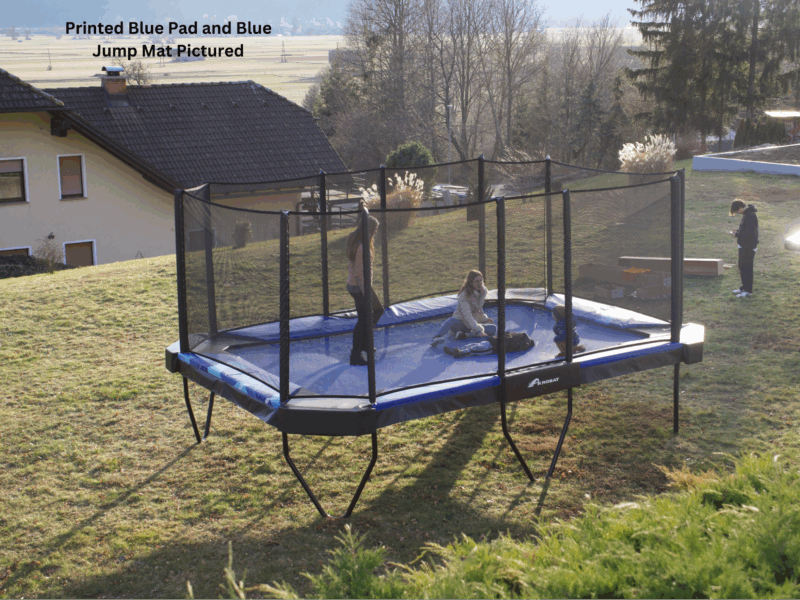
Featured Product: XCITYX 17ft x 12ft Akrobat Above Ground Trampoline
Moving a full-size trampoline isn’t just about packing, it’s about choosing the right transportation method based on your model and layout.
Option 1: Move It Assembled (Short Distance)
In rare cases, you can move a trampoline without taking it apart, but only if:
- You have a large enough open path (no tight gates or obstacles)
- You’re moving it a very short distance, like within the same yard
- You use trampoline wheels or recruit 3–4 people to lift carefully
We’ve seen families lift smaller round models and carry them across lawns, but for a heavy-duty rectangle trampoline from Akrobat, partial disassembly is almost always the smarter route.
The weight alone makes “just lifting it” risky and inefficient.
Option 2: Use a Truck or Trailer
This is the most effective way to move a fully or partially disassembled trampoline over long distances.
- Measure your trailer or truck bed to ensure it fits the width and length of the frame sections
- Lay down blankets first, then secure the parts using ratchet straps
- Watch out for clearance, enclosure poles can raise the overall height enough to cause problems under bridges or in tight urban streets
- If you’re transporting an Akrobat trampoline, consider the additional weight when choosing your vehicle; the high-grade steel frame adds stability and lifespan, but also mass
How do you transport a 12 ft trampoline?
Disassemble it carefully, bundle and wrap each part, and use a vehicle that can handle both the size and weight, especially if it’s an Akrobat model.
Option 3: Hire Trampoline Movers
If disassembling a trampoline sounds overwhelming, or if you’re dealing with rusted bolts, an in-ground setup, or lack the right equipment, professional movers can be worth the investment.
This is especially true for larger, premium trampolines like those from Akrobat.
A trampoline moving service typically includes:
- Full disassembly and packing
- Transport in a suitable vehicle
- Reassembly at your destination
Costs often range from $300–$500 depending on distance, trampoline size, and whether accessories are included.
While that might sound like a lot, it often offsets the risk of damage, injury, or wasted time.
Can movers take apart a trampoline for me?
Yes, and for families relocating with an AkrobatUSA model, it can be the most efficient option.
Storage & Reassembly Tips
Moving is only half the job. How you store your trampoline, and how carefully you reassemble it, matters just as much.
If you’re storing before reinstalling:
- Keep all soft components (mat, net, pads) completely dry before boxing
- Avoid stacking heavy items on top of the mat to prevent creasing or cracking
- Store indoors or in a weather-protected space if possible, UV rays and frost degrade materials faster than most realize
When reassembling:
- Use the reference photos you took during disassembly
- Check every component for wear, rust, or frame distortion
- Replace any bent bolts, cracked plastic caps, or worn pads
- Always maintain 4–6 ft of clearance around the trampoline once it’s set up again
If you own an Akrobat trampoline with AkroCLICK® technology, reassembly will be faster and more precise. No tools, no loose bolts, just a clean fit that clicks securely into place.
It’s one of the reasons our customers stay with us across multiple moves.
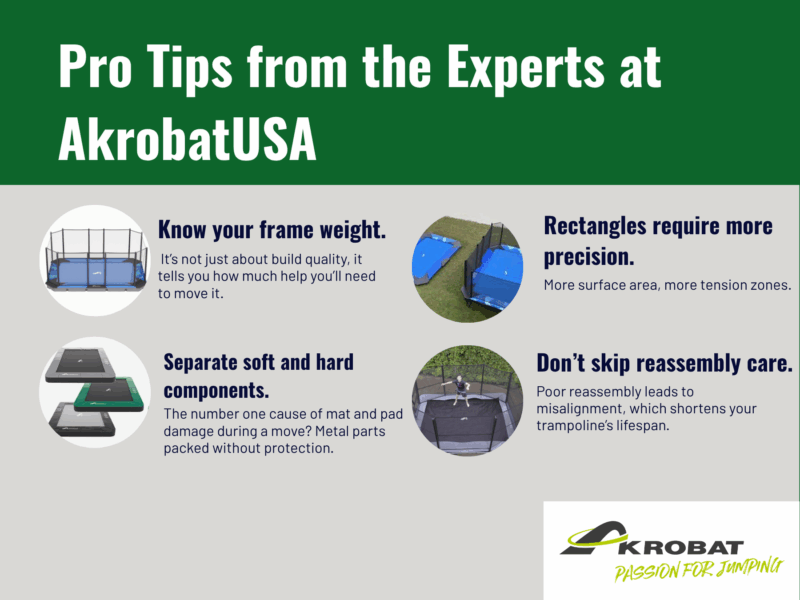
FAQs: What People Also Ask
- What’s the best way to transport a trampoline long-distance? Disassemble it completely. Wrap every component and box all hardware. Never strap a fully assembled frame to a moving truck, it risks frame warping, net tearing, or total loss in transit.
- How do I weigh down a trampoline after moving? Use in-ground anchoring systems or stabilization kitsl. While some people use sandbags, we don’t recommend them as a long-term solution, they degrade quickly and interfere with bounce performance.
- Can I keep the mat folded? Only if it’s completely dry and the material is still pliable. Older mats may crack when folded sharply. Rolling loosely is a safer option.
- Will my trampoline survive the move? Yes, if you disassemble and pack it properly. The biggest risks during relocation come from rushed packing or skipping padding protection. Trampolines like Akrobat are built for durability, but even top-tier components need care in transit.
- How can I reassemble my trampoline without instructions? Use the photos you took before takedown. Match labeled hardware bags with frame sections, and reference any documentation from the original purchase. AkrobatUSA customers can contact our U.S.-based support team for reassembly tips and technical guidance.
Final Checklist: Pack and Move Like a Pro
- ✅ Take reference photos before disassembly
- ✅ Use spring tools and remove every third spring first
- ✅ Label all bags and boxes clearly by frame section
- ✅ Never mix padding or nets with metal components
- ✅ Check trampoline frame weight before choosing transport method
- ✅ Inspect all parts before reassembly
- ✅ Reassemble with care, or get help from professionals
- ✅ Store components in dry, temperature-controlled areas when possible
Move Smarter with AkrobatUSA
If you’re reading this, chances are you care about doing things the right way, just like we do.
Relocating a trampoline is more than a chore. It’s a project that, when handled right, lets your investment continue delivering for years to come.
At AkrobatUSA, we don’t just sell trampolines, we help families protect what they’ve already invested in.
Whether you’re transporting a high-performance rectangle trampoline for sports training or a round backyard setup for young jumpers, we offer the guidance and gear that make the move smoother.
Need help reordering parts, verifying specs, or selecting the right new model for your new yard?
The AkrobatUSA team is here to assist. We offer U.S.-based customer service, premium European-manufactured trampolines, and tool-free frame systems designed with real families in mind.
👉Shop AkrobatUSA trampolines or contact our team for support that moves with you.
