
The key to an ideal in-ground trampoline is the hole you dig.
Most people only focus on what’s above ground, but a poorly planned pit (wrong depth, bad drainage, unstable soil) can ruin your bounce, shorten your trampoline’s life, and even pose safety risks.
This guide gives you everything you need: measurements, soil tips, drainage advice, tools, and real cost breakdowns. Let’s dig in the right way.
Why Proper Planning Matters Before You Dig
Before you lift a single shovel, you need to map out precise dimensions, understand your soil, and gather the right tools or you risk wasting time, money, and energy.
Mapping Out Dimensions for Safety and Performance
For a trampoline to perform at its best (meaning a strong, even bounce and a stable structure) your pit must be the right depth and width.
Typically, you’ll want to dig to match the trampoline frame height, which averages around 33 cm (or about 10 inches) for most models. This allows the frame to sit flush with the ground, eliminating dangerous fall heights and making it easy for kids to climb on without ladders.
As for the width, you need to match the trampoline’s overall size plus a few extra inches, usually 3 to 5 inches, to allow for easy positioning, airflow, and frame adjustments. Digging too small leads to frustrating repositioning and potential damage; digging too large wastes time and labor.
Checking Your Yard and Soil Conditions
Before you dive into digging, take a close look at what you’re digging into.
- Soft topsoil? You’re in luck, this is the easiest to dig by hand.
- Clay-heavy or rubble-filled ground? Get ready for extra muscle or mechanical help.
- Sloped yard or nearby tree roots? Here’s where planning really matters.
Can you dig a pit on a slope without causing erosion? Yes but you’ll need to factor in slope stabilization techniques, like retaining edges or graded pit shaping, to ensure long-term safety. And while digging near trees might seem harmless, remember: roots can shift, expand, or decay over time, undermining the trampoline’s stability or damaging the frame. We always recommend consulting a landscape professional if your layout is complicated by trees or steep terrain.
Tools You’ll Need (and When to Hire Help)
For smaller setups, you can often handle the digging with basic hand tools: shovels, spades, pickaxes, and a wheelbarrow for soil removal. But if you’re dealing with rocky soil, clay, or a large trampoline model, a mini digger or even a hired excavation crew can save you hours (or days) of backbreaking work.
In some cases, you might also need a breaker tool to loosen compacted soil or break through buried rubble layers.
Step-by-Step Guide to Digging a Trampoline Pit
Follow these steps carefully to ensure your trampoline pit is stable and built to last.
Step 1: Mark and Measure
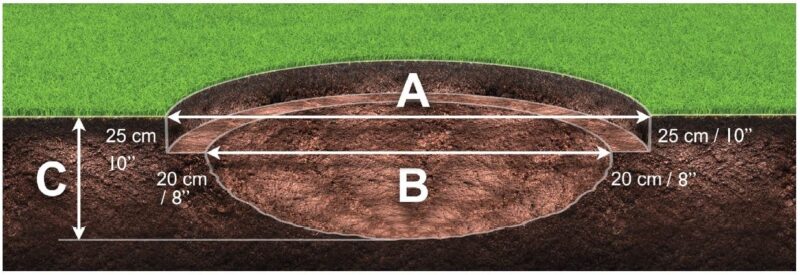
Start by marking both the inner and outer zones of the pit.
The outer zone matches the full diameter or dimensions of your trampoline frame, plus an extra 3–5 inches for fitting ease and airflow. The inner zone (where the mat bounces) will be slightly smaller but deeper, shaped like a bowl to optimize bounce.
Why does this shape matter? AkrobatUSA’s engineering team has found that a bowl-shaped inner area ensures even air movement under the mat, giving you a smooth, energy-efficient bounce.
Measure twice, mark carefully, and save yourself headaches later.
Step 2: Start Excavation
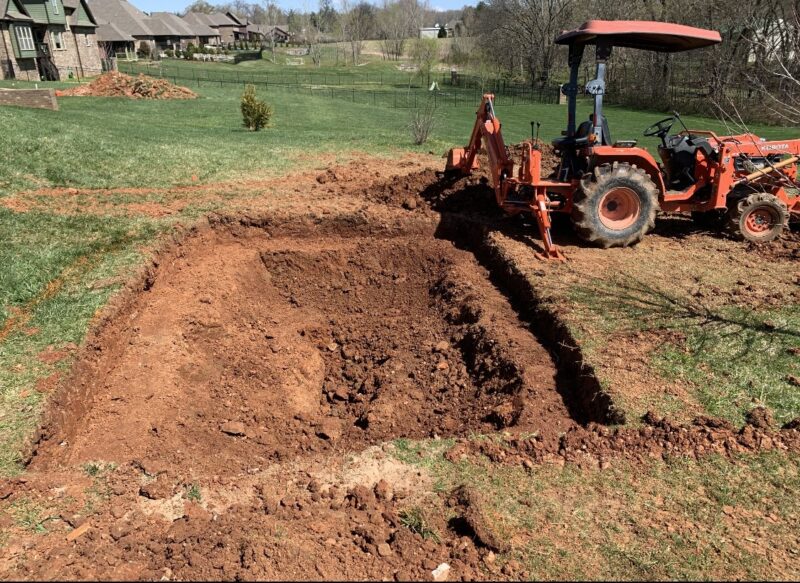
Once you’ve marked your space, it’s time to dig.
For small setups and soft soil, hand digging can save you equipment rental costs but prepare for a serious workout. For larger models or tougher ground (clay, rocky fill), a mini digger can speed up the process dramatically, although you’ll need to factor in access: narrow gates, steep paths, or soft lawns can make bringing in heavy equipment tricky.
Before you dig, call your local utility service to mark underground cables, pipes, or septic systems. A quick call saves you stress, damage, and expensive repairs.
Step 3: Shape, Compact, and Stabilize
With the rough dig done, it’s time to finesse.
Compact the pit walls carefully to prevent collapse. It protects your trampoline’s long-term stability. We recommend using PVC retaining panels around the pit, an extra layer of reinforcement that many generic guides overlook but It’s been the secret to keeping the walls solid year after year.
A frequent question we get: How much space should I leave between the frame and the pit wall?
Ideally, aim for 3–5 inches of clearance. This gives you enough room to adjust the frame during positioning, ensures adequate airflow under the mat (critical for bounce performance), and prevents soil pressure from pressing directly against the trampoline structure.
Drainage Solutions to Prevent Flooding
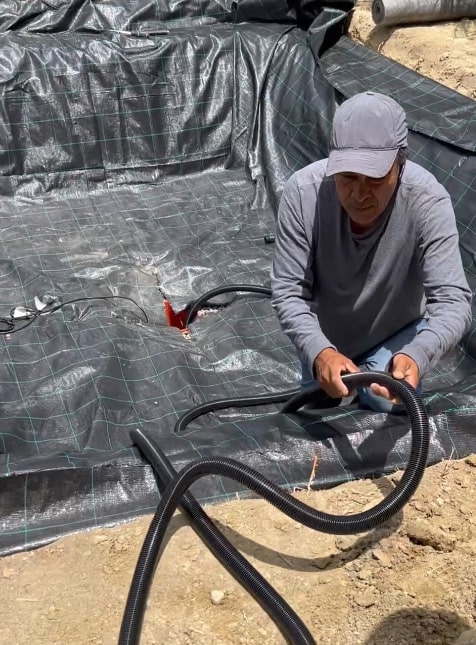
Poor drainage can turn your trampoline hole into a soggy, muddy mess that affects bounce performance and could shorten the lifespan of your frame and springs
Basic DIY Drainage Setups
If you’re in a moderate climate, you may be able to manage drainage with a simple DIY setup. Here’s how:
- Layer gravel at the base of the pit to create a porous foundation that allows water to filter downward.
- Install a perforated pipe system (often called a French drain) along the bottom or edges of the pit, guiding water away from the trampoline zone.
- Shape the pit bottom into a gentle slope (usually toward the center or toward a natural drain point) to prevent water from sitting flat.
A well-designed gravel + pipe system, paired with thoughtful pit shaping, can handle moderate rain or occasional water buildup. Just remember, these setups need regular checking to ensure they don’t clog or settle unevenly over time.
Advanced Drainage (For Wet Climates)
If you live in a region with heavy rain, high water tables, or clay-rich soil, you’ll likely need advanced drainage measures and that’s where a sump pump system comes in.
A sump pump actively removes excess water, keeping the pit dry even during intense storms or prolonged wet seasons. AkrobatUSA offers compatible drainage kits designed specifically for our trampoline systems, allowing you to integrate professional-grade water management directly into your installation.
Managing Soil, Turf, and Landscaping
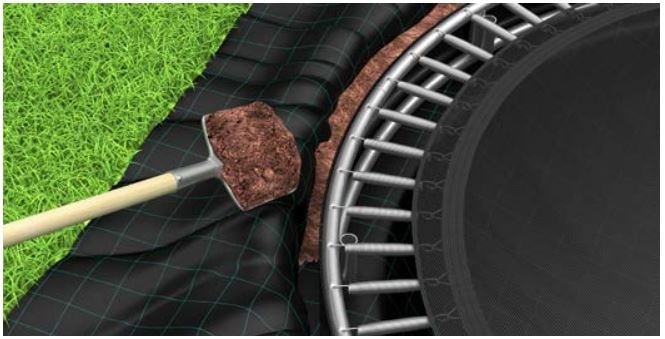
One of the most overlooked parts of digging a trampoline pit is what you do with the leftover soil and how you restore your yard afterward. Here’s what you can do:
Where to Put the Dug-Out Soil
Digging even a small trampoline pit produces a surprising amount of soil. So where should it all go?
- Reuse it for backfilling around the pit edges once the trampoline is installed. You’ll need soil to close small gaps between the frame and pit wall.
- Use it for landscaping elsewhere; build garden beds, level low spots, or reinforce flowerbeds.
- If you have excess, plan ahead for soil disposal: many local landscaping companies will haul it away for a fee, or you can offer it on local community boards (some gardeners will gladly take free topsoil).
Re-Laying Turf for a Clean Finish
To maintain that polished backyard look, save the turf you remove when you dig.
Carefully cut and roll up the top layer of grass before excavation. Once the trampoline is installed and backfilling is complete, you can re-lay the turf around the pit edges, blending the trampoline seamlessly into the landscape. This approach not only looks professional but also prevents bare patches of dirt that can erode or turn muddy.
Pro tip: water the re-laid turf thoroughly and tamp it down to help it re-root quickly.
Avoiding Erosion and Landscaping Damage
Will digging on a slope ruin my yard or cause long-term erosion?
Well, digging on a slope can increase erosion risks if you don’t stabilize the area properly. But with the right precautions, you can protect your landscape:
- Add retaining edges or low walls around the upper side of the slope.
- Use compacted backfill soil to shore up weakened areas.
- Plant groundcover or turf around the pit to anchor loose soil.
If you’re unsure, consult a landscape professional especially if you’re working on a steep incline or near water runoff zones.
🔗More Details on How to Install Akrobat’s In-Ground Trampoline Here
Costs, Time, and Effort: What to Expect
It’s smart to know the cost, time, and energy you’re committing, whether you do it yourself or hire the pros.
DIY vs. Professional Installation Costs
If you’re tackling the dig yourself, the main costs are your time and tool rentals. Here’s a rough breakdown:
- Basic DIY tools (shovels, pickaxe, wheelbarrow): $100–$200.
- Mini digger rental (if needed): $200–$500 per day, depending on location.
- Breaker tool rental (for rocky soil): $50–$150 per day.
- Drainage materials (gravel, pipe, optional sump pump): $100–$800, depending on setup.
Hiring a professional excavation crew dramatically raises costs but cuts down labor and risk. Expect to pay:
- Small pits: $500–$1,500.
- Large or complex pits (with drainage setup): $1,500–$3,000 or more, depending on local rates and soil conditions.
Remember, these numbers don’t include the trampoline itself, just the pit prep.
Time Commitment and Physical Effort
DIY hand-digging a small pit can take 1–2 full weekends of hard labor, especially if you’re working with dense or clay-rich soil. Larger pits or trickier layouts (like rectangular shapes or sloped yards) can stretch into a week or more, even with multiple helpers.
Using a mini digger cuts the physical effort dramatically; what might take a week by hand can often be completed in a single day with the right equipment and prep.
Final Checks for a Lasting Install
You’ve measured, dug, and set everything in place but before you let anyone bounce, final checks help ensure your trampoline is level, protected, and built for years of fun.
Leveling and Adjustments
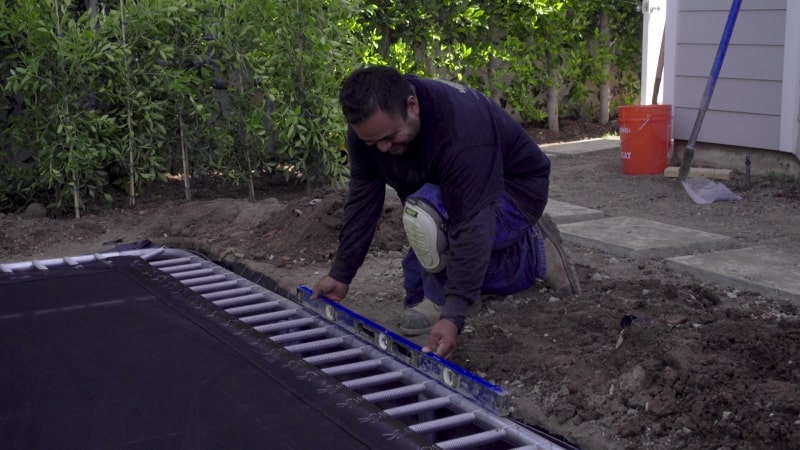
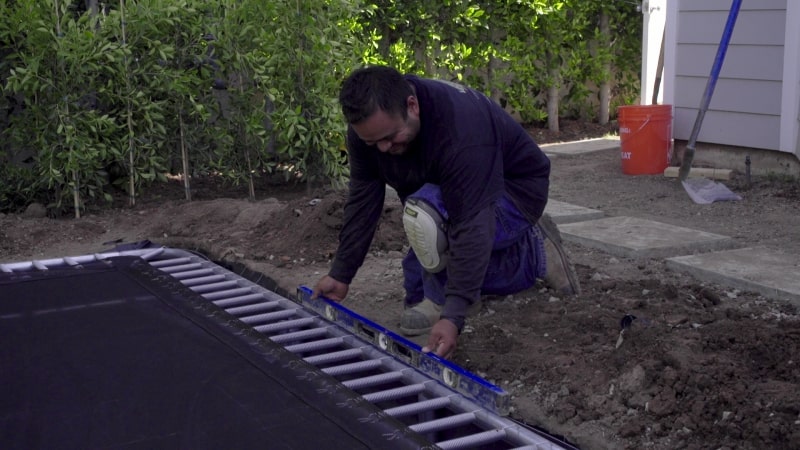
Even a perfectly dug pit can shift slightly once the trampoline is placed. That’s why we recommend double-checking the frame alignment with a level before you finish backfilling.
Weed and Animal Prevention
No one wants weeds growing up through the trampoline, and you definitely don’t want animals nesting underneath.
Starting by installing a weed barrier, Akrobat’s in-ground models include this filter fabric/ weed cloth, eliminating the need for extra materials. For animal prevention, check the pit’s perimeter for gaps and consider adding fine mesh along open edges if local critters are a worry.
🛒 Check Out Akrobat’s Weed Protection Mat Here (included with trampoline)
Long-Term Maintenance Considerations
Even with the best install, you’ll need to plan for light upkeep over the years. Fortunately, Akrobat trampolines are built with non-toxic, EU-certified materials that resist UV, weather, and heavy use, plus, they come backed by a lifetime frame warranty, offering unmatched durability and performance protection.
That means less time worrying about repairs or replacements, and more time enjoying the best bounce your backyard can offer.
So, here’s the takeaway: a successful in-ground trampoline install comes down to proper planning, precise dimensions, effective drainage, and premium materials.
With the right tools, knowledge, and a little guidance, you can achieve a high-performing trampoline setup that lasts for years and looks fantastic doing it.
If you’re ready to elevate your backyard with pro-level quality, go explore
