

We have been in the trampoline industry for over 20 years. We have seen families transform their fitness, athletes protect their joints, and people who thought they hated cardio suddenly light up with joy, all because of the humble bounce.
If you’re new to the trend, you’re maybe wondering. “How long should I jump on a trampoline to actually lose weight?”
That’s exactly what we’re going to answer here, how long you need to jump, how to build endurance safely (even if you’re winded after 2 minutes), and how real trampoline workouts stack up against traditional cardio.
You don’t need a gym. You don’t need to be in shape. You just need a little space, a little consistency, and a trampoline built to do the job right.
Let’s jump in.
How Long Should You Jump to See Real Weight Loss?
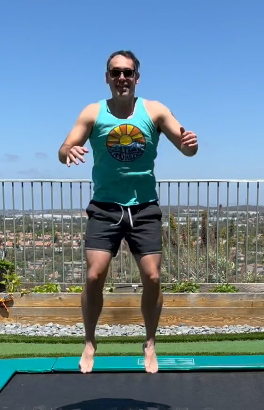
Weight loss isn’t about perfection, it’s about consistency. That’s true whether you’re doing 60-minute high-intensity sessions or hopping on the trampoline for just five minutes before breakfast.
The question isn’t “how long should I jump?”—the real question is: how often can I move my body in a way that feels good and gets my heart rate up? Trampolining makes that easy to answer.
If you’re looking for a general guideline, here’s how rebounder workouts stack up in terms of calorie burn:
⏱️ Quick Glance Chart: Time vs Calorie Burn
| Time | Intensity | Calories Burned (Approx.) |
| 15 mins | Moderate | 80–120 |
| 30 mins | Moderate | 160–240 |
| 45 mins | High | 300–400 |
| 60 mins | High | 400–600 |
These numbers will vary depending on your weight, intensity level, and whether you’re mixing in bodyweight movements or resistance tools. But here’s the big picture: even short sessions can add up fast.
What if You Can Only Do 5 Minutes?
We hear this a lot: “ I get out of breath after just a few minutes… is that even doing anything?”
Absolutely. If five minutes is your starting point, own it. Five minutes of focused rebounding will challenge your legs, fire up your core, and elevate your heart rate. And better yet—it’s easy to stack those minutes throughout the day.
Try this simple approach:
- Break it into sets: 3 x 5-minute bounce sessions throughout the day
- Mix in bodyweight moves: alternate between light bouncing and jumping jacks, squats, bounce punches, or side steps
The real beauty of trampoline training is how adaptable it is. Whether you’re a high-performance athlete or a busy parent who just wants to move more, rebounding meets you where you are.
And if you’re using an AkrobatUSA trampoline, that experience becomes even more forgiving and powerful. The AkroVENT® jump mat absorbs 62.7% more bounce impact, so your joints stay protected and your endurance builds faster.
So start where you can. Stay consistent. You’ll be surprised how quickly five minutes turns into fifteen.
What Happens When You Start Jumping on a Trampoline Daily?
When people ask me for their first rebounding tip, I always say this: don’t let the simplicity fool you.
Your first few minutes might surprise you. One of the first times I jumped with intention, really bounced, not just stood and coasted, I barely made it past three minutes. My calves were on fire after 90 seconds. I remember laughing because I’ve trained on just about every piece of cardio equipment you can imagine. But this?
This was different.
The reason? Trampolining taps into muscles we don’t usually use, tiny stabilizers in your ankles, hips, and core. Even if you’re fit, those underused muscles get hit hard.
So, if you’re gasping at the 2-minute mark, you’re not doing anything wrong. You’re doing it right.
That feeling—jello legs, burning calves, racing heart—is exactly how it should feel when you’re waking up your body with a new movement pattern. I’ve trained professional athletes and total beginners, and everyone starts somewhere. There’s no shame in short sessions.
The trick is progression. Most people can go from 5 minutes to 15 within just 2 to 4 weeks, especially if they stick with it and split their workouts into manageable chunks (like 3 sessions of 5 minutes).
The Science of Weight Loss on a Trampoline (It’s More Than Cardio)
There’s a misconception I hear often: “Jumping on a trampoline can’t possibly be as effective as running.” Here’s the truth—rebounding at a high intensity can burn just as many calories as running, but without the pounding on your knees, hips, and lower back.
A 150-pound person can burn:
- 80–120 calories in 15 minutes of moderate bouncing
- 160–240 calories in 30 minutes
- 400–600 calories in a full 60-minute rebounding session
Now, compare that to running. Running can burn a ton of calories, but at what cost? The wear and tear on your joints adds up, especially if you’re over 30, have a previous injury, or simply prefer a workout that feels less like punishment.
What makes rebounding different is the dynamic movement.
You’re not just bouncing, you’re stabilizing, engaging your core, adjusting posture, using your arms. Every jump is a full-body action. When done right, it elevates your heart rate, builds strength, and trains balance, all at once.
That’s why so many people swap the treadmill for the trampoline. It’s not just efficient—it’s sustainable. And if your goal is long-term weight loss, sustainability is everything.
Why Trampoline Workouts Feel More Fun—and That’s a Big Deal
I’ve trained people who say they hate cardio. They’ve quit countless fitness programs because they dreaded every session. But something changes when you step on a trampoline.
Rebounding doesn’t feel like work—until you realize you’re drenched in sweat and your heart is pounding.
That’s the magic. It’s fun. And fun is underrated when it comes to fitness. The more you enjoy it, the more often you’ll do it. And consistency, not intensity, is what drives real weight loss.
You’re smiling, but you’re sweating. That’s what we tell people when they’re mid-workout and forget they’re exercising. You’re bouncing to music, laughing with your kids, or zoning out to a podcast—and meanwhile, your heart rate is climbing and your muscles are firing.
What Kind of Workouts Work Best for Fat Loss?
Weight loss isn’t just about jumping aimlessly. Trampolines give you the freedom to add a lot of different movements that challenge your body and keep you motivated.
Let’s start with a basic—but highly effective—beginner routine.
🔰 Sample Beginner Routine (15 Minutes)
This routine is designed to elevate your heart rate, activate major muscle groups, and still feel approachable—even if you’re new to working out.
Here’s what it looks like:
- 2 min – Easy bounce (warm-up): Light up-and-down bouncing. Focus on posture and breathing.
- 3 min – Jump jacks: Add speed and full-body motion to raise your heart rate.
- 2 min – Bounce squats: Lower into a squat with each bounce. Great for glutes and legs.
- 2 min – Rest bounce: Dial it back. Gentle bouncing, deep breaths.
- 3 min – High-knees: Drive your knees up with power. Boosts fat burn and strengthens the core.
- 3 min – Cooldown bounce: Return to a relaxed rhythm and let your heart rate lower.
Don’t worry if you need to pause between sets. Most beginners find this routine challenging but doable, and over time you’ll naturally want to push further.
🔥 Want to Burn More? Add Intensity
Once you’re comfortable bouncing for 15–20 minutes, it’s time to step it up.
Here are our go-to methods to turn up the burn without wrecking your joints:
- Bounce with hand weights: A pair of 1–2 lb weights can tone your arms and shoulders while keeping your heart rate elevated. Keep movements controlled and avoid flailing to prevent shoulder strain.
- Try HIIT style: Alternate between 30 seconds of fast, intense jumping and 30 seconds of slow recovery. Repeat for 10–20 minutes. This is one of the most effective formats for burning fat and boosting metabolism.
- Follow guided workouts: There are excellent rebounder workouts on platforms like YouTube. Just make sure the routine matches your fitness level—and your trampoline’s build.
- Add core moves: Seated bounces, tuck jumps, or side-to-side hops engage your midsection in a big way. They’re especially useful if you’re aiming to improve posture or reduce back pain.
And here’s where equipment quality really matters. If your trampoline squeaks, shifts, or limits your movement, you’re going to burn out fast. That’s why we designed AkrobatUSA trampolines to handle serious use with quiet performance, powerful bounce, and pro-level materials. You’ll feel the difference with every rep.
Choosing the Right Trampoline Makes All the Difference
If you’re serious about using a trampoline to lose weight—or even just to move more without hurting your joints, the type of trampoline you choose will absolutely determine your experience.
Some are too stiff. Some feel like toys. And some? They break down after a season or two of regular use.
That’s why we don’t just recommend high-quality trampolines—I use them. Every single day.
At Akrobat, we don’t cut corners. We’ve built our trampolines for real people doing real movement—parents, athletes, beginners, seniors, and anyone who wants their body to feel better, not worse, after a workout.
Here’s what makes Akrobat trampolines different:
- AkroVENT® Jump Mats – Our innovative mat design increases airflow and creates 62.7% softer landings, which means less stress on your joints and more time jumping without fatigue.
- Engineered to Last 2.5 Million Jumps – Yes, really. These are built for the long haul. The frame, springs, and materials are made to endure serious daily use—whether by kids, adults, or elite athletes.
- Quiet, Smooth Performance – No squeaking. No awkward bounce. No jarring stops. Just a pure, fluid experience that helps you stay focused, whether you’re doing cardio, HIIT, or just clearing your mind after a long day.
If you’ve ever stepped onto a flimsy trampoline and felt let down—or even unsafe—know this: the right trampoline doesn’t just protect your body. It unlocks your potential.
Ready to Jump Into Weight Loss?
If you’re looking for a trampoline that’s more than just backyard fun—one that supports your health, protects your joints, and feels incredible to use—
→ Explore AkrobatUSA’s top-rated trampolines built for adult fitness and family fun
We don’t just make trampolines. We make movement possible—at every age, at any fitness level, and for anyone ready to feel strong again.
