
If you’ve ever wondered whether jumping on a trampoline can strengthen the pelvic floor, you’re asking the right question. Whether it’s light bladder leaks, postpartum recovery, or rebuilding core control after years of wear and tear, pelvic floor health is a quality-of-life issue.
In this guide, we’ll walk you through what the research says, who should be cautious, what exercises to start with, and why the trampoline you choose makes all the difference.
So if you’re curious, skeptical, or cautiously hopeful, let’s explore together how a simple trampoline might be your first step toward stronger support and fewer leaks.
What The Research Says About Trampolining For Pelvic Floor
Trampoline workouts are fun, but can they actually help your pelvic floor? Let’s find out!
Over the last decade, a growing body of research has started to catch up with what many practitioners have seen firsthand. Jumping on a trampoline (when done right) can engage and strengthen the pelvic floor.
In clinical studies, trampoline jumping has been shown to increase pelvic floor muscle activation in healthy women. Surface EMG recordings show that the muscles don’t just work passively; they react actively with each controlled landing, especially during the deceleration phase. It’s reflexive, it’s real, and it’s the kind of training most people don’t even realize they’re getting.
In one 12-week study focused on postmenopausal women, those who followed a structured mini-trampoline routine experienced a notable reduction in urinary leakage episodes.
What’s even more impressive is that these improvements weren’t limited to symptoms; participants also showed improvements in pelvic floor reaction time, balance, and even heel bone density. That’s a trifecta we don’t see often in low-impact exercise.
Why does this happen?
Because bouncing loads and unloads the pelvic floor with each jump. Think of it like this. Every time your feet leave the mat, the pelvic floor lifts slightly. Every time you land, it reacts like a shock absorber. That automatic contraction is exactly what builds strength, especially when paired with proper breath control and body awareness.
Now, people often ask: “Is rebounding better for pelvic floor than Kegels?”
Well, it’s not an either-or situation.
Kegels target voluntary contraction, which is beneficial, but trampoline jumping adds reflexive training, the kind that helps during sneezes, coughs, or sudden motion. When done together, they create a much more functional pelvic floor; one that reacts in real-time, not just during isolated reps.
Is Trampoline Jumping Right for Everyone?
Here’s the thing, while trampolines are for everyone, not every trampoline workout is for everybody, at every stage. And when it comes to the pelvic floor, safety starts with knowing your baseline.
When to Be Cautious or Modify
If you’ve been diagnosed with pelvic organ prolapse, significant urinary incontinence, or persistent pelvic pain, it’s good to consult a pelvic floor therapist before starting rebounding. They can assess whether your pelvic floor has the capacity to tolerate the forces of bouncing, and if not, help you build foundational strength first.
A lot of women experience leakage during the first few bounces and worry they’re failing or making things worse. But leakage at the start doesn’t necessarily mean harm, it’s often a sign that your pelvic floor is under-recruited and needs to relearn how to respond to pressure. The good news? With progressive training, many women see leaks diminish or disappear altogether.
Progression is the name of the game.
Don’t jump straight into high, vigorous bouncing. Start with small, controlled movements for just 1-2 minutes, focusing on posture and breath. Build from there, slowly increasing time and intensity as your muscles adapt. Like lifting a weight, your pelvic floor needs time to meet the challenge.
How to Start Trampoline Exercises for Pelvic Floor Health
If you’re serious about using trampoline workouts to strengthen your pelvic floor, let us be blunt: the type of trampoline matters. It’s really about control, surface response, and load on your joints and muscles.
Choosing the Right Trampoline
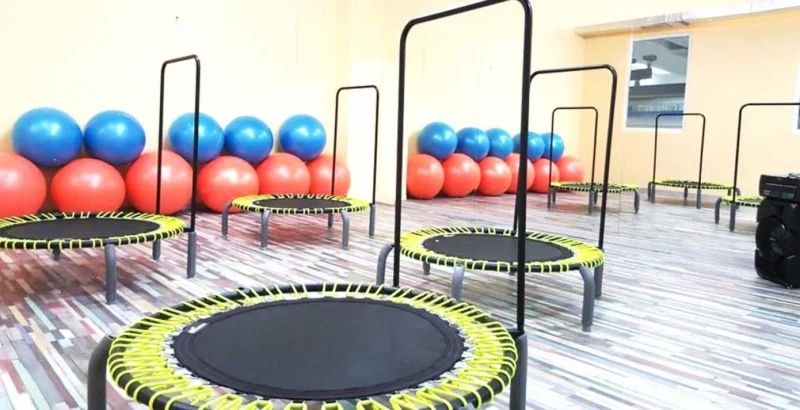
When choosing a trampoline, you’ll find two main categories: mini-trampolines with springs and bungee cord rebounders. Both have their place, but they’re not identical. Springs create a slightly firmer, more responsive bounce, offering clearer feedback for pelvic floor activation. Bungee systems provide a softer, deeper bounce, which can feel gentler but may require more core control to avoid over-sinking.
So, which is better for pelvic floor training?
If you’re starting out, want a more predictable bounce, and need stability for low-impact movements, a quality spring-based trampoline gives you a solid foundation. If joint sensitivity is a bigger worry, or if you prefer a quieter, cushier feel, a bungee may be the way to go.
Our trampolines use engineered spring systems combined with our AkroVENT® mat; a softer, ventilated surface that reduces joint load without sacrificing bounce control. This balance makes it easier for beginners to maintain pelvic floor-friendly alignment without feeling unstable or overwhelmed by too much give underfoot.
🛒Shop Akrobat’s Speed Bouncer As Seen on Picture Here
Beginner-Friendly Trampoline Moves for Pelvic Floor
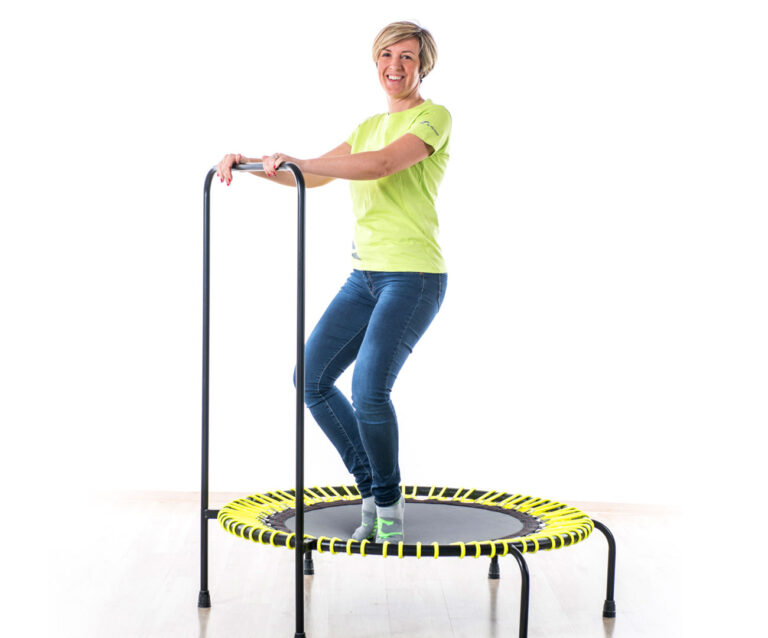
When starting trampoline exercises for the pelvic floor, here’s the golden rule: less is more. You’re not training for high jumps or acrobatics, you’re training for control, coordination, and confidence.
✅ Start with gentle bounces: your feet may not even leave the mat. Focus on pressing down through your feet, feeling the recoil, and letting the pelvic floor respond naturally. Avoid big jumps at first; those come later, once your muscles know how to handle the load.
✅ Keep your feet shoulder-width apart, knees soft, posture tall. This stance helps engage the pelvic floor and inner thighs while maintaining pelvic alignment. Resist the urge to lock your knees or grip your glutes, it’s about lift, not clenching.
✅ Coordinate your breath with each bounce. Inhale as you prepare, exhale and gently lift the pelvic floor as you press down into the mat. Think “zip up” from the inside, not “squeeze.”
One simple tool we recommend? Place a soft Pilates ball (or similar) between your knees while you bounce. Gently squeezing the ball encourages activation of the adductor muscles, which are connected to the pelvic floor. It prevents hip widening and outward rotation, which are frequent compensatory movements.
If you’re wondering, “Are there specific trampoline routines for pelvic floor training?”, absolutely. Here’s a basic starter sequence you can try:
- 10 gentle bounces in place (feet stay grounded)
- 10 small lifts (heels leave mat, toes stay down)
- 10 mini jumps (both feet lift just an inch or two)
- Hold a bounce at bottom for 5 seconds, gently engaging core and pelvic floor
- Repeat sequence twice, resting 30 seconds between sets
As you gain strength, you can gradually increase bounce height, reps, or duration but never at the expense of control.
Beyond the Pelvic Floor: Extra Benefits of Rebounding
When we talk about rebounding, people often start the conversation with pelvic floor goals. But what surprises them (and what we love sharing!) is that the benefits of trampoline workouts go far beyond strengthening the pelvic floor.
First, trampolining is an incredible tool for improving balance, joint stability, and lower body strength. Every bounce demands subtle shifts in posture, micro-adjustments from your ankles to your hips, and engagement from stabilizing muscles you might not even realize you’re training. Over time, this builds a more responsive, resilient body.
And for people in their 40s, 50s, and beyond? There’s a powerful bonus: rebounding supports bone density. Studies have shown that the mechanical loading during trampoline jumping stimulates bone metabolism, particularly in the hips and heels. It’s a simple, enjoyable way to combat bone loss without the harsh impact of pavement or plyometrics.
We’ll never get tired of hearing that people have the confidence to exercise again after leaks. That kind of victory; the shift from fear and frustration to empowerment and pride, that’s why we do what we do; building equipment that helps people reclaim confidence in their movement, one bounce at a time.
At the end of the day, rebounding is a whole-body, whole-person approach to strength, balance, vitality and joy. And that’s something worth jumping for.
👉 Ready to bounce back stronger? Discover AkrobatUSA’s premium trampolines, engineered for durability and pelvic floor-friendly fitness.
