
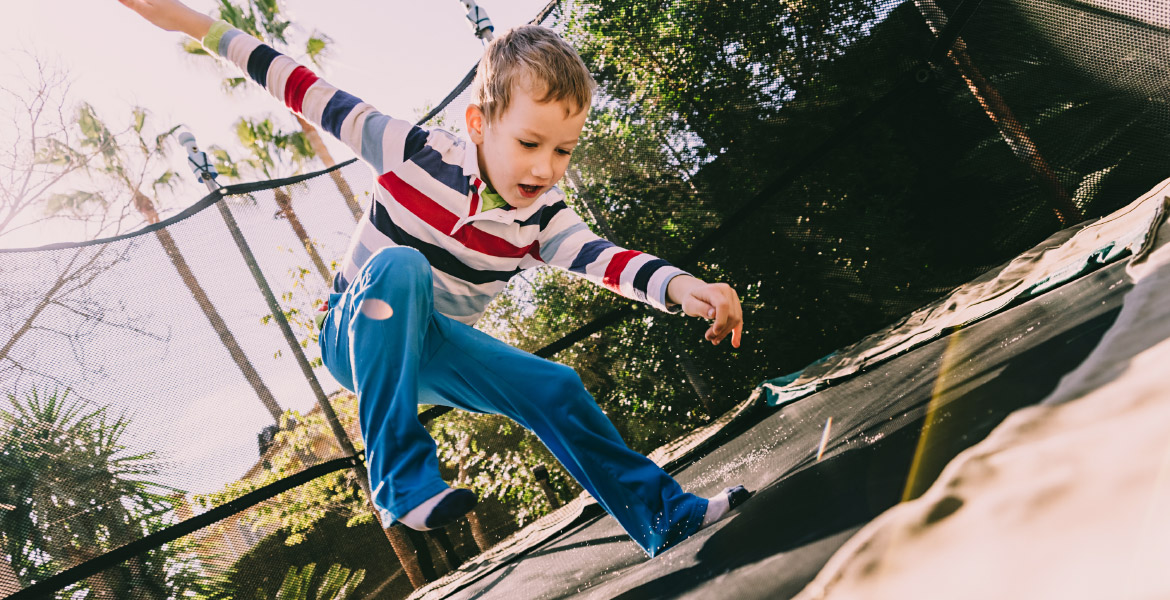
Trampolines offer something few toys do: full-body movement, sensory stimulation, and a way to turn chaos into structure.
In this article, we’re going to unpack exactly how trampolines can support toddler development. You’ll walk away knowing what features make a trampoline toddler-friendly, and which ones to avoid, how to solve the real risks and what to look for if you want a trampoline that won’t just entertain, but elevate your child’s growth.
If you’re tired of saying “No!” every time your toddler wants to jump on the couch, this is for you. Let’s talk about how a bounce might just be the breakthrough your child needs.
What Are the Real Benefits of Trampolines for Toddlers?
1. Physical Development That Starts with a Bounce
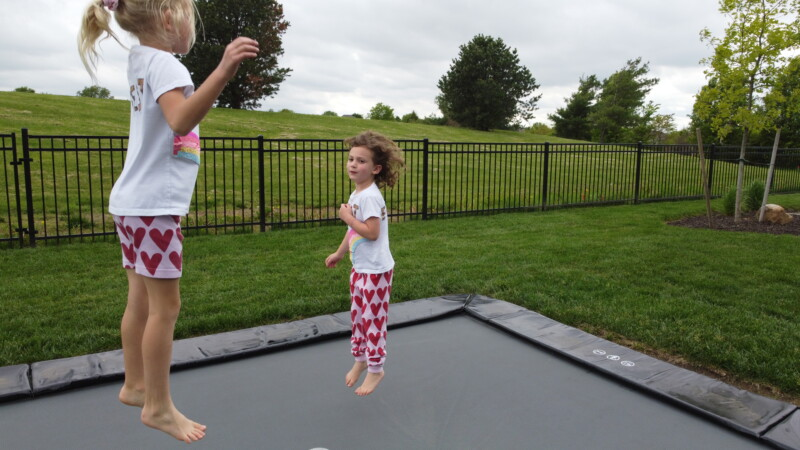
🏆Great Choice for Kids → 10ft x 6ft Akrobat Primus Flat In-Ground Trampoline
Let’s begin with what’s most noticeable: physical transformation. A toddler’s body is constantly building strength, balance, and endurance. And a trampoline, especially one designed for young children, provides a playful way to support that process.
Every bounce encourages a child to stabilize their core, engage leg muscles, and maintain posture as they land. These small movements accumulate into something much larger: stronger bones and healthier bone density during critical developmental years.
Because trampoline exercise is low-impact, it supports strength-building without putting stress on still-growing joints. It’s a way for toddlers to explore their physical ability while enjoying a contained form of fitness.
Think of it as a springboard into stronger coordination, faster reflexes, and full-body awareness.
2. Encourages Sensory and Motor Skill Growth
Toddlers develop motor skills best when they’re fully immersed in sensory-rich movement. That’s exactly what trampolines deliver. As they bounce, the brain receives a steady stream of vestibular input, information about balance, direction, and movement through space.
These subtle adjustments help improve spatial awareness and body control, two pillars of early development.
For toddlers who may struggle with sensory processing or are on the autism spectrum, a baby trampoline can offer regulated, rhythmic movement that helps calm and organize the nervous system. It also supports proprioception, teaching toddlers how their limbs move in relation to their body.
These are benefits most parents won’t notice on day one, but movement specialists and pediatric therapists certainly do.
3. Burns Off Energy in a Healthy, Structured Way
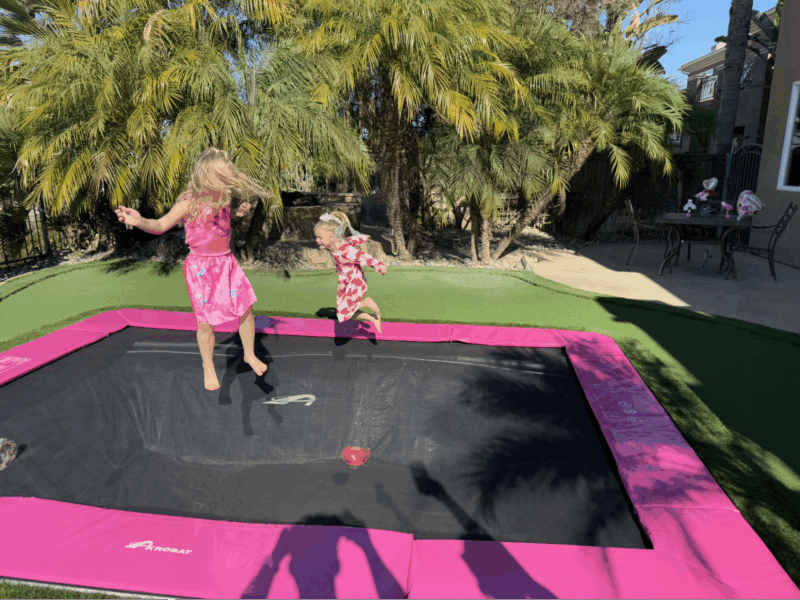
Let’s be honest: one of the biggest draws for parents is that trampolines give kids a way to move with purpose. Unlike running in circles around the kitchen table, bouncing on mini trampolines channels that energy into a repetitive, structured motion that has real developmental upside.
Even better, it promotes better nap routines and deeper nighttime sleep, especially when jumping becomes part of a consistent daily rhythm. On cold or rainy days, indoor rebounders give toddlers a place to move without climbing furniture or testing boundaries. It’s movement they crave, turned into a habit you can trust.
4. Boosts Circulation and Cardiovascular Health
Though it may look like simple play, bouncing is a mild aerobic activity that contributes to cardiovascular fitness. As toddlers jump, their heart rate elevates in short bursts, increasing blood flow and oxygen delivery throughout the body. That circulation boost helps everything from energy levels to brain development.
Because the impact is absorbed by a durable mat and spring system, trampolining protects young joints while still encouraging cardiovascular strength, a rare combo in toddler-friendly physical activity.
5. Builds Early Confidence and Body Awareness
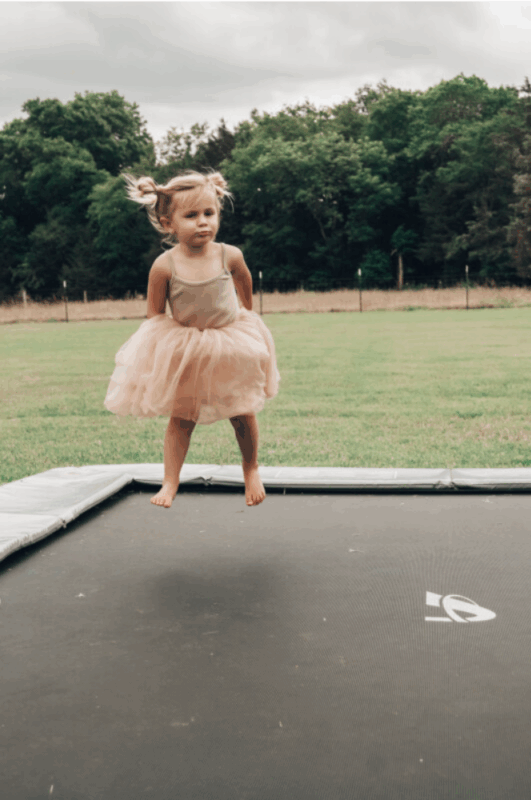
Every jump is a moment of choice and control. Will they bounce high or low? Land on both feet? Try to spin or reach? That freedom to experiment is key to building confidence in toddlers who are still figuring out what their bodies can do.
Mastering bounce control not only builds strength and endurance but also gives young kids a sense of agency. They begin to move with purpose. For timid children, this often unlocks a newfound sense of courage. For more adventurous toddlers, it’s a way to express physical ability without the typical risks of rough-and-tumble play.
6. Supports Emotional Regulation and Reduces Tantrums
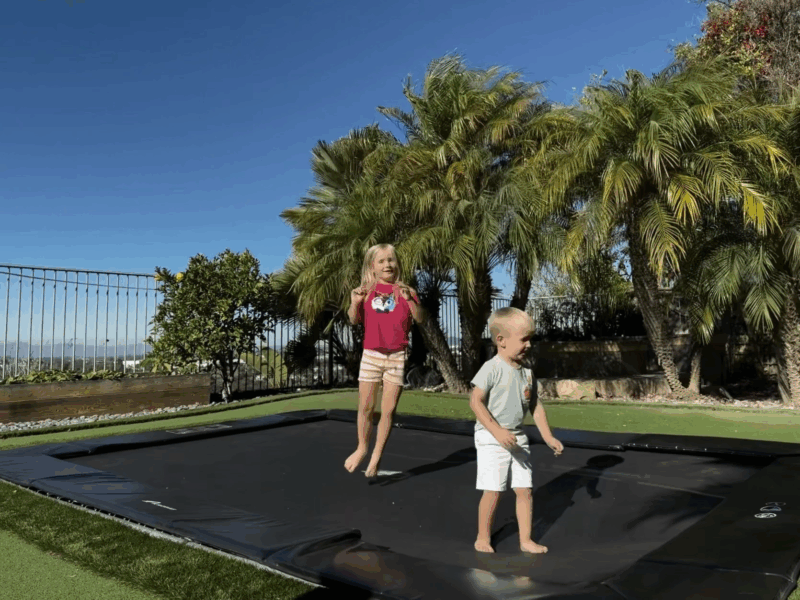
If your toddler has ever gone from meltdown to mellow after physical play, you’ve seen the power of movement on mood. Trampoline time helps toddlers self-regulate through the release of endorphins, the brain’s natural mood boosters. This is especially valuable for strong-willed toddlers or those with ADHD, who often need healthy outlets for intense emotion.
Parents often notice fewer tantrums and improved transitions (like bedtime or mealtime) when their toddlers have had trampoline time earlier in the day. That rhythm of exertion and recovery supports emotional stability, without medication, lectures, or screens.
7. Promotes Imaginative Play and Social Skills
What starts as simple jumping quickly becomes a launchpad for creativity. Toddlers pretend they’re bouncing on clouds, escaping lava, or flying like superheroes. These stories unfold organically and build imagination in a way few structured activities do.
When more than one child is involved, the trampoline becomes a social learning space. Turn-taking, following verbal instructions, and managing excitement are practiced in real-time. Supervised bouncing with siblings or friends gives kids a natural setting for cooperative play, building both relationships and emotional intelligence.
How Young Can a Kid Jump on a Trampoline?
The short answer: it depends on the type of trampoline and supervision. So before deciding on size or setup, it’s worth understanding how age, development, and trampoline design work together.
While full-size trampolines are an exciting investment, not every model is intended for the youngest users. Some children under the age of 6 should not use them without parents since they may not have the built-in balance.
Introducing Movement with Toddler-Friendly Options
For toddlers under 3, movement and bounce can be introduced in structured, adult-led sessions using:
- Mini trampolines with handrails
- Bounce surfaces with limited lift
- Short, supervised sessions (5–10 minutes)
- Hand holding and bouncing with parents is a favorite bonding experience.
These setups aren’t about independence, they’re about building motor skills, sensory input, and confidence, always under close watch.
For children ages 3–5, the picture begins to shift. By this stage, many children begin to show:
- Improved postural control
- Emerging spatial awareness
- The ability to follow simple safety instructions
In this age range, parents can start to consider larger trampolines with appropriate safety features, especially models designed with:
- Lower profiles
- Quality enclosure nets
- Padded edges and high-durability mats
- Flush to the ground
Readiness Matters More Than Age
Whether your child is 2 or 5, ask yourself:
- Can they stand and balance on one foot?
- Do they follow verbal instructions during active play?
- Are they aware of their own movements and limits?
If not, it may be worth starting with bounce-assisted play while you supervise closely.
Should You Get a Trampoline for Your Toddler?
If your toddler loves movement, seeks stimulation, or needs a healthy outlet for emotional energy, the answer is yes, with the right setup. Trampolines can be an effective way to add meaningful physical activity into your child’s routine, support better sleep, and encourage developmental benefits like coordination, spatial awareness, and self-confidence.
But like any activity at this age, supervision is everything.
Treat your trampoline like you would a bike, scooter, or swing. It’s a tool, not a babysitter.
Evening campouts and sleep sessions on the trampoline are also favorites for parents and children.
Explore Smart Trampolines Engineered for Growing Toddlers
If you’ve made it this far, you already know the truth: toddlers need movement. Not just to burn off energy, but to build better coordination, grow stronger, and regulate their emotions. The challenge? Most trampolines weren’t built for toddlers, and that’s where things go wrong.
Akrobat builds trampolines differently.
We don’t just manufacture play equipment. We engineer safer high-performance bounce systems that support early development, minimize fall risk, and help to protect young joints, without sacrificing fun.
Here’s How We Can Help:
- In-Ground Trampolines Built for Toddlers: No ladders. No high drops. Our in-ground models offer low entry points and industry-leading padding, good for early jumpers.
- AkroSPRING® & AkroCLICK® Technology: Enjoy a soft, controlled bounce that’s easy on young knees, plus tool-free assembly for a secure fit that parents can trust.
- Safety-First Accessories: From UV-resistant safety enclosures to padded covers, we make it easy to create a protected jump zone your toddler will love, and you’ll feel good about.
👉Browse Akrobat Trampoline Kits
👉Find Accessories That Add Safety
Because bouncing should build more than energy. It should build confidence, health, and memories.
