
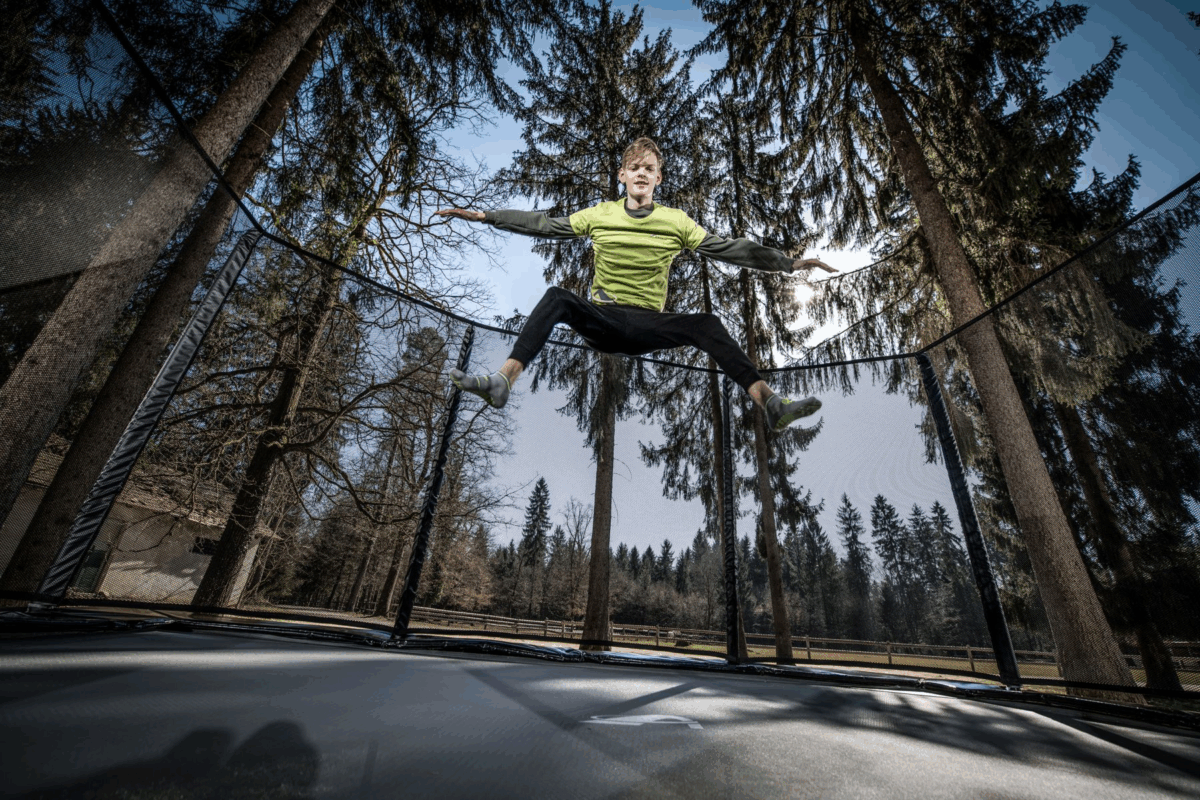
Yes, trampolining can help hypermobility by improving proprioception and muscle strength if done cautiously. Low-impact, controlled bouncing on quality trampolines like Akrobat’s may support joint health, but supervision, proper technique, and limits are essential.
Hypermobility, characterized by overly flexible joints due to lax connective tissue, requires thoughtful movement. While trampolining can strengthen stabilizing muscles and improve proprioception, doing it at the wrong time, or on the wrong surface, can do more harm than good.
When You Shouldn’t Be on a Trampoline
If you’re experiencing a flare-up, joint pain, or lingering fatigue, stay off the trampoline. Hypermobility already challenges joint integrity, and jumping while fatigued or inflamed only increases the risk of subluxations or soft tissue injury. The same goes for moments following minor injuries or instability episodes. Even seemingly small issues can accumulate, leading to long-term joint damage if ignored.
Not All Trampolines Are Equal
The typical backyard trampoline with a stiff mat and unpredictable bounce is a poor match for hypermobile bodies. These models often create jarring landings and uncontrolled forces that challenge even stable joints.
By contrast, trampolines designed with joint safety in mind, like AkrobatUSA’s AkroVENT® system, offer vertical force dispersion and softer, quieter bounce dynamics. This technology minimizes joint stress and encourages safe, controlled motion, making it a viable training tool instead of a liability.
What Is Hypermobility?
Hypermobility isn’t simply being flexible, it’s a biomechanical condition where joints move beyond normal ranges due to lax connective tissues. These tissues, responsible for stabilizing joints, don’t provide the firm resistance most bodies rely on. The result? Joints that glide and bend too easily under stress.
People with hypermobility often deal with instability, repeated sprains, frequent joint subluxations (partial dislocations), full dislocations, muscle fatigue, and lingering joint pain after activity. For some, even simple repetitive motions can trigger discomfort or mechanical failure.
This leads many to ask a fair question: “Is jumping on a trampoline bad for joints?”
It can be, if done recklessly or without appropriate safeguards. The repetitive compressive and shearing forces of uncontrolled bouncing can amplify joint stress, potentially worsening the very issues hypermobile individuals struggle to manage.
However, the same forces, when controlled, can stimulate muscular adaptations that support those unstable joints. That’s the distinction. This isn’t a yes or no issue. It’s entirely conditional.
Why Trampolining Can Help Hypermobility If Done Right
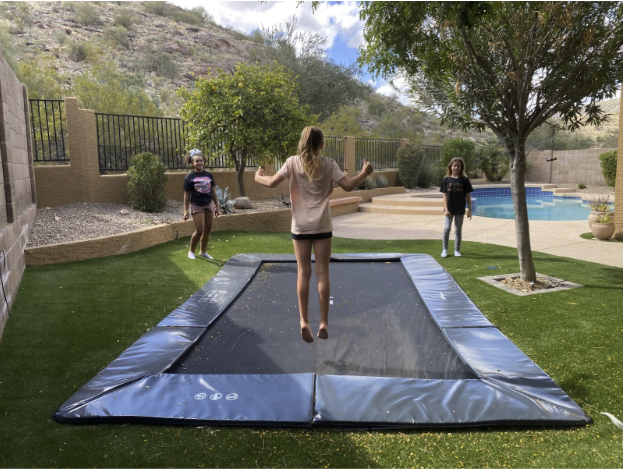
Despite these concerns, trampolining offers distinct advantages when approached with discipline and precision. The dynamic surface of a trampoline, particularly one engineered for controlled bounce like Akrobat’s AkroVENT® system, provides a unique environment to strengthen joint-supporting muscles without exposing joints to jarring impacts.
When hypermobile individuals bounce under supervision at low heights, several beneficial processes activate:
- Muscle strengthening through controlled repetition: Repeated, predictable bouncing can engage stabilizer muscles around the knees, hips, shoulders, and ankles, areas often vulnerable to laxity. Over time, these muscles compensate for ligament looseness and improve joint security.
- Proprioception training: Hypermobility disrupts the body’s internal sense of where joints are positioned during movement. Controlled trampoline sessions challenge balance and coordination, training the nervous system to improve joint awareness, a key factor in injury prevention.
- Core stability development: Every bounce demands spinal and pelvic stability. This continuous activation of core musculature can lead to stronger postural support and better control over dynamic movements.
This naturally raises another question we hear often: “Can trampoline use help build stability?”
When the right equipment, techniques, and safety measures are applied, the answer is yes. It’s not a shortcut to stability, but it becomes one tool in a broader, carefully-managed strategy that often includes physical therapy and strength training.
The Risks of Trampolining with Hypermobility
Multiple jumpers on the same surface, off-center landings, or unregulated bounce heights make outcomes unpredictable. Trampoline parks, designed for high-energy, multi-user activity, are particularly hazardous for hypermobile bodies. Their chaotic environments can overwhelm even well-conditioned joints.
The Best Type of Trampolines for Hypermobility
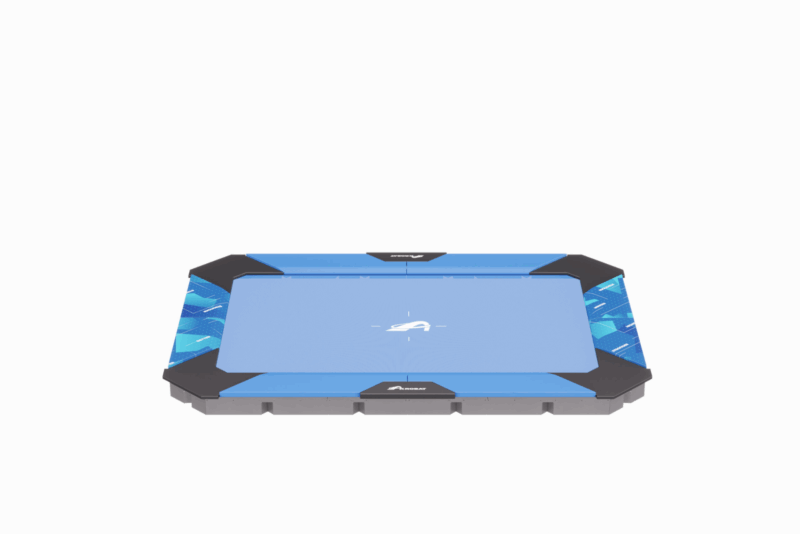
The choice of equipment is not optional. Trampolines designed for generic recreational use are rarely built with hypermobile users in mind. Akrobat takes a different approach.
- Softer bounce dynamics with AkroVENT® mats: Our proprietary mat system disperses impact vertically and absorbs force across the entire jumping surface. This reduces joint load, especially for individuals sensitive to sharp landing forces.
- Quiet, smooth bounce cycles: The spring architecture of Akrobat trampolines avoids the harsh mechanical snap found in cheaper systems. This creates controlled acceleration and deceleration through each bounce, reducing sudden joint-loading spikes.
- Enclosures that actively prevent dangerous exits: All Akrobat designs include full enclosure systems that absorb off-balance bounces and prevent dangerous falls, especially critical for hypermobile users whose joints may give way unexpectedly.
- In-ground models provide an added layer of security: For families concerned with fall height, Akrobat’s in-ground systems keep the jumping surface closer to grade level, further minimizing fall risk while maintaining the same professional-grade bounce performance.
AkrobatUSA’s role is more than manufacturing; we advise, guide, and match each family with the safest configuration for their situation.
We’re not just selling trampolines; we’re applying two decades of experience in competitive training, medical consultation, and biomechanics to help families make confident, well-informed decisions.
Step-by-Step Guide: How to Safely Use a Trampoline with Hypermobility
Navigating trampoline use with hypermobility requires more than general advice, it demands a specific, actionable plan. Here’s how we guide families, athletes, and healthcare professionals to approach this activity responsibly:
1. Get Professional Medical Clearance First
Every hypermobile individual presents differently. Before starting, work with a healthcare provider familiar with connective tissue disorders to assess joint stability, muscular imbalances, and readiness for dynamic activities like trampolining. This isn’t a one-time step, it should be revisited periodically as strength and symptoms evolve.
2. Choose the Right Equipment (Akrobat USA Recommendations)
Not all trampolines are equal. Hypermobile bodies need controlled, predictable bounce dynamics with superior force absorption. Akrobat trampolines provide:
- AkroVENT® Mat Technology for vertical force dispersion.
- Heavier, reinforced frames to eliminate lateral flex during bouncing.
- Full perimeter enclosures to protect against unintended exits.
We help you match the equipment to your specific environment, whether above-ground or in-ground configurations are most appropriate.
3. Always Supervise Children During Use
Children, particularly those still learning body awareness, require active supervision every time they step on the trampoline. Supervision includes limiting additional jumpers, controlling bounce height, and intervening quickly if technique deteriorates.
4. Start with Low Bounce Heights and Simple Movements
Initial sessions should focus on mastering low, controlled bounces. High vertical leaps introduce unnecessary forces early on. Build bounce control and body positioning slowly before adding complexity.
5. Watch for Fatigue and Limit Sessions
Fatigue compromises joint control. Sessions should be short, often just a few minutes at a time in the beginning. Allow full recovery between sessions to prevent compensatory patterns from setting in.
6. Prioritize Recovery After Flare-Ups
Even minor soreness or joint irritation signals that tissues need recovery time. Never push through discomfort. Respect the body’s feedback and adjust activity accordingly.
7. Supplement with Strength & Stability Exercises
Trampolining isn’t a standalone solution. It works best when combined with physical therapy, resistance training, and core stability exercises. Build stabilizer strength around vulnerable joints so they’re prepared for dynamic movement demands.
Are Other Sports for Hypermobility?
No single sport universally solves the hypermobility challenge. Each activity comes with trade-offs that depend on the individual’s symptoms, joint stability, muscle control, and experience level.
- Swimming offers excellent low-impact conditioning. Water supports the body, minimizing joint loading while building muscular endurance. It helps maintain cardiovascular fitness without stressing connective tissues. However, certain strokes may require modifications to avoid excessive shoulder rotation.
- Pilates, especially reformer-based programs, can be valuable when guided by instructors who understand hypermobility. These slow, controlled movements strengthen core muscles, train joint stability, and improve body awareness. The key is precision, not repetition.
- Cycling delivers cardiovascular and lower-body strength benefits, but proper bike fit is non-negotiable. Overextension through the knees, hips, or spine can trigger instability if positioning isn’t carefully managed.
- Resistance training is often underutilized by hypermobile individuals, yet targeted strength programs may offer some of the best long-term stability outcomes. The key is slow progression under supervision, focusing on stabilizer muscles rather than chasing heavy loads.
Some families ask about aerial training or gymnastics under supervision. With the right instructors, those trained to prioritize stabilization rather than flexibility extremes, controlled aerial work can develop joint control, proprioception, and muscular balance. This is not recreational-level gymnastics, but specialized skill-building environments where form and control are taught deliberately.
Where hypermobility faces its greatest risks are in chaotic, uncontrolled activities. Contact sports like rugby, football, hockey, and unsupervised trampoline parks introduce unpredictable forces that hypermobile joints struggle to manage. Fast changes in direction, unexpected collisions, or sudden overextensions dramatically escalate injury risks in these settings.
What Parents of Hypermobile Children Need to Know
Few decisions weigh heavier than deciding which activities to allow or restrict for hypermobile children. On one hand, parents want to protect vulnerable joints. On the other hand, they recognize that limiting participation too severely may affect confidence, social development, and physical resilience.
We often hear this quiet concern: “Will restricting my child create resentment?”
The answer depends entirely on how restrictions are framed. Children thrive when they are active participants in understanding their bodies. Cautious exposure, paired with supervision, teaches self-awareness and decision-making. Fully prohibiting fun activities, particularly when peers participate freely, can foster frustration, confusion, or even riskier behavior when restrictions are lifted abruptly later.
AkrobatUSA has worked with many families navigating this fine line. Allowing controlled trampoline sessions under supervision, using equipment specifically designed to soften bounce forces, gives children a chance to enjoy safe physical engagement while their bodies build the stability they need over time. Avoiding chaotic environments doesn’t mean avoiding joyful movement. It means creating the right environment for growth.
Common Questions Answered
Can you do trampolining with hypermobility?
Yes, but only under specific conditions. Controlled bouncing on high-quality equipment, combined with supervision, short sessions, and guidance from healthcare providers, can make trampolining a safe tool for strengthening joint stability.
Is jumping on a trampoline bad for joints?
Uncontrolled bouncing, improper equipment, or chaotic environments absolutely stress hypermobile joints. But controlled bouncing on properly engineered trampolines like Akrobat’s may actually help train muscle control, proprioception, and joint stability.
What sport is safest for hypermobility?
There is no universal “safe” sport. Swimming, pilates, cycling, and supervised strength training often offer the best blend of low joint stress and controlled strengthening. Trampolining, with proper controls, can also play a valuable role.
Should hypermobile kids avoid all bouncy activities?
Not entirely. Bouncing activities, when done safely and under supervision, can actually help train proprioception. The key is limiting uncontrolled variables, chaotic bounce parks or high-flying activities are a poor fit; supervised backyard trampolining on equipment like Akrobat’s offers a more controlled option.
Finding the Right Balance
Trampolining sits at the intersection of risk and benefit for those with hypermobility. Done carefully, it may provide proprioceptive training, muscular stability, and confidence-building movement. Done recklessly, it opens the door to unnecessary injury.
The distinction often lies in the equipment itself. Akrobat trampolines are engineered to create controlled, predictable bounce dynamics while reducing harsh joint forces through superior mat technology and frame stability.
For families facing these questions, consultation with healthcare providers remains wise. But when you’re ready to explore trampolining as a tool rather than a hazard, AkrobatUSA stands ready to guide you toward the safest, most effective solutions available.
Your Next Step: Let AkrobatUSA Help You Build Confidence
If you’ve read this far, you’re likely weighing the same question countless parents and individuals with hypermobility face: “Can we create safe, confidence-building experiences without exposing vulnerable joints to risk?”
That’s where AkrobatUSA fits.
We offer solutions designed specifically for this challenge:
- Akrobat AkroVENT® Mat Technology: 62.7% softer bounce absorption to minimize joint impact while preserving bounce control.
- In-Ground and Enclosed Systems: Lower fall risk, superior stability, and safer perimeter control for supervised use.
- Guidance: We don’t just sell trampolines, we consult, advise, and help families design setups tailored to hypermobility needs.
AkrobatUSA doesn’t believe in compromises when safety and joint health are involved. If you’re ready to purchase a trampoline, reach out today.
Let’s build the safest jumping experience your family deserves.
