
Yes, trampolining is a competitive Olympic sport judged on difficulty, execution, time in air, and precision. It requires strength, spatial control, and training, with athletes competing globally. From Olympic podiums to elite training, trampolining is far more than recreational play.
While many still associate trampolines with casual fun, competitive trampolining is structured, scored, and globally respected.
Athletes compete at national and international levels, and the physical and mental demands rival those of any Olympic discipline.
At AkrobatUSA, we distribute performance-grade trampolines engineered by Akrobat for athletes who take jumping seriously. Our in-ground and above-ground trampolines, especially our rectangular models, are designed with competitive precision in mind.
If you want to know how it got here, and how the right trampoline can support your journey, you’ll want to keep reading.
A Brief History: From Circus Act to Olympic Stage
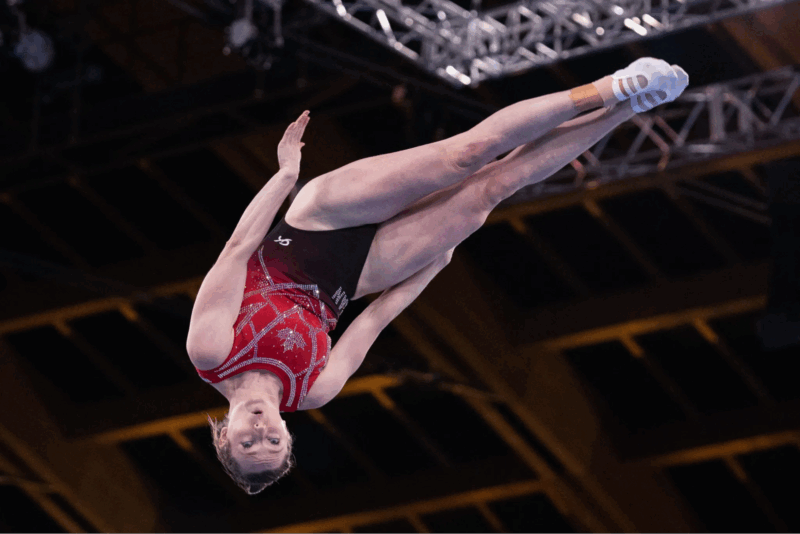
Photo Source: Canada’s Rosannagh Maclennan competes in the women’s final of the Trampoline Gymnastics event during Tokyo 2020 Olympic Games. Yuki Iwamura/AFP via Getty Images.
Trampolining wasn’t born in a gym. It was invented in the 1930s by George Nissen and Larry Griswold, inspired by diving boards and circus safety nets.
What began as an entertainment device quickly found its place in military pilot training, astronaut conditioning programs, even NASA used trampolines to sharpen spatial awareness and body control.
By 1947, the first national competition was organized at the University of Iowa. The sport reached international prominence with the inaugural World Trampoline Championships in London in 1964. It was showcased as a demonstration event during the 1964 Tokyo Olympics, paving the way for its Olympic debut in 2000 at the Sydney Games.
Despite early resistance from traditional gymnastics organizations, trampolining earned its spot through decades of athletic innovation and global competition. Today, it stands as a fully sanctioned Olympic sport governed by the Fédération Internationale de Gymnastique (FIG), with its own scoring rules, formats, and technical benchmarks.
How Competitive Trampolining Works
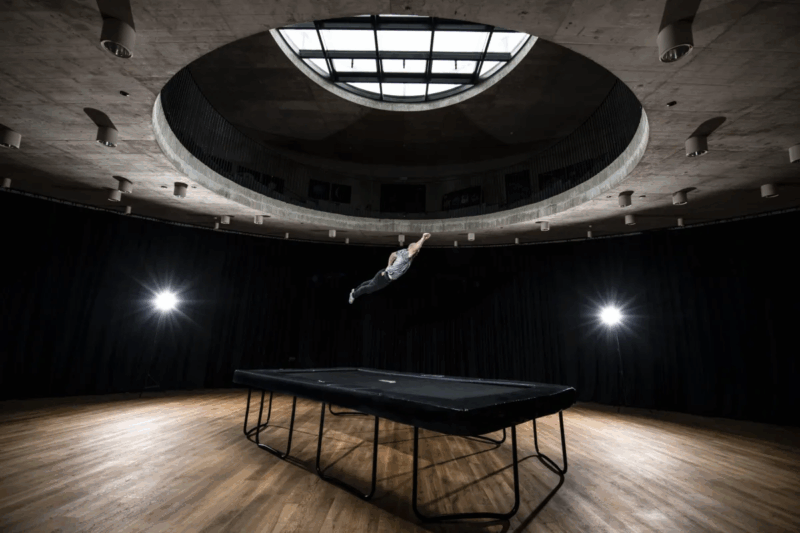
Competitive trampoline gymnastics is as structured as it is demanding. Athletes perform two 10-skill routines during qualifiers. These are judged across four strict scoring elements:
- Execution: form, control, and technique.
- Difficulty: complexity of flips, twists, and combinations.
- Horizontal Displacement: how centered the athlete stays on the trampoline.
- Time of Flight: total airborne time, yes, it’s literally timed to the hundredth of a second.
There are also synchronized events, where two athletes must perform identical routines at the same time. Precision and coordination are everything, scoring also depends on how well both athletes mirror each other mid-air.
Trampolining is considered a closed skill sport, meaning routines are performed in a consistent, predictable environment.
The Athletic Demands of the Sport
Trampolining is like acrobatics under pressure. Athletes must develop advanced aerial awareness, explosive strength, and pinpoint timing. Precision is non-negotiable, small misalignments can turn a world-class Triffis into a crash landing.
Common elements in elite routines include:
- Barani: a front somersault with a half twist.
- Triffis: a triple back somersault with a half twist.
- Miller: a double back somersault with three twists, one of the most difficult legal moves.
Training is year-round, often broken into multiple daily sessions for strength, flexibility, trampoline time, and video analysis. Mental toughness is just as critical.
Athletes must perform under pressure with total control, there are no spotters mid-air, no second chances mid-routine.
This is why elite trampolinists work with specialized coaches, often in facilities that feature Olympic-standard equipment.
When athletes don’t have access to those, they rely on performance gear like Akrobat’s pro-level trampolines to simulate real competition conditions at home.
Where Training Happens: From Backyard to Elite Gyms
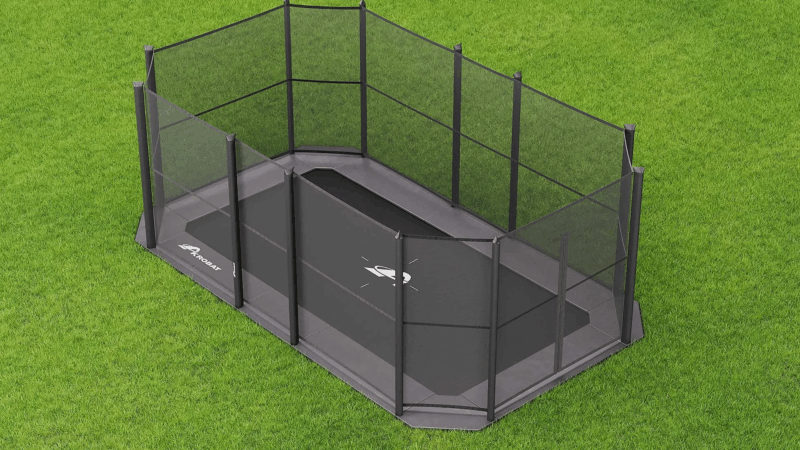
Shop now 👉17ft x 10ft Akrobat Primus Flat Plus In Ground Trampoline – Gray Pad and Black Jump Mat
While the sport has grown globally, many athletes still lack access to competition-grade training centers. That’s where high-quality home equipment becomes vital.
Modern trampolining gyms now exist in most developed countries, supporting national teams and coaching systems. But elite development often begins in backyards, with the right trampoline.
Here’s what separates real training equipment from toys:
- Bounce Quality: Akrobat’s AkroVENT® mat enhances airflow for a 62.7% softer landing. Less strain on joints, more airtime for better skills.
- Controlled Rebound: Our AkroSPRING® system delivers consistent lift and return with every jump, critical for advanced combos.
- Build Weight: Akrobat trampolines are engineered with heavy-duty frames several hundred pounds heavier than typical backyard models, delivering the stability needed for serious takeoffs.
- Rectangular Design: Athletes prefer rectangular trampolines for directional bounce control. Akrobat’s rectangular models are competition-inspired, ideal for both kids and elite training.
- Tool-Free Setup: With AkroCLICK® technology, our trampolines go together without bolts or screws, locking securely for long-term reliability.
Whether you’re training your child for their first meet or pushing your own boundaries as an adult athlete, AkrobatUSA can equip your home with performance gear built for the next level.
Looking for the right setup? Shop our trampolines.
VI. Misconceptions & Real Barriers
Many people still carry outdated assumptions about trampolining. Here’s what needs to be cleared up.
“It’s just for kids.” 👉 Trampolining is one of the few Olympic-level sports where you’ll find elite athletes and everyday adults using the same training methods.
Competitive trampolining has no hard age cutoff, many athletes enter or re-enter the sport in adulthood. Whether you’re looking for fitness, rehab, or podium goals, age isn’t the limit, mindset and equipment are.
“It’s not a real sport.” 👉 Despite its roots in circus performance, trampolining is a fully sanctioned Olympic event governed by FIG, the same organization that oversees artistic and rhythmic gymnastics.
Events are internationally judged and structured by scoring systems every bit as rigorous as other Olympic sports.
“We don’t have access to gyms.” 👉 This is a real concern, especially in rural or underserved areas. That’s where AkrobatUSA makes a difference. We provide Olympic-inspired, competition-grade trampolines you can use at home, whether above-ground or in-ground. Serious training shouldn’t depend on your zip code.
Trampolining Beyond the Olympics
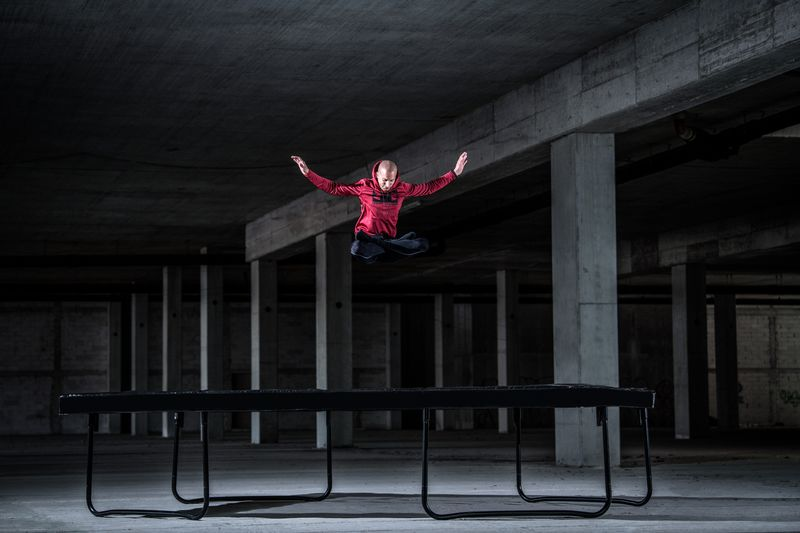
Competitive trampoline isn’t limited to elite events. The sport has evolved to support a wide range of uses and athletes:
- Adaptive Sports & Therapy: Trampolines are used in rehabilitation for paraplegic athletes and individuals recovering from injury. They promote controlled motion, joint decompression, and spatial awareness, while restoring confidence. Coaches worldwide use trampolines for movement therapy, especially with nontraditional athletes.
- Freestyle & Action Sports Training: Snowboarders, skiers, and skateboarders use trampolines to train off-season. Akrobat’s XCITYX model combines vertical bounce with sidewall rebounding to simulate aerial action safely. These are structured sessions used to build aerial skills.
- In Schools and PE Programs: Trampolining is now integrated into physical education worldwide. Its ability to develop coordination, rhythm, and body control makes it an ideal addition to any curriculum, and a favorite among students.
- Backyard Training Grounds: For many athletes, it starts in the backyard. Young competitors watch Olympic routines on TV, then try to replicate them on their home trampolines. With the right gear, that backyard becomes their first training facility.
- See national champions Liam Lornton, Max Poveda & Sebastian Ramberg here: https://akrobatusa.s005.wptstaging.space/trampoline-video/
- Akrobat Trampolines: Built for Performance
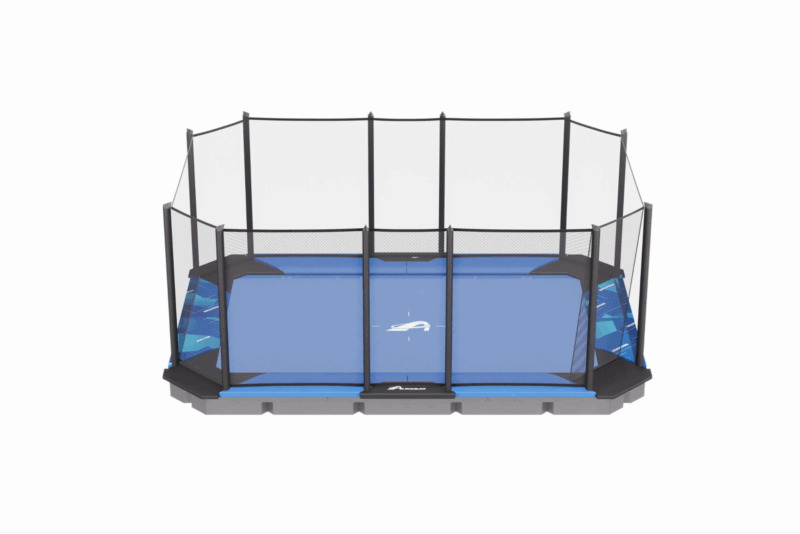
Shop now 👉17ft x 12ft XCITYX Akrobat In-Ground Trampoline – Printed Blue Pad and Blue Mat
Here’s what defines performance at Akrobat:
- Durability: Akrobat trampolines are rated for up to 2.5 million jumps. They use European-certified, non-toxic materials and heavy steel frames with weatherproof coatings.
- Frame Weight: A heavier frame isn’t just about sturdiness, it’s about bounce control. Lighter frames flex or rattle; ours don’t. When you’re practicing advanced aerials, that matters.
- Competition-Level Bounce: AkroVENT® mats offer vertical lift with 62.7% better impact absorption. That means longer air time and less stress on joints.
- Precision Engineering: AkroCLICK® assembly eliminates bolts and screws for safer, faster setup, without compromising stability.
- Rectangle Ready: Our rectangular trampolines provide even bounce distribution, essential for skill repetition and trick execution. If you’re training for precision, round just won’t cut it.
These are the features elite athletes look for. They’re also what make Akrobat trampolines ideal for competitive prep, coaching programs, or serious family training.
So, Is Trampolining Right for You?
If you’re wondering whether trampolining is just for kids or casual jumpers, here’s your answer: it’s a full-spectrum, Olympic-level sport that requires dedication, skill, and the right environment to thrive.
Whether you’re exploring competition, looking for advanced training tools, or helping your child develop discipline through sport, you’re not just buying a trampoline. You’re investing in a launchpad.
AkrobatUSA offers the gear, experience, and support to help you turn a backyard or gym into a performance zone.
Find your competition-ready trampoline here.
Ready to Train Like a Competitor?
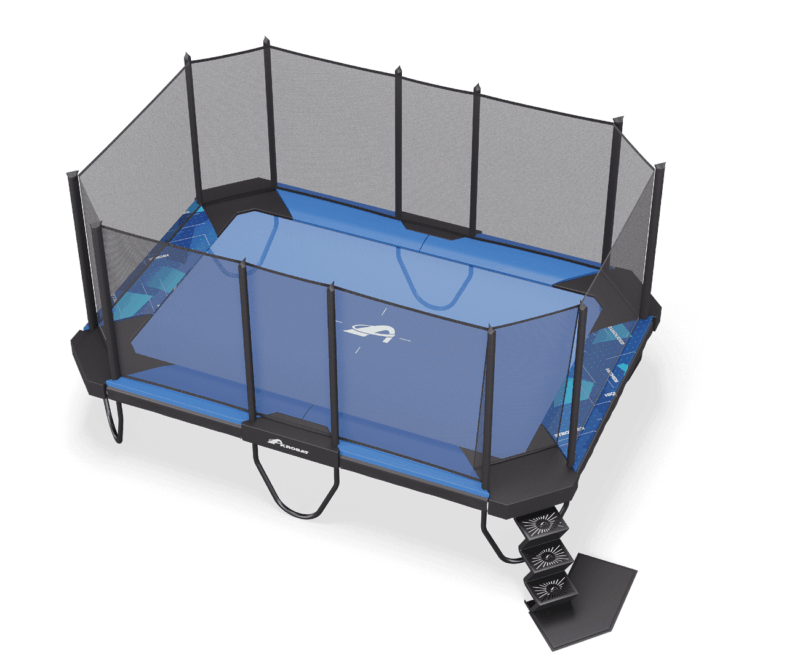
Shop now 👉XCITYX 17ft x 12ft Akrobat Above Ground Trampoline – Printed Blue Pad and Blue Jump Mat
If you’re here, it’s because you care about more than just fun, you’re looking for performance. Maybe it’s for your child’s first competition.
Maybe you’re returning to the sport yourself. Or maybe you’re simply tired of flimsy backyard trampolines that weren’t designed for actual training.
That’s exactly where AkrobatUSA comes in. Here are 3 ways we help athletes level up:
1. Primus Flat & In-Ground Trampolines
Well-suited for families or clubs who want a lower-profile install with serious performance. In-ground setups reduce fall height and integrate seamlessly with your landscape, without sacrificing bounce quality.
2. Rectangle Pro Models for Competitive Training
Our rectangular trampolines offer directional bounce and precise rebound, a non-negotiable for skill progression. Combined with AkroVENT® and AkroSPRING® systems, they deliver an experience that rivals Olympic setups.
3. XCITYX for Freestyle + Cross-Training
Ideal for snowboarders, gymnasts, or parkour athletes. Vertical walls meet horizontal bounce to simulate real-world trick training in a controlled environment.
We help athletes train better, move smarter, and build confidence in the air, because we believe performance shouldn’t be limited by your ZIP code.
👉 Shop Akrobat trampolines now! Your journey into competitive trampolining deserves the right foundation. Let’s build it.
