
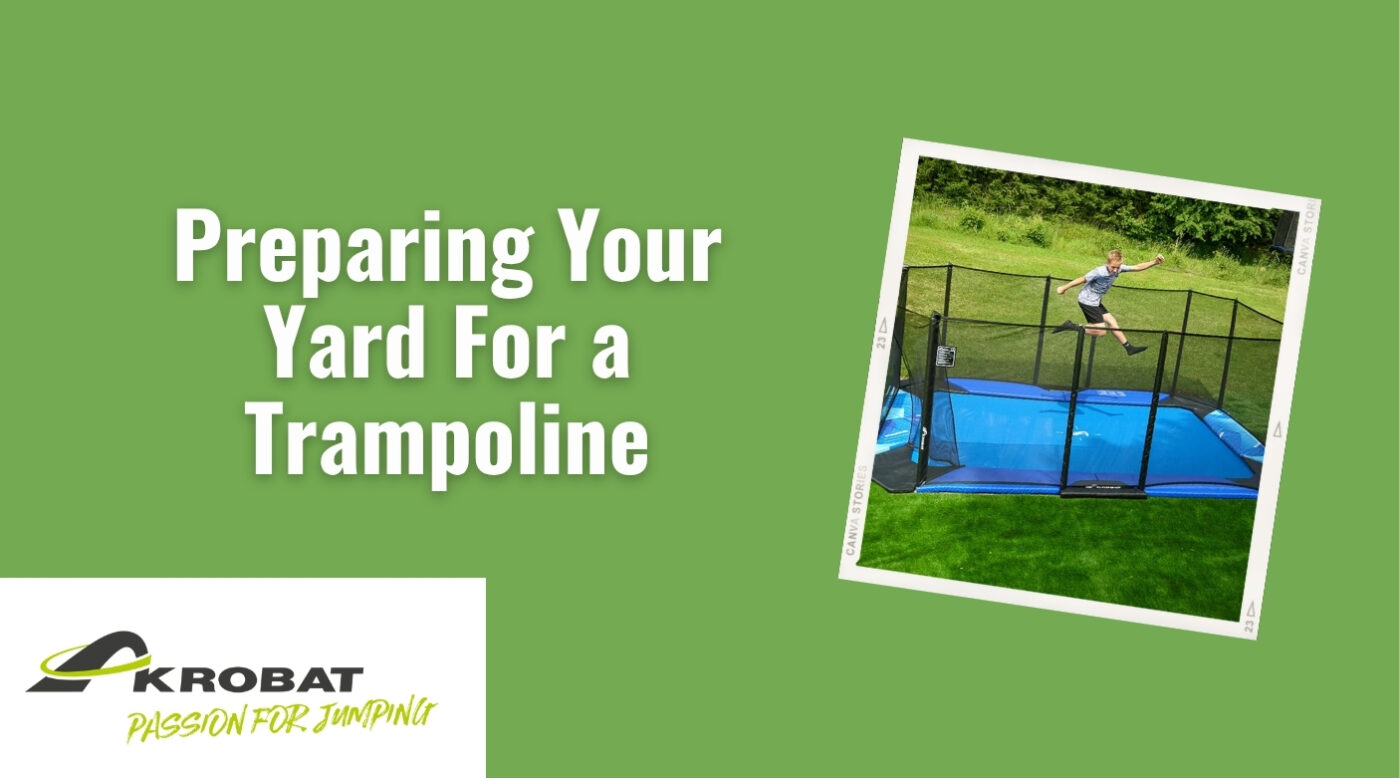
Pick a clear, level spot for your trampoline, mark and dig a bowl-shaped pit and install or confirm proper drainage. Line your pit with a strong weed barrier. (Akrobat includes this with all in-ground trampolines.) Install your Akrobat trampoline flush and stable. Smart yard prep prevents flooding, pit collapse, pests, or uneven sinking, keeping every bounce fun year-round.
✔️ Quick Yard Prep Checklist:
- Select a level site with overhead clearance
- Mark the pit shape to match your trampoline frame
- Dig a bowl-shaped pit with stable, sloped walls
- Add proper drainage: gravity drain, gravel layer, or sump pump
- Line with a weed barrier. Test-fit your Akrobat frame for the proper level. Compact backfill
- Keep 3-6 feet clear around your trampoline for access
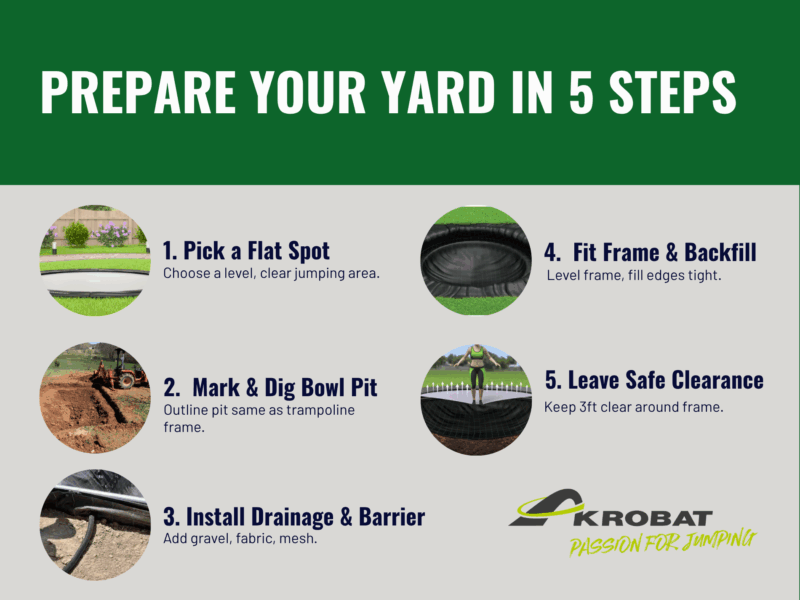
To get it right, choose a level spot with clear space overhead and around the edges, mark and dig a bowl-shaped pit that drains well, line it properly, and install your Akrobat trampoline so it stays stable, and fun for years.
The truth is, your yard’s condition can make or break the performance and lifespan of your trampoline. A poorly prepped site can lead to irrigation or rainwater pooling, pit walls compromised , or a trampoline that could sink unevenly over time.
Our team at AkrobatUSA believes in doing it right the first time, from choosing the best spot to ensuring proper soil handling and drainage installation.
When you choose an Akrobat in-ground trampoline, you’re investing in proven engineering, frames tested for millions of jumps, and thoughtful details like the AkroVENT® mat for better airflow and the tool-free AkroCLICK® system that speeds up installation. We’ve laid out every step below, no fluff, no shortcuts. If you want your family’s trampoline to last, read on and see how to transform your backyard into a jumping paradise you can rely on for years.
Step 1: Choose and Assess the Best Location
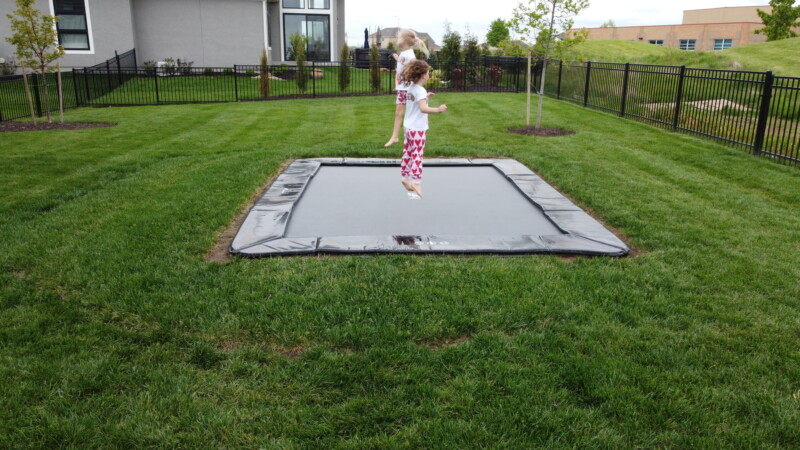
Featured Product: 14ft x 10ft Akrobat Primus Flat In-Ground Trampoline – Black
A solid foundation starts with picking the right location. For any trampoline, your yard should be as level as possible. Minor slopes can be corrected during digging, but severe grades require extra soil work.
Look for a clear area free from low-hanging branches, fences, overhead wires, or rocks. Leave at least 4 feet or more of open space around all sides so nothing encroaches on your jump zone. (1’-2’ if using an enclosure)
If you have a tight yard, double-check site access too, you may need to bring in a mini digger, so narrow gates or tight corners shouldn’t catch you off guard.
When families ask, “Can I put a trampoline on a slope?”
Our answer is: yes- but only if you’re prepared to level it properly. A poorly leveled site is one of the biggest reasons a trampoline tilts or feels unstable over time. At AkrobatUSA, we recommend using a long level or laser level to confirm the ground’s evenness before you dig.
Step 2: Mark Out the Trampoline Pit
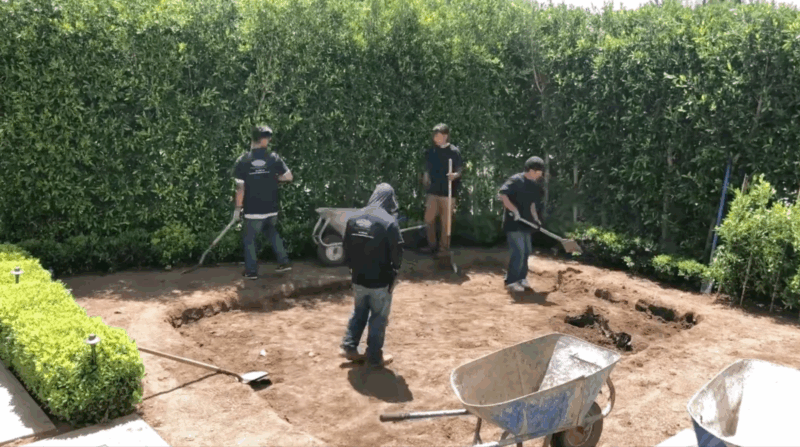
Once you’ve chosen your spot, outline exactly where the pit will go. Your pit must match the shape and size of your Akrobat trampoline frame, round for round, rectangular for rectangular. Mismatched pits lead to gaps and unstable edges.
Drive stakes at key points or tie a rope to a center stake for a perfect circle radius. Use spray paint to mark the entire footprint. This step prevents costly do-overs later. We also recommend putting the trampoline frame together and using it as a template so you can find just the right spot.
As you strip away the grass or topsoil, don’t throw it out. Repurpose your soil and any good turf in other parts of your landscaping or use it to fill low spots in your yard. Not only does this cut waste, but it saves on disposal costs, one more way to tackle hidden expenses that catch DIYers off guard.
Step 3: Dig the Pit to the Right Depth
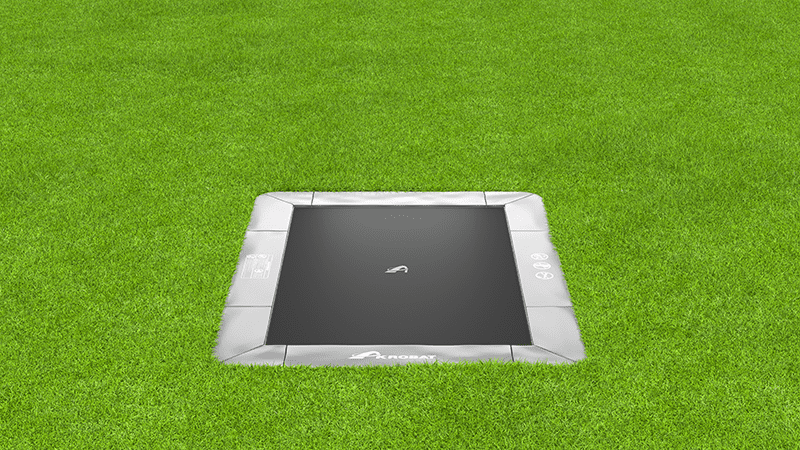
Featured Product: 14ft x 10ft Akrobat Primus Flat In-Ground Trampoline – Anthracite Grey
This is where many homeowners underestimate the work. An in-ground trampoline pit should have a bowl-like shape, shallower edges, deepest at the center, which prevents bottoming out and allows for more consistent airflow and bounce. So, “How deep should I dig the pit?”
It depends on your model, but a typical depth ranges from 2’6” on smaller trampolines to 3’9” feet at the deepest point on largest sizes. Be sure to consult Akrobat’s installation guide, our frames are tested for millions of jumps, but only when they’re supported by the right installation including soil depth and slope.
Keep in mind: you’ll need some of that soil later for backfilling gaps between the pit walls and the frame. Don’t haul everything away too soon. And yes, for larger pits, renting a mini digger is absolutely worth it, you’ll save hours of work.
Step 4: Install Proper Drainage
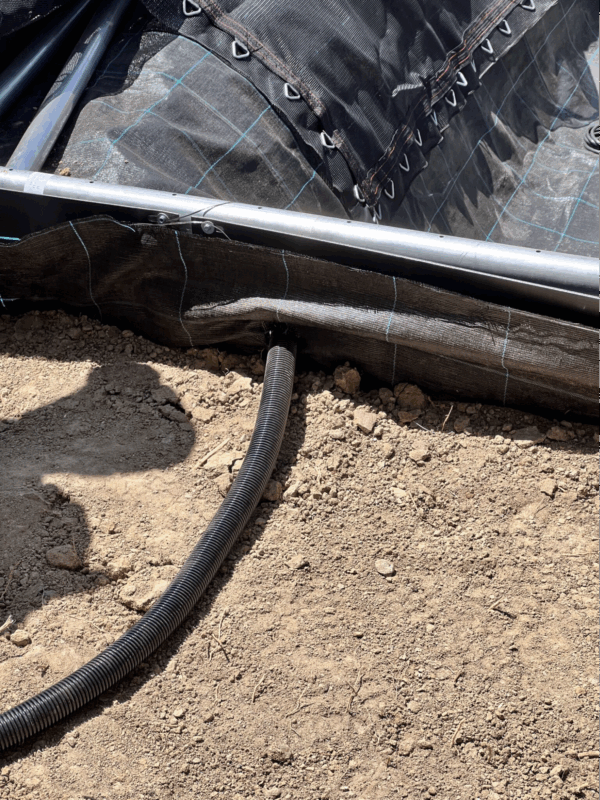
A trampoline pit that holds water is a recipe for soggy jumps, frame degradation, and costly repairs. That’s why drainage is important. AkrobatUSA recommends proven drainage solutions, including gravity drains, gravel bases, drain pits, and sump pumps when necessary.
If your soil drains well naturally, a simple gravel layer beneath the pit’s center may be enough. For flatter yards or yards that don’t percolate well, adding a center drain pit filled with gravel may be enough. If you have clay or a soil that doesn’t drain well then we recommend adding in a sump pump.
Homeowners often ask, “What should I put under a trampoline in the yard?” The best answer: good drainage layers and weed barriers. Line the base with landscape fabric to block weeds and pests, preventing growth that could hinder proper drainage. (All Akrobat in-ground trampolines include this) Pair that with the AkroVENT® mat, which offers superior airflow, helping keep the pit dry by reducing trapped moisture. This is especially crucial in maintaining the longevity of your trampoline, as it helps prevent damage that may affect cheaper models over time.
By planning your drainage system well, you’ll avoid the nightmare of a flooded pit and the headaches that come with it.
Step 5: Fit and Level the Trampoline
Now that your pit is dug and drains properly, it’s time to make sure your Akrobat trampoline sits where it should, flush and stable.
Always test-fit the frame in the pit before finalizing. This lets you check that dimensions match the pit shape, the bounce space is clear, and the frame sits at the right height. If it’s too deep, you risk poor airflow and bounce. Too shallow, and you create a tripping hazard.
Akrobat’s AkroCLICK® system makes this part faster. With our tool-free frame assembly, each piece clicks securely into place, no guesswork, no loose screws.
Once the frame is set, backfill the edges with your saved soil and compact it firmly. This keeps the trampoline stable and prevents gradual sinking.
Done right, this step alone can save you from costly re-leveling or pit repairs down the road.
Step 6: Add Ground Cover and Weed Barriers
One overlooked detail is what goes beneath and around the trampoline. Make sure to install the included weed cloth below the frame and lining the trampoline pit. . A lined pit is less likely to turn into a muddy mess or attract burrowing animals.
Lay landscape fabric neatly over the exposed soil. Overlap edges and pin them down so they don’t shift with weather changes. This blocks weeds and provides a cleaner base.
Pair this with Akrobat’s AkroVENT® mat. Its design not only boosts bounce but also promotes airflow through the pit, helping moisture dry faster, a detail few other brands offer. Better pit ventilation means less mold, less rot, and longer-lasting performance.
Step 7: Check for Clearance
With the frame in place and the ground covered, look around the pit’s perimeter. You should maintain at least 4-6 feet of clear, obstacle-free space on all sides, no stones, garden furniture, or hard edges that could cause injuries.
Families often ask, “Should I put a safety enclosure on an in-ground trampoline?”
It’s smart to add one, especially if you have young kids. While an in-ground design lowers the fall height, an enclosure gives extra peace of mind, preventing accidental tumbles onto hard ground. Many parents who install an enclosure say it helps kids feel more confident, which can make jumping even more fun.
When you combine the in-ground setup with a secure enclosure, you’re stacking up layers of protection that reflect how Akrobat does things: smarter, and engineered for real family life.
Seasonal & Long-Term Pit Maintenance
Your job isn’t over once the trampoline’s in. A well-prepared yard needs light upkeep to keep your investment functional for years.
- Check your drainage system at the start of every season. Remove any debris from the pit and clear blockages from gravel layers, drain pits, or sump pumps. Inspect the frame, jump mat, and pit walls for any signs of wear. One advantage of owning an Akrobat is durability, our frames resist rust for decades, even after 2.5 million jumps. But a quick inspection helps you catch any small issues before they become big repairs.
Questions About Preparing a Yard for a Trampoline
Even with a clear plan, many families share the same questions, and they’re worth answering before you break ground.
- How deep should I dig the pit for an in-ground trampoline? Dig your pit based on the proper depth outlined for the size Akrobat trampoline you have purchased. dig your pit in a bowl shape for optimal bounce. Always check your specific Akrobat model’s guide so you don’t under-dig or over-dig.
- What’s the best way to drain an in-ground trampoline pit? For many yards, a gravel base plus a simple drain pit works well. If your soil retains water, install a sump pump or gravity drain.
- Do I need a professional to install my trampoline pit? If you’re comfortable renting a mini digger and have good site access, many homeowners can handle the dig themselves. But hiring a pro is always a good option.
- How do I keep animals out of the trampoline pit? Lay down a sturdy mesh barrier under your weed liner. This stops burrowing animals from weakening the pit walls or pushing soil up under the mat.
- Can I put a trampoline on a slope? Only minor slopes should be leveled out during excavation. A steep grade can mean more complex soil work or extra retaining edges. If in doubt, ask our team at AkrobatUSA, we’re happy to advise.
- Will an in-ground trampoline sink over time? If you dig the pit with proper shape, compact backfill well, and maintain drainage, your trampoline should hold its level. Using Akrobat’s heavy-duty frames and rust-resistant materials helps maintain pit stability, too.
- What size pit do I need for my trampoline? Always match your pit dimensions to the selected frame size, whether round or rectangular
- .How do I level the ground under my trampoline? Use a long straightedge or laser level. Mark high and low spots clearly and add or remove soil gradually. Never rush leveling, it’s what keeps your trampoline better for the long run.
- Is a mini digger worth renting for pit digging? For larger models or tough soil, yes. It saves hours of labor.
Tips for a Smooth and Fun Backyard Trampoline
Prepping your yard properly means fewer headaches and more bounce time for years to come. At AkrobatUSA, we back every trampoline with industry-leading build quality, competition-grade bounce, and weatherproof frames tested to withstand over 2.5 million jumps.
Details matter: tool-free AkroCLICK® assembly, airflow-enhancing AkroVENT® mats, rust-resistant frames, and EU-certified materials that help protect your family’s bounce experience.
Unlike generic brands, we help you get the most out of your trampoline with clear installation guidance and real customer support when you need it.
If you want to avoid the worry of flooded pits, sagging frames, or an unstable bounce, it starts with smart prep and ends with choosing a trampoline built for real life, season after season. AkrobatUSA is here to help you every step of the way:
- Better bounce, less impact: Our AkroVENT® mats improve airflow, drying your pit faster.
- Frames that last: Hot-galvanized steel resists rust, protecting your pit shape and your investment.
- Backed for the long run: Tool-free assembly and industry-leading warranties mean you spend more time enjoying your yard, not repairing it.
👉Check out our in-ground and above-ground trampoline kits today, and see how good your backyard can feel when you trust a team that cares as much as you do.