
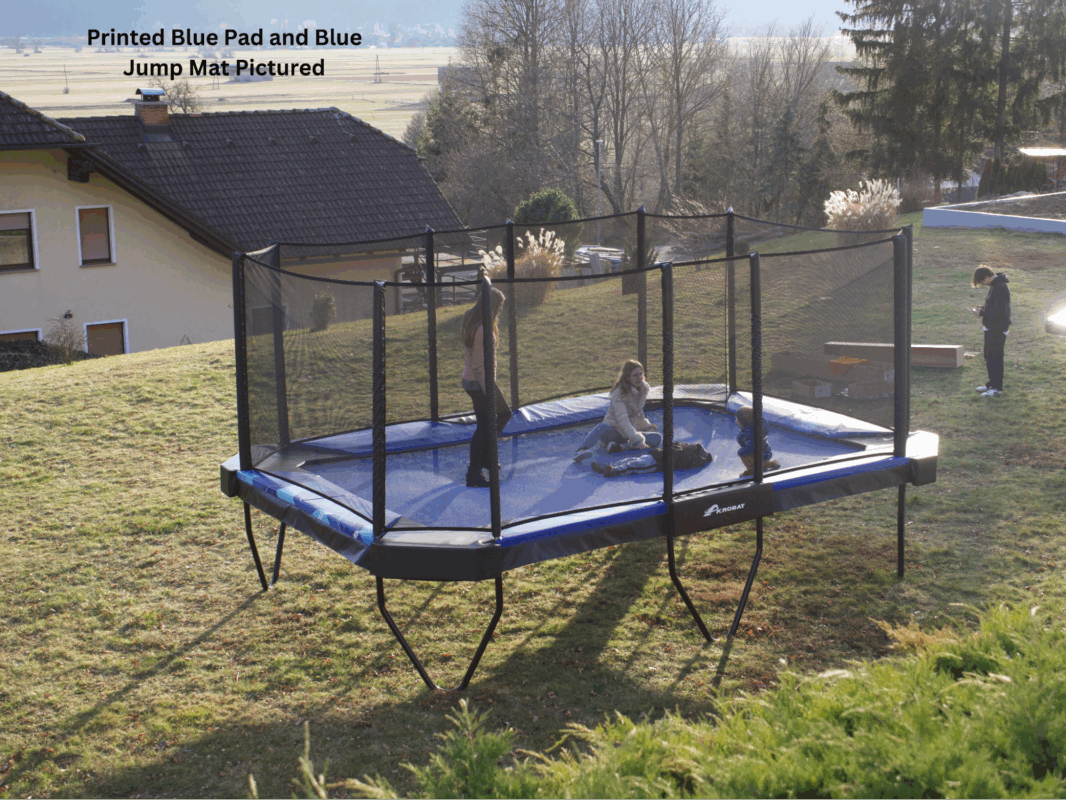
Yes, trampolining can be good for your back. To support spinal health, the trampoline must have soft, consistent bounce dynamics that protect joints and reduce impact stress. Trampolines that reduce rebound resistance and engineered springs that stretch evenly to distribute landing forces vertically can cushion each bounce, engage core stabilizers, and provide gentle spinal decompression.
If you’re simply curious whether trampolining is safe for your back, you’ve got your answer. But if you want to know why it works, who should be cautious, and how to get the most back-friendly bounce possible, keep reading.
Why Trampolining May Help Your Back
Core Muscle Activation and Spinal Stability
Every controlled bounce triggers engagement of deep core muscles, especially the transverse abdominis. This muscle group acts like a natural corset for your spine, stabilizing each vertebra and protecting against unnecessary strain. Over time, consistent trampolining develops the support structure your spine depends on for healthy alignment.
Posture Improvements Over Time
We see it time and again, users reporting visible improvements in posture after regular trampoline sessions. Controlled jumping naturally promotes spinal awareness. As your body balances with every movement, the feedback encourages better alignment, allowing your spine to stack properly throughout daily activities.
Low-Impact Load Compared to Running
What many don’t realize is just how efficient trampolining is compared to higher-impact activities. Ten minutes of focused trampoline exercise delivers cardiovascular benefits similar to thirty minutes of running, without the harsh, repetitive impact on your spine that concrete or treadmill surfaces create. The trampoline absorbs much of the downward force, sparing your joints and spinal discs from unnecessary compression.
Gentle Spinal Decompression on the Ascent
During each upward phase, some users describe a sensation of subtle decompression in the spine. This brief release allows intervertebral discs to temporarily expand, which may help alleviate pressure and contribute to an overall sense of spinal relief, what some refer to as natural “self-mobilization.”
Lymphatic Flow and Detoxification
The vertical motion of trampolining does more than engage muscles, it stimulates the lymphatic system. This constant fluid movement helps reduce inflammation, support immune function, and even accelerate recovery in tissues surrounding the spine. Some users even report improved circulation that affects areas they never expected.

When Trampolining Might Be Bad for Your Back
Existing Back Injuries That Require Caution
There are clear situations where trampolining may present risks rather than benefits. If you have any of the following conditions, medical supervision is advised before starting:
- Herniated discs
- Spinal stenosis
- Severe scoliosis
- Unstable spondylolisthesis
Trampolining may still be possible under expert care, but it must be approached thoughtfully.
The Dangers of Poor Technique
Poor form transforms even a well-designed trampoline into a risk. Hard landings, locked knees, or disengaged core muscles increase spinal compression and strain. Correct technique, bouncing with soft knees, an engaged core, and a balanced upright posture, protects the back and maximizes the therapeutic benefits.
Sudden High-Impact Movements
While trampolining is designed for safe repetition, reckless movements, aggressive flips, or high-intensity stunts dramatically increase vertebral risk. Overconfidence remains one of the most preventable causes of trampoline-related back injury.
How to Use a Trampoline Safely with Back Pain
Choose the Right Equipment
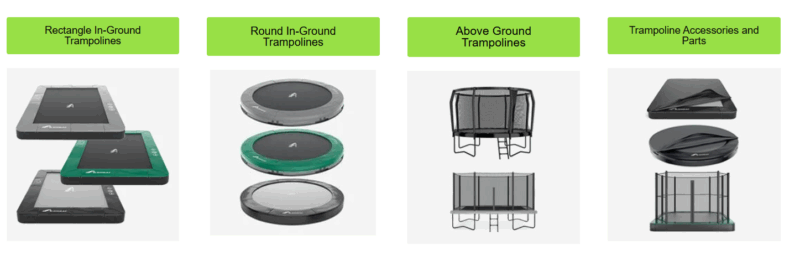
Not all trampolines are created equal, and this is never more obvious than when managing back health. High-quality trampolines, like those engineered by Akrobat, feature advanced suspension systems that control impact forces. Our proprietary AkroSPRING® system and AkroVENT® jump mats deliver consistent bounce absorption that protects the spine while maintaining smooth performance.
Start Slowly: The Gradual Progression Model
Start with gentle bouncing. Allow your muscles to adapt to the motion before introducing more dynamic balance drills or extended sessions. Controlled progression allows your body to strengthen safely, reducing the chance of setbacks.
Use Balance Aids If Needed
For those new to trampolining or recovering from back instability, handlebar-equipped mini-trampolines provide additional stability. This support helps users build confidence and maintain correct posture through each phase of recovery.
Prioritize Warm-Ups and Cool-Downs
Always activate your core and gently prepare spinal muscles before jumping. After each session, take time to stretch and cool down. These simple habits prevent unnecessary stiffness and help maintain healthy muscle balance.
Watch for Warning Signs
Listen closely to your body. If you experience sharp pain, sciatica flare-ups, instability, or sudden discomfort while bouncing, stop immediately and seek professional input before continuing.
Comparing Trampolining to Other Back-Safe Workouts

When compared directly to other low-impact activities, trampolining offers some distinct spinal advantages:
- Swimming vs. trampolining: Both improve disc hydration, but trampolining activates stabilizers more directly.
- Yoga vs. trampolining: Yoga promotes flexibility, while controlled bouncing offers unique spinal decompression.
- Walking vs. trampolining: Walking lacks vertical force variations; trampolining offers superior core engagement.
- Treadmill vs. trampolining: Treadmill running stresses the spine with every foot strike; trampolining absorbs these forces.
When to See a Specialist Before You Start
While trampolining may benefit many, there are specific conditions that require professional evaluation before beginning:
- Active disc herniation
- Sacroiliac (SI) joint instability
- Osteoporosis
- Severe chronic back pain or history of spinal surgery
- Hypermobile joints
For these cases, a specialist can help determine if and how trampolining might safely fit into your routine.
The Bottom Line: Should You Bounce?
Trampolining has the potential to strengthen your back, improve posture, and reduce joint stress when approached with care. But it’s not a one-size-fits-all solution.
Respecting your body’s condition, applying proper technique, and progressing slowly are non-negotiable if you want to enjoy the spinal benefits this activity offers.
Ready to Protect Your Back While You Bounce? AkrobatUSA Can Help.
The wrong trampoline can make back issues worse. That’s why every AkrobatUSA model is engineered with spine protection in mind. Here’s how we can help:
- Controlled Bounce Absorption: Our AkroSPRING® suspension and AkroVENT® jumping surface deliver a smooth, joint-friendly bounce that cushions the spine while maintaining performance.
- Safer Progression for All Experience Levels: Whether you’re rehabbing from minor back pain or simply want to protect your joints long-term, AkrobatUSA trampolines allow you to progress safely, without the jarring, uncontrolled movements found in lesser equipment.
- Built to Outlast Your Recovery and Beyond: With European-manufactured frames designed to withstand 2.5 million jumps, your investment lasts well beyond short-term solutions. You’re getting a trampoline designed for both today’s needs and tomorrow’s fun.
If you’re serious about protecting your back while still enjoying the freedom of movement trampolining offers, explore AkrobatUSA solutions for you.
