
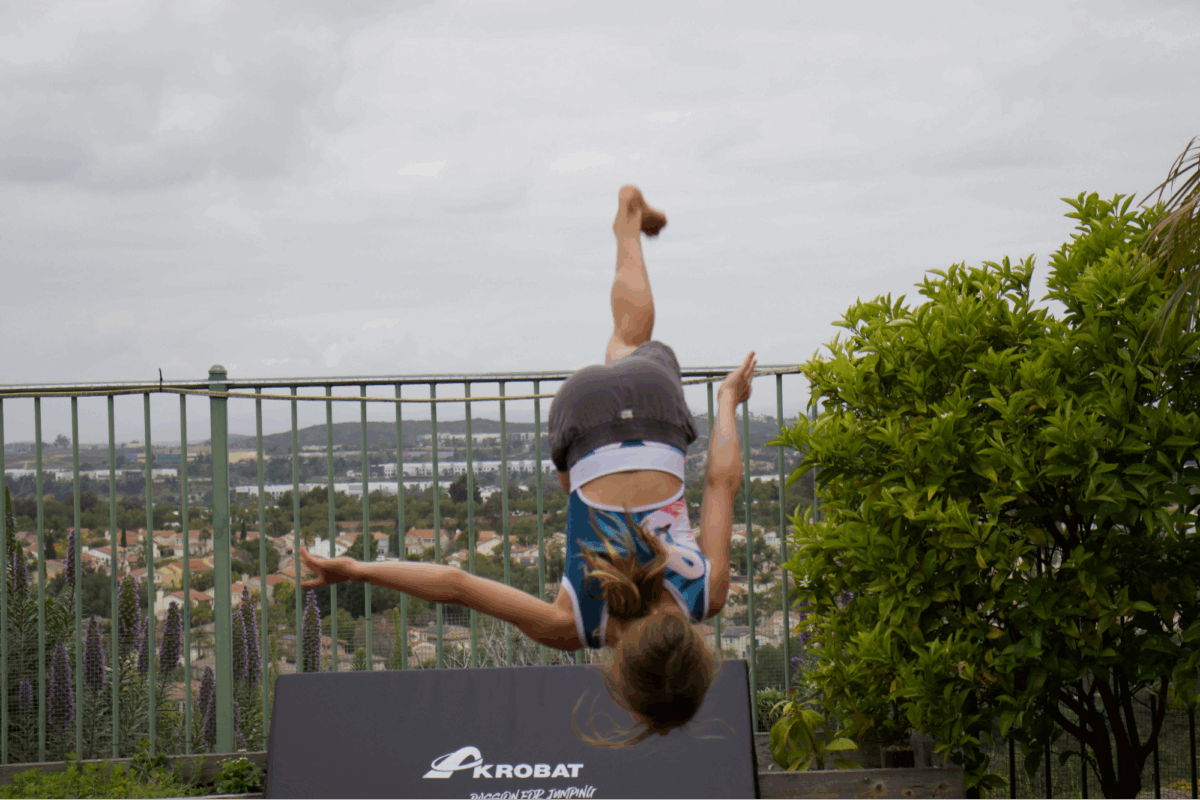
In recent years, more elite runners, jumpers, and sprinters have started training on trampolines, not just to add variety, but because the benefits are hard to ignore. It’s not hype. It’s not a gimmick. When properly implemented, trampolining offers advantages that traditional ground-based drills can’t replicate.
If you’re wondering whether trampoline jumping is good for athletes, especially those in track and field, the short answer is yes, and here’s why: this type of training targets explosive strength, spatial awareness, joint integrity, and mental clarity all at once.
Whether you’re prepping for a long jump cycle or sharpening your sprint form, trampoline work adds a dimension of performance enhancement that’s both measurable and sustainable.
Full-Body Engagement with Low Joint Impact
When you jump on a performance-grade trampoline, you’re engaging the full posterior chain: glutes, hamstrings, calves, quads, and your core. Every jump demands dynamic balance and control, which translates directly to cleaner sprint form and better landings.
But perhaps the most compelling reason to integrate trampoline work into a weekly routine is its impact-to-benefit ratio. With each bounce, athletes get a high-intensity cardio and strength workout with minimal joint load.
Studies show that just 10 minutes of trampolining can yield cardiovascular results equivalent to 30 minutes of running. And when you’re trying to minimize overuse while maximizing output, that kind of return matters.
Plyometric Benefits Without the Wear and Tear
Jump drills are essential for building explosiveness, but on hard surfaces, they can take a toll. That’s where trampoline training changes the game.
Each bounce mimics plyometric activity, bounding, sprint take-offs, vertical lift, with reduced impact. This allows for repeated, high-effort movements without compromising recovery. On an Akrobat trampoline, fast-twitch fibers are trained aggressively and safely, particularly those that fire during:
- Sprint starts out of the blocks
- High jump launches
- Long jump takeoffs
This is the kind of neuromuscular stimulus that helps shave tenths off your 100m time or add centimeters to your vertical.
How Trampolines Help Track Athletes Improve Specific Skills
Trampolines create a training environment that sharpens precision. You can’t be sloppy on a rebound surface, you’ll feel the difference immediately. Every misaligned takeoff is amplified, which makes it easier to detect flaws in your stride or footstrike mechanics.
For sprinters, this means:
- Cleaner ground contact patterns
- Improved rhythm and stride frequency
- Better stability through the hips and knees
So, can trampolining make you faster?
Answer: Yes, especially in the acceleration and drive phases. The bounce trains your body to generate force efficiently, while the dynamic surface improves neuromuscular coordination.
Jumping Events: High Jump, Long Jump, Triple Jump
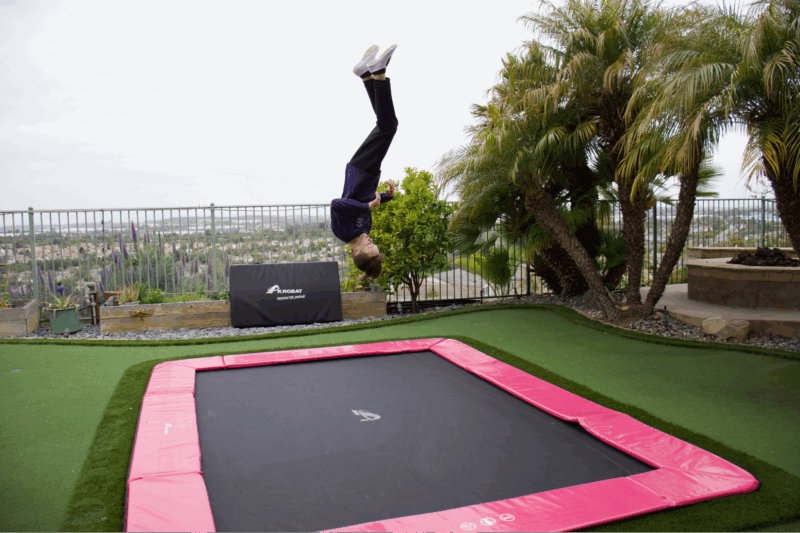
For horizontal and vertical jumpers, air awareness is just as vital as strength. Trampoline drills enhance spatial orientation, rotation control, and landing mechanics, all without risking hard landings. Jumpers can:
- Run through aerial forms like tucks, pikes, and twists
- Improve their timing and leg cycling
- Build the spatial memory needed to stick precise landings
Pro tip: Many coaches we work with use trampolines to simulate the final landing mechanics of the triple jump. The controlled rebound gives athletes a way to rehearse without overloading the knees or hips.
Unique Benefits Athletes Won’t Get from Traditional Workouts
Cognitive and Mental Performance Boost
Athletic performance isn’t just physical, it’s mental. On competition day, the athlete who’s calm, focused, and in rhythm is often the one who wins. Trampolining offers something unexpected: mental clarity.
Repetitive, rhythmic bouncing has been shown to reduce cortisol, the hormone linked to stress and anxiety. Athletes often report entering a flow state after just a few minutes of jumping. This isn’t just anecdotal, it’s visible in how quickly they settle into a rhythm and lock into mental focus during high-pressure meets.
Whether used in warm-ups or the day before competition, trampoline sessions can:
- Reset the nervous system
- Sharpen reaction timing
- Build pre-race confidence
In fact, many track coaches we work with use light trampoline bouncing as part of a pre-meet primer to align both body and mind.
Joint Preservation and Lymphatic Recovery
Track athletes deal with volume: high reps, long mileage, and ground reaction forces that stack up over time. Trampolines provide a much-needed alternative, especially after taxing training cycles.
Compared to traditional plyometric work, trampoline sessions reduce post-training soreness and flush out lactic acid faster through natural lymphatic stimulation. This is particularly valuable for:
- Sprinters experiencing calf tightness
- Jumpers recovering from intense competition
- Middle-distance runners dealing with cumulative fatigue
Trampoline training keeps intensity high without overloading the joints, which is why many athletes rely on AkrobatUSA’s in-ground models for seamless, low-impact transitions between effort and recovery.
A Hidden Tool for Special Populations
The performance value of trampolining doesn’t stop at able-bodied athletes. We’ve seen paraplegic athletes use controlled bounce routines to develop upper body strength and core stability. Veterans in rehab programs have incorporated trampolining to retrain spatial awareness and vestibular balance after concussions.
This speaks to one of the most underrated benefits of trampoline training: proprioception. By subtly challenging your sense of orientation and balance, every bounce becomes a micro-correction, which builds smarter, more adaptable athletes over time.
From Warm-Up to Full Training: How to Integrate Trampoline Drills
One of the biggest misconceptions is that trampoline training is only for recovery or general conditioning. In reality, it can be structured into a full, progressive training session, no guesswork required.
Step-by-Step Integration Plan
- Warm-Up Routine (5 minutes)
Start with light bouncing to activate the neuromuscular system. Add gentle arm swings and leg motions while syncing your breathing to your rhythm. This primes both the body and the brain. - Skill-Specific Drills (10–15 minutes)
Use trampoline time to target performance cues:
- Sprint-Simulated Knee Drives: Drive the knees through the bounce cycle to mimic acceleration phase mechanics.
- Single-Leg Jump Cycles: Boost ankle stability and hip control, great for hurdlers and long jumpers.
- Aerial Awareness Drills: Practice pike, tuck, or twist positions mid-air to build comfort with flight mechanics.
- Cool Down (5 minutes)
Shift to gentle rebounding to guide your heart rate down. Incorporate balance holds, core-centric movements, and diaphragmatic breathing to close the session in a grounded, focused state.
Sample Weekly Schedule
For athletes integrating trampoline work, here’s a simple rhythm that balances strength, recovery, and variety:
- 2x/week Power Development Days: Layer trampoline sessions into sprint or jump-focused training. Keep it explosive, technical, and clean.
- 1x/week Recovery Session: Bounce at low intensity to aid muscle recovery and promote circulation.
- Optional Substitution: Trade one cardio or treadmill block for a trampoline HIIT circuit, short intervals, high bounce frequency, full-body movement.
This approach keeps training fresh while unlocking new levels of athletic output, all without overloading the system.
Real Athlete Concerns
Worry #1: “Will I build bad mechanics?”
This concern comes up often, especially among sprint coaches who are protective of ground-based form drills. And it’s valid, if you isolate trampoline use and neglect sprint work, there’s potential for over-bouncing or floating patterns to creep into sprint posture.
But the solution is simple: don’t use trampoline drills in isolation.
When paired with track work, trampoline training refines posture, builds reactive strength, and reinforces good movement patterns.
In fact, many AkrobatUSA users integrate trampoline drills after sprint block starts to reinforce hip drive and arm rhythm. Used correctly, trampolining amplifies form rather than distorting it.
Worry #2: “Does it really simulate track performance?”
A trampoline isn’t trying to mimic a sprint surface, it’s trying to prepare the body for the demands of that surface.
The goal is to sharpen neuromuscular coordination and power output in a lower-impact environment. Every bounce on an Akrobat performance trampoline develops:
- Midfoot strike precision
- Core alignment during lift-off
- Real-time body control during airborne phases
These are foundational qualities for any athlete, whether they’re on a track, in a sandpit, or launching off the high jump apron. Trampolining doesn’t replace sport-specific drills, but it’s a high-value complement that improves the quality of everything that follows.
Worry #3: “What about ankle instability?”
Here’s the reality: athletes with past ankle issues often benefit from trampoline use.
Each soft landing activates the stabilizing muscles around the ankle, while the elastic surface gently challenges balance in ways most weight rooms can’t replicate. Over time, this builds reactive stability, not instability.
That said, proper footwear matters. For land-based drills, we recommend using basketball shoes on the trampoline mat to better replicate real-world support and grip. AkrobatUSA trampolines are designed for controlled bounce with consistent resistance, making them ideal for both training and rehab transitions.
Athlete-Tested: Why This Training Is Endorsed by the Pros
If trampolines weren’t effective, NASA wouldn’t have used them to rebuild astronaut bone density post-orbit. The truth is, rebounding works. And that same principle applies on Earth, for anyone looking to improve speed, strength, and body control.
Professional snowboarders and martial artists use trampoline training to refine air awareness and explosive balance. Basketball players use it to enhance vertical jump and landing control. Coaches working with elite-level track athletes report that trampoline sessions contribute to:
- Faster reaction times
- Better control through phase transitions
- Increased agility without joint overload
Choosing the Right Trampoline for Performance
Not all trampolines are built for this level of training. If you’re using something designed for backyard play or mini fitness classes, you’re going to hit performance ceilings fast, and maybe even compromise safety.
Here’s what we recommend for serious athletes and performance coaches:
- Competition-Grade Bounce: You need bounce that feels alive, not too soft, not overly stiff. AkrobatUSA trampolines are tuned to support repetition without fatigue.
- High Airflow Jump Mats (AkroVENT®): These allow for better lift and more controlled landings. You won’t get unpredictable pop or slippage.
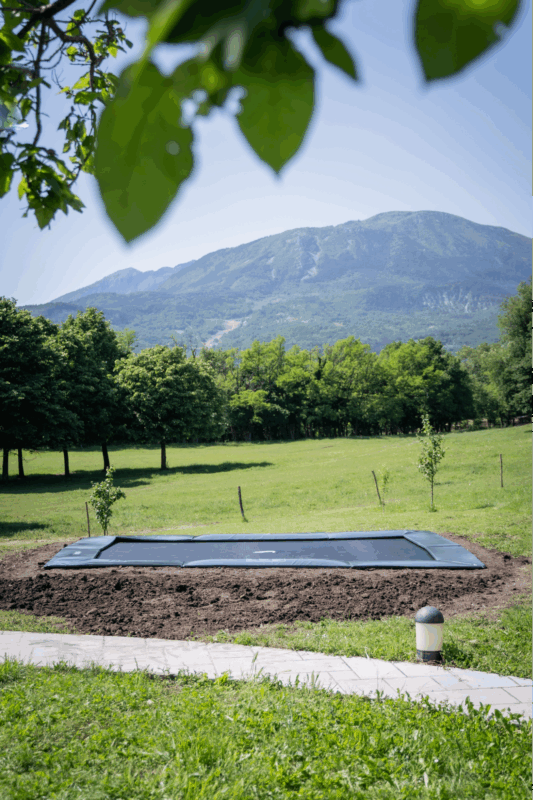
- In-Ground or Enclosed Setups: In-ground trampolines offer sleek installation with reduced fall risk. Above-ground models with enclosures are also safe when space is limited.
- Durable, Precision Springs (AkroSPRING®): A trampoline is only as good as its springs. Ours deliver consistent energy return across every bounce, so drills feel sharp and repeatable.
Whether you’re training sprinters, hurdlers, or field athletes, the right setup makes all the difference.
Is Trampolining Worth It for Track and Field Athletes?
If you’re asking, “Is trampoline good for runners?” the answer is absolutely, when you use the right equipment and training structure.
Trampolining offers a rare combination of benefits that few training tools can match:
- Explosive power development without the joint wear
- Faster recovery and reduced fatigue
- Sharpened spatial awareness and timing
- A mental reset before and after high-stress competitions
It’s not just cross-training, it’s cross-enhancement. From sprint acceleration to jump control, rebounding delivers a multi-layered return. And when paired with structured drills and smart progression, it becomes one of the most effective tools in a track and field athlete’s program.
Ready to Take Your Training Higher?
If you’re an athlete or coach looking to break plateaus, reduce overtraining, or bring more focus and bounce to your routine, you need a trampoline built for performance, not play.
✔ Ideal For:
- Runners and jumpers looking for speed, recovery, and technical refinement
- Coaches building versatile training systems
- Athletes rehabbing from intense seasons and aiming for a smarter restart
What Training Could Look Like With AkrobatUSA
Imagine a training week where recovery is faster, power output climbs, and every athlete finishes feeling sharper, not drained. With Akrobat’s performance-grade trampolines, that’s not just possible, it’s standard.
When you train on tools built for serious athletes, results follow. Let’s build something bounce-worthy.
