

Most people are surprised to learn that a simple 10-minute trampoline session can deliver the same physiological benefits as 30 minutes of running. That stat comes straight from NASA, who incorporated trampolining into astronaut rehab protocols to combat the bone loss and muscle deterioration caused by zero gravity.
Closer to home, recovery specialists and movement professionals are turning to full-sized trampolines, not just rebounders, as a smarter way to help patients regain mobility after surgery. Whether you’re working through ACL reconstruction, hip replacement, or a spinal procedure, the unique physics of trampolining offer a soft-yet-powerful pathway back to functional movement.
In this article, we’ll break down everything you need to know:
- Can it help, not harm, your spine?
- And who should avoid it altogether?
Let’s dive into how trampolining is reshaping post-op rehab, and why more people are choosing backyard bounce over traditional routines.
Why Trampolining Is Gaining Popularity in Rehab Programs
Low-Impact, High-Benefit
Traditional rehab often involves movement on hard surfaces, which can delay healing and aggravate sensitive joints. Trampolining shifts the equation.
The unique surface absorbs impact, dramatically reducing the load on knees, hips, and ankles. That makes it especially helpful for individuals recovering from orthopedic procedures.
Unlike pavement or gym flooring, a well-designed trampoline surface, like those built by Akrobat, creates a responsive cushion. It absorbs the energy of your landing and returns it smoothly, protecting your body while still encouraging muscular engagement.
This makes trampolining ideal during the transition phase between physical therapy and full functional return.
Activates the Lymphatic System
Surgical recovery isn’t just about bones and muscles. Your lymphatic system plays a critical role in removing cellular waste, reducing swelling, and supporting immune function. But here’s the catch, unlike your circulatory system, your lymphatic system has no pump. It relies on movement.
Trampolining, with its gentle vertical motion, activates lymphatic flow better than almost any other form of exercise. It’s particularly valuable for those recovering from procedures involving lymph node removal or fluid retention, such as breast cancer surgery or abdominal operations. The motion helps flush inflammation and promotes faster internal healing, naturally.
Supports Neurological & Balance Recovery
Movement on a trampoline isn’t passive. Every bounce demands micro-adjustments across the body, stimulating proprioceptors and forcing the brain to stay engaged.
That’s why trampolining has become a powerful tool in neuro-rehabilitation programs.
We’ve seen it used with individuals managing balance-related conditions like Parkinson’s or recovering from stroke-related motor impairments. The act of stabilizing on a soft, responsive surface rewires movement patterns and helps the nervous system find new ways to move.
Trampolining doesn’t just rebuild muscles, it rebuilds brain-body connection.
Who Should Consider Trampoline-Based Rehab?
If you’re navigating post-operative recovery, the right trampoline can serve as more than just a fitness tool, it can be your return-to-movement partner. Here are the people most likely to benefit:
- ACL and MCL surgery patients looking to regain joint stability without repetitive impact.
- Hip and knee replacement recipients who need low-strain methods for re-engaging mobility.
- Spinal surgery patients, with clearance, who want to strengthen their core and stabilize posture safely.
- People with chronic joint conditions or arthritis, seeking a smooth, forgiving movement alternative.
- Breast cancer survivors managing lymphedema and tissue tightness post-treatment.
Pro tip: Consult your surgeon or physical therapist before beginning any trampoline-based recovery activity. Recovery is not a race, timing matters.
Who Should Not Use a Trampoline for Recovery
While trampolining offers significant recovery potential, it’s not the right fit for everyone, especially in the early phases of healing. Caution and timing are key.
Avoid trampoline-based movement if you fall into any of these categories:
- You’re less than 4–6 weeks post-op and haven’t received medical clearance.
- You live with severe balance impairments and are not working under supervision.
- You’ve recently undergone spinal fusion surgery and haven’t been explicitly cleared for impact-free movement.
- You still have open incisions or unhealed surgical wounds.
- Your procedure involved unstable joints or implanted devices that haven’t fully integrated.
As a company obsessed with doing things right, we urge you to prioritize safety, timing, and professional input before stepping on any trampoline surface, ours included.
Trampolining After ACL Surgery?
Most physical therapists advise waiting a minimum of 4–6 months post-surgery before introducing trampoline movement. Even then, it should be gradual, deliberate, and guided by a clinical progression.
Our in-ground and above-ground trampolines offer the kind of surface control and bounce technology, like our AkroSPRING® system, designed to support joint health and minimize harsh impact.
Here’s a common-sense step-by-step path:
- Begin with stance holds. Stand centered on the mat, engaging your core and gently activating leg muscles.
- Add light balance shifts. Slowly rock side-to-side or forward-backward, never leaving the mat.
- Introduce heel taps. Tap alternate heels while stabilizing your hips.
- Progress to micro-bounces. Keep feet in contact with the mat, allowing the surface to gently flex beneath you.
- Advance to controlled bounding. With PT clearance, begin small plyometric hops, using your quads, not momentum, to reintroduce impact in a safe way.
Skip anything flashy. No spins. No flips. Just controlled, functional movement that prioritizes healing over performance.
Is Trampolining Good or Bad for Your Back?
Let’s be clear: Trampolining can be highly effective for those recovering from back-related procedures, but only when approached with care.
When It Helps
- The soft surface reduces spinal compression, making it far less jarring than jogging or stair climbing.
- It activates deep core stabilizers, essential for spinal support and postural reeducation.
When It Doesn’t
- If you twist, arch, or jump with force too soon, you risk aggravating healing tissues.
- If your mat is too tight, or your form too aggressive, you’ll introduce the same compression you’re trying to avoid.
That’s where design matters. Akrobat’s Primus models deliver a 62.7% softer bounce absorption than standard mats, absorbing force at the moment of contact and returning energy evenly. That means your spine gets the support it needs, not a shock it doesn’t.
Full-Body Benefits Beyond Recovery
Even after recovery milestones are met, the value of trampolining continues. It’s not just rehab, it’s a movement lifestyle that strengthens the whole body and uplifts the mind.
Physical Outcomes That Last
- Enhances oxygenation and supports better circulation.
- Builds cardiovascular endurance without the pounding of high-impact cardio.
- Prevents muscle atrophy, especially in the core, glutes, and stabilizers.
Mental & Emotional Boosts
- Elevates dopamine and serotonin, the feel-good chemicals your brain craves during recovery.
- Helps break cycles of post-surgical fatigue, boredom, and anxiety.
- Restores autonomy and joy, replacing fear of movement with confidence and play.
Some have compared the bounce rhythm to meditation in motion, a state where the body and mind reset together. That’s the type of recovery we believe in. Not just functional, but fulfilling.
Common Fears About Post-Surgery Trampolining
“What if I land wrong and reinjure myself?”
This concern is real, and valid. The key isn’t to avoid trampolining altogether, but to control your environment and progression.
- Use soft-bounce technology, like what we integrate into every AkrobatUSA trampoline.
- Start in a supervised setting if possible, especially during the reintroduction phase.
- Focus on balance before bounce, let your body reacclimate to motion on a safe, stable surface.
Fear fades with preparation.
“What if I feel dizzy or nauseous?”
Trampolining introduces new sensory input, especially if you’ve been sedentary during recovery.
- Begin with micro-bounces that don’t leave the mat.
- Take frequent grounding breaks, walking in place can help reset your nervous system.
- Stop immediately if discomfort begins, then consult your provider before resuming.
Motion-based recovery is powerful, but pacing matters.
Beginner-Friendly Recovery Routine (10–15 Minutes)
A successful trampoline session doesn’t need to be intense. It just needs to be consistent and structured. Here’s a simple, ACL- or hip-recovery-friendly routine to help reintroduce motion safely.
5-Step Sample Session
- Warm-Up: Walk in Place – 2 minutes: Prepare the body with gentle, grounded movement.
- Weight Shift Bounces – 2 minutes: Gently shift your weight from one side to the other, engaging core stability.
- Heel Taps with Light Arm Swings – 3 minutes: Tap your heels alternately while swinging arms for lymph flow and coordination.
- Side-to-Side Steps (No Lift) – 2 minutes: Build lateral control and retrain joint alignment under low stress.
- Cool Down: Deep Breaths + Light Bounce – 2 minutes: Reset the nervous system with calming motion and controlled breath.
Add soft background music if it helps focus or motivation. Ritual helps turn rehab into a rhythm.
Choosing the Right Trampoline for Recovery
If you’re serious about using trampolining for post-surgical rehab, your equipment needs to work with your body, not against it. Here’s what to look for in a trampoline built to support healing:
- 275 g/sqm galvanized steel frames: Provides the weight-bearing stability that holds firm under pressure, no weak welds or creaky joints.
- AkroSPRING® technology: Smooth, consistent bounce that reduces impact while improving control and responsiveness.
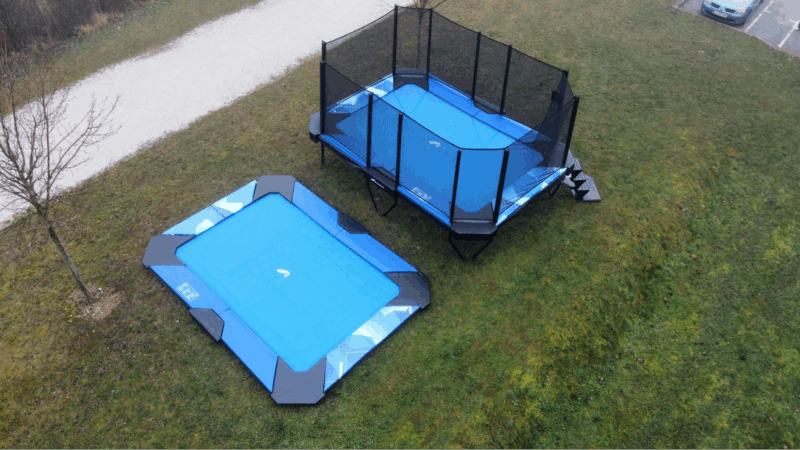
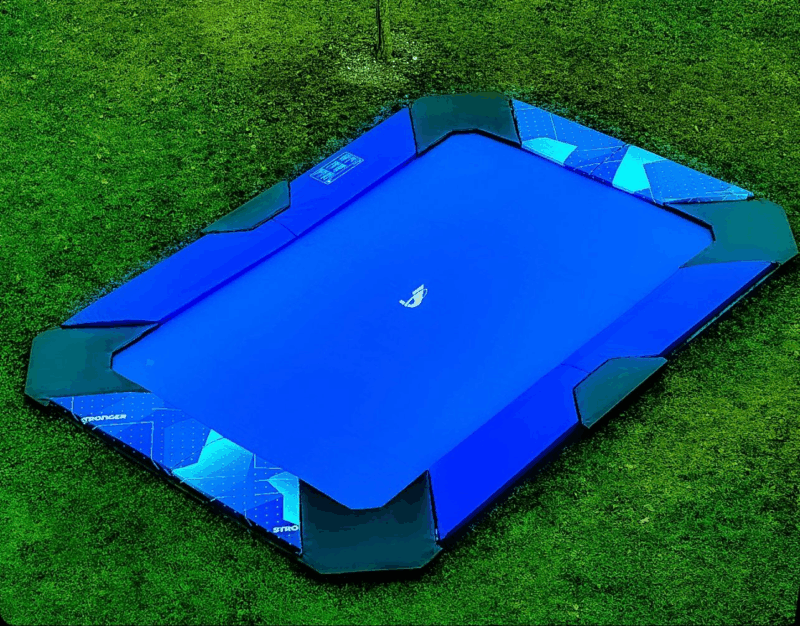
- In-Ground Installation: Low step-in height makes entry and exit easier for those with joint sensitivity or mobility concerns.
- Optional Enclosures or Handle Support: Extra stability and protection, especially helpful in early reconditioning stages.
Should You Use a Trampoline During Recovery?
Trampolining, when introduced at the right time and with the right equipment, offers far more than just a way to move again. It helps restore autonomy, rebuild muscle memory, and reframe what recovery looks like, from something clinical to something empowering.
Start slow. Stay consistent. And most importantly, choose a trampoline built to support, not challenge, your healing process.
Whether you’re recovering from joint surgery, spinal procedures, or managing chronic mobility issues, progressive movement on a high-quality trampoline can ease stiffness, support your nervous system, and reignite the kind of motion that feels good again.
Ready to Recover Smarter?
If you’re looking for a trampoline that does more than entertain, one that actually supports your recovery, we’ve built it.
Here’s how AkrobatUSA makes a difference for post-surgical users:
- AkroSPRING® Suspension System: Delivers a smooth, responsive bounce that cushions your joints without flattening your momentum, ideal for lower body reconditioning.
- In-Ground Trampoline Options: Easy-to-access design reduces step-up height, making it safer and more stable for post-surgical entry and exit. No climbing, no wobble.
- Primus Safety Technology: Our Primus models offer up to 62.7% softer bounce absorption than standard mats, helping reduce impact while supporting controlled movement.
Take the First Step Toward Smarter Recovery
Imagine stepping onto a trampoline that doesn’t fight your healing, it supports it. No jolts, no loud springs, no cheap mats. Just smooth, balanced motion in your own backyard. A place where you can bounce your way back to strength, stability, and confidence, on your terms.
Explore AkrobatUSA’s full collection of trampolines to find the model that meets your recovery goals.
