

For many families, Sensory Processing Disorder (SPD) brings daily challenges that can feel unpredictable and exhausting. Children may struggle to stay focused, regulate their emotions, or even tolerate everyday sensations. These behaviors aren’t willful, they stem from how their brains process sensory input like movement, pressure, and spatial awareness.
One of the most effective movement-based tools to support sensory needs? The trampoline.
This article explores the trampolining for SPD, autism, and ADHD, and answers questions we hear every day. Let’s walk through it all.
What Parents Need to Know About Sensory Processing Disorders
Sensory Processing Disorder affects how the nervous system interprets information from the senses. While every child processes sensory input in a unique way, SPD tends to fall into two broad patterns:
- Over-responders: easily overwhelmed by light, sound, touch, or movement.
- Under-responders: crave intense input, often seeking constant motion or pressure to feel regulated.
Movement plays a critical role in how kids process their world, especially two key systems:
- Vestibular system: located in the inner ear, helps us balance and sense motion.
- Proprioceptive system: provides feedback from muscles and joints to build awareness of body position and control.
Trampolining activates both systems simultaneously, creating a powerful sensory experience that can help reduce chaos and support more confident, focused behavior.
Why Trampolines Work So Well for Sensory Regulation
Vertical bouncing on a trampoline generates consistent, rhythmic movement. This movement engages the vestibular system in a repetitive way, something that swinging or spinning may not always achieve for every child.
- Improves balance and coordination
- Reinforces spatial orientation
- Helps develop better motor planning (the ability to think and move at the same time)
Unlike unpredictable play, trampolines offer a predictable, self-directed sensory experience, key for kids who rely on consistency to feel in control.
How Trampolines Deliver Proprioceptive Input
Each bounce applies pressure through joints and muscles, which stimulates proprioceptive feedback. For kids who need grounding or body awareness, this kind of input is deeply regulating.
- Encourages full-body awareness
- Reduces fidgeting and restlessness
- Can support transitions and calm-down moments
When we say a trampoline “feels good” to the sensory system, we mean that it taps into deep neurological patterns that create calm and clarity.
How Do Trampolines Compare to Other Sensory Tools?
| Tool | Vestibular Input | Proprioceptive Input | Cost-Effective | Indoor/Outdoor |
| Trampoline | ✅✅✅ | ✅✅✅ | ✅ | Both |
| Lycra Swing | ✅✅ | ✅ | ⚠️ Expensive | Indoor |
| Bean Bag | ❌ | ✅ | ✅ | Indoor |
| Crash Pad | ❌ | ✅ | ✅ | Indoor |
Trampolines stand out not just for their dual sensory benefits, but also for their versatility and ability to scale as your child grows. Unlike tools that only stimulate one sensory system, or that require indoor-only use, Akrobat trampolines are designed for year-round integration into your child’s routine.
Real Questions from Families, And the Answers
Is a trampoline good for sensory processing disorder?
Yes, when chosen carefully and used with guidance, trampolines offer one of the most effective ways to engage both vestibular and proprioceptive systems. They help children self-regulate by delivering just the right amount of movement and resistance.
Is trampoline jumping good for autistic children?
Structured bouncing helps many autistic children find calm and predictability. The rhythmic motion supports emotional regulation, while the deep pressure feedback from each jump can reduce anxiety and improve daily transitions.
Is trampoline use helpful for children with ADHD?
Absolutely. Regular trampoline use gives children with ADHD a constructive outlet for energy and helps sharpen focus. In fact, some occupational therapists recommend trampoline time as a prep tool before classroom learning or therapy sessions.
Is trampoline jumping considered vestibular or proprioceptive?
Both. That’s what makes it so powerful. It’s one of the few physical activities that engages both sensory systems simultaneously, delivering a double impact for children who need consistent movement and grounding input.
Choosing the Right Trampoline for Sensory Needs
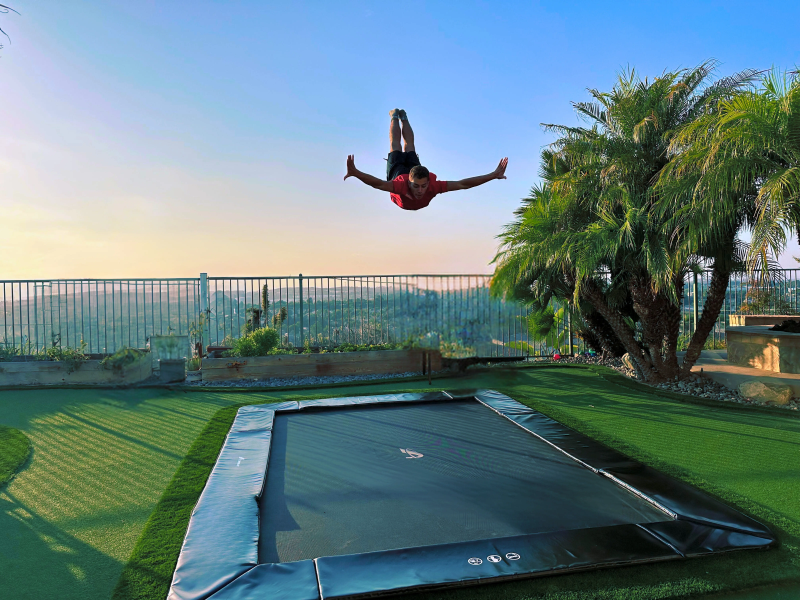
While some families opt for mini rebounders, they often fall short for long-term use and multi-sensory engagement. Akrobat designs both in-ground and above-ground trampolines that deliver soft, joint-friendly bounce performance in your backyard, no matter the season.
Outdoor models offer a larger surface, higher quality springs, and a full-body experience that’s ideal for children with SPD, autism, or ADHD.
Concerned about deck space or slopes? A level ground surface, or professionally installed in-ground setup, can resolve placement challenges while enhancing accessibility and aesthetics.
What Features Matter Most?
Look for:
- Quiet, smooth bounce: Our AkroSPRING® system and AkroVENT® mat eliminate squeaks and flapping sounds that can irritate sensory-sensitive children.
- Non-toxic materials: Every Akrobat trampoline uses certified, chemical-free components, especially critical for children with chemical sensitivities.
- Tool-free installation: Our AkroCLICK® design allows for secure, hassle-free assembly, no screws, no wobble, no stress.
- Full enclosures: Durable safety netting with strong padding reduces risk while maintaining open visibility for parents.
Explore our options here: Akrobat’s Trampolines.
Step-by-Step: Incorporating a Trampoline into a Sensory Routine
Creating a successful trampoline routine isn’t about intensity, it’s about consistency, timing, and supporting your child’s rhythm. Here’s how to integrate it naturally into daily life:
Step 1: Set the Scene
- Choose a space free from distractions like bright lights or background noise.
- For outdoor models, ensure the ground is level. If needed, build up the area or consider one of AkrobatUSA’s in-ground installations.
Step 2: Start Small
- Begin with 5–10 minutes of relaxed bouncing. Let your child explore the motion and find what feels good.
- Give them control of the pace. Structured freedom supports confidence and autonomy.
Step 3: Observe and Adjust
- Use trampoline time before transitions, such as heading to school or shifting to a quiet activity.
- Watch for signals of overstimulation, like rapid speech or restlessness. Shorten sessions or follow up with calming strategies if needed.
Step 4: Combine with Other Tools
- Place a crash pad nearby for soft landings or transitions.
- For added support, consider pairing bounce sessions with tools your child already loves, like a Lycra swing, weighted vest, or calming breath work.
This layered approach makes trampolining more than just an activity, it becomes a powerful part of your sensory toolkit.
Questions Parents Ask, And How to Navigate Them
1. “What if my child gets overstimulated?”
Start slow and keep bounce time predictable. If your child seems over-energized after bouncing, follow it with something grounding, like deep pressure, a quiet room, or a short nature walk. Trampoline use should support regulation, not override it.
2. “Our yard isn’t flat, will this even work?”
Many families assume they’re out of luck due to uneven terrain. AkrobatUSA offers both in-ground and above-ground options, and our in-ground installations can be customized for sloped or irregular spaces. A level platform or professional groundwork can turn a “no” into a “yes.”
3. “Will trampolining hype them up before bed?”
Not necessarily. While every child reacts differently, most benefit from late-afternoon bouncing, especially if it’s followed by calm activities. We recommend stopping sessions about an hour before bedtime to allow the nervous system to wind down.
4. “Is it really worth the investment?”
Yes, and not just for your child. A high-quality trampoline becomes a daily part of your family’s sensory rhythm. Unlike gear that’s quickly outgrown, AkrobatUSA trampolines are built for years of dependable use, with whisper-quiet performance, non-toxic materials, and bounce technology trusted by athletes and therapists alike.
Bonus Tips for Making Trampolining Work for Your Family
For families dealing with SPD, consistency and creativity matter. Here are a few ways to make trampolining a sustainable, positive part of your child’s routine:
- Create a “bounce routine”: Whether it’s 10 minutes before school or a post-lunch movement break, predictability helps the nervous system prepare and respond.
- Let kids self-direct when possible: Offer structure but allow autonomy. Kids often know what input they need. Some will bounce high, others may lie on the mat or pace. It all counts.
- Use it as a reward or motivator: Trampolining can become a powerful incentive, “bounce breaks” in exchange for finishing homework, brushing teeth, or transitioning away from screen time.
- Add sensory cues: Music with a consistent rhythm, color-coded zones, or visual timers can deepen engagement and help neurodivergent kids feel more in control.
Should You Try a Trampoline for SPD?
If you’re a parent seeking real, daily support for your child’s regulation, confidence, and connection, yes. Trampolining isn’t just play. It’s a movement with purpose.
Whether your child is autistic, experiences SPD, or has ADHD, structured bouncing provides the sensory input their system needs to organize, focus, and thrive. Unlike many therapy tools, trampolines invite joy, routine, and self-regulation, all from the comfort of your backyard.
Built for Movement. Trusted for Sensory Support. Backed by AkrobatUSA.
When it comes to sensory challenges, not all trampolines are created equal. And the wrong one can do more harm than good, too noisy, too stiff, or too risky.
That’s where we come in.
Akrobat trampolines are purpose-built for sensory therapy and daily family use.
- AkroVENT® Jumping Mat: Delivers a 62.7% softer bounce for smoother landings and less joint strain, ideal for kids who need rhythmic, low-impact motion.
- AkroSPRING® Technology: Engineered for whisper-quiet, controlled rebounding, so sensory-sensitive kids stay calm and engaged.
- AkroCLICK® Assembly: Tool-free, stress-free setup with a precision lock system trusted by therapists and families alike.
Is this for your family?
- Your child seeks consistent movement to focus, calm, or reset
- You’re looking for an outdoor solution that supports daily sensory needs
- You want a long-lasting trampoline that won’t squeak, sag, or rust
Imagine this…
Your child comes home overstimulated, but instead of a meltdown, they bounce. Ten minutes later, they’re calmer, focused, and ready for what’s next. You didn’t have to negotiate. You didn’t have to prompt. You gave them the space, the tool, and the rhythm they needed. And they figured out the rest.
Find the best option for you: 👉Akrobat In-Ground & Above-Ground Trampolines
