
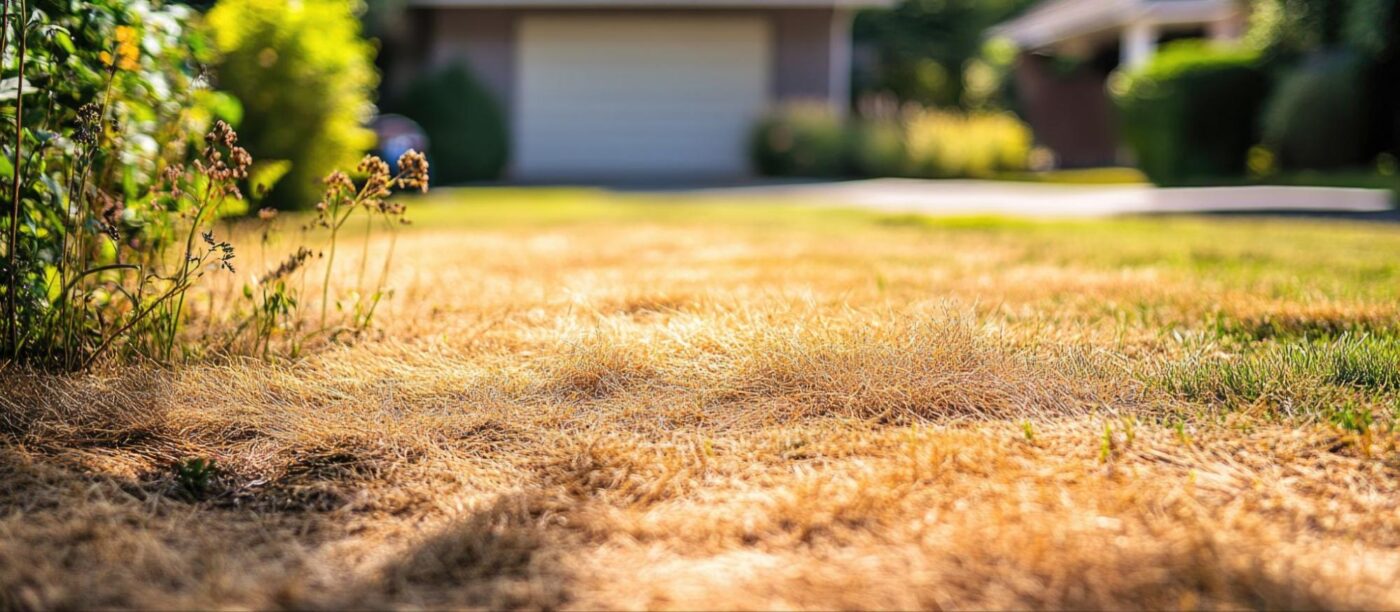
If you’ve ever installed a trampoline and watched weeds erupt underneath within weeks, read this. When weeds creep under or around your trampoline, they don’t just ruin the look of your backyard, they can:
- Compromise drainage, encouraging mold and insect nests.
- Reduce bounce performance, especially in in-ground pits where soil movement matters.
- Force frequent repositioning or trimming around and under the unit, something no homeowner wants to deal with mid-season.
Trampolines must be engineered for performance, longevity, and family safety. But none of that matters if the surrounding environment sabotages your setup from the ground up.
Short answer on how to prevent weeds around your trampoline.
- Use a weed barrier like landscape fabric topped with gravel or mulch to block sunlight and stop weeds.
- Avoid grass under trampolines, it dies from shade and moisture.
- Use breathable weed mats, compacted soil, or rubber mulch for low-maintenance landscaping that prevents regrowth.
Why Weeds Thrive Under Trampolines
Most trampoline owners notice the same issue within a few weeks: the grass underneath dies, and weeds start to creep in.
The reason is simple: grass needs sun, water flow, and airflow. A trampoline blocks all three.
When sunlight disappears, Kentucky bluegrass and other common lawn types go dormant or die off completely. What’s left behind is bare soil, and that’s exactly what opportunistic weeds, like clover or crabgrass, are waiting for.
The lesson: don’t treat weeds as a cosmetic issue, they’re structural.
What to Put Under a Trampoline to Prevent Weeds (Included with all Akrobat In-ground trampolines)
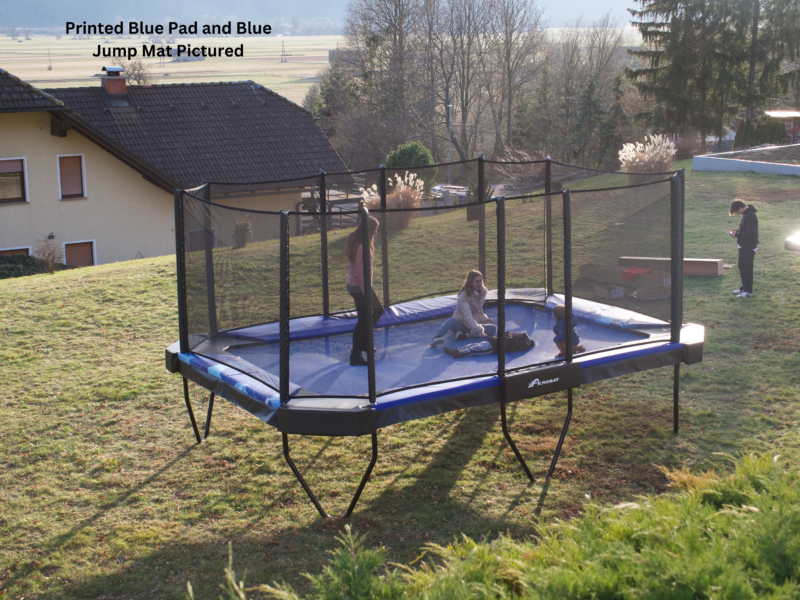
Use a Professional-Grade Weed Barrier
Your first line of defense should always be a breathable, UV-stable weed barrier. Akrobat’s in-ground trampoline kits include a commercial-grade weed liner specifically engineered to block weed growth without restricting drainage.
This isn’t thin home store fabric that rips within a season, ours is built for outdoor durability and long-term suppression.
To install properly, trim the liner using sharp utility scissors. Once placed, secure the liner using heavy-duty garden staples every 12 to 24 inches to keep it in place.
Above Ground Trampoline Installations: Top the Barrier with the Right Ground Cover
The weed barrier on its own blocks growth, but topping it with the right material locks everything in place and enhances both function and aesthetics:
- Pea gravel or crushed stone: It’s stable, low-maintenance, excellent for drainage, and tough enough to withstand years of use without inviting weeds back.
- Rubber mulch: If you want a softer surface under or around your trampoline, rubber mulch does double duty. It adds a cushioned landing and deters weeds. However, in high-heat regions, rubber can trap warmth, so we advise using UV-stable rubber blends like those found in playground zones.
- Wood chips: These are inexpensive and widely available, but they break down faster, attract pests, and can scatter. If you’re going this route, avoid bark mulch under in-ground setups, too many families end up fishing it out of the bounce zone.
Why You Should Avoid Grass or Bare Soil
Trampolines create permanent shade, and most grasses, especially Kentucky bluegrass, aren’t shade-tolerant. What grows instead are patchy weeds, or worse, soggy mud. Grass clippings and decaying turf also feed future weed outbreaks. If you want a clean, weed-free play area, it’s better to replace the grass entirely under the trampoline.
Preventing Weeds in In-Ground Trampoline Pits
In-ground trampoline pits require a different approach. Many people think they can plant low-light ground cover or decorative plants in the base of the pit. We strongly advise against this.
Plants introduce root systems that loosen compacted soil, directly undermining bounce quality.
As one customer put it, “the trampoline lost its springiness the moment weeds started rooting at the base.” 👉 That’s because soft soil absorbs jump energy. In these situations, we recommend hard-packed earth and a no-plant rule inside the pit.
Akrobat-Style Weed Liner + Gravel Base
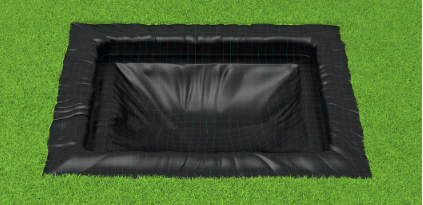
Every Akrobat in-ground trampoline includes a breathable weed protection mat that doubles as an erosion control layer. Once the pit is dug to the right depth and shape (bowl-shaped to prevent pooling), the liner should be installed snug against the soil walls.
We recommend following this with a 2–4 inch layer of compacted gravel beneath the trampoline base.
This two-part system, liner + gravel, prevents weeds and standing water. Moisture trapped in a pit not only invites weeds and mold, it attracts bugs. If you’re seeing worms, ants, or mosquitoes under your trampoline, there’s a good chance poor drainage is to blame.
Akrobat weed liners are also UV-resistant and allow for nutrient flow, meaning they won’t suffocate your soil if the trampoline overlaps with landscaped areas or garden borders. For sloped yards, the same liner also serves as an effective erosion guard, protecting both your trampoline and your property long-term.
Maintenance Tips to Keep the Area Weed-Free
Preventing weeds starts with good installation, but long-term success depends on how you maintain the area once the trampoline is in use. Here’s how to keep that space clean, safe, and bounce-ready all season.
Regular Weed Checks
We recommend quarterly inspections of the area under and around your trampoline, especially during spring and summer when weed growth is most aggressive. Walk the perimeter and lift any loose mulch or gravel to check for early sprouting.
If you spot green shoots or clover seedlings poking through your filler layer or near the legs, pull them immediately before root systems take hold. Early action always requires less effort than dealing with established weed networks.
Pet + Kid-Proofing Tips
If dogs or kids often crawl or run under your trampoline, you’re likely to face kicked-up mulch, exposed soil, or even urine patches that fast-track weed growth. One practical solution is to install a mini fence or barrier to discourage pets from entering.
Another overlooked strategy is using trampoline skirts or pool noodles along the base perimeter. These additions reduce light penetration underneath, cutting off one of the last variables that can drive regrowth even with a quality weed mat in place.
When to Use Weed Killer (and When Not To)
We don’t often recommend chemical solutions, but in some cases, they have their place, specifically right after installation. A light spray of a kid-safe pre-emergent weed killer can offer an added buffer while your barrier and ground cover settle into place.
However, avoid using herbicides once the trampoline is active. Spray drift and soil absorption near play zones aren’t worth the risk. Stick to physical controls and approved safe-use products if you’re maintaining a family play area.
Creative Trampoline Landscaping Ideas That Prevent Weeds
Practical doesn’t have to mean boring. The right landscaping around your trampoline can elevate the look of your yard and suppress weeds at the same time.
Decorative Gravel Zones
A gravel zone is one of the most effective long-term strategies. Start by edging the area with bricks, steel edging, or decorative pavers. This not only holds your fill material in place but also acts as a physical barrier against creeping grass or clover.
Filling this space with clean pea gravel or crushed granite creates a “recreation zone” that feels like a designed part of your landscape, not just an afterthought. It’s easy to rake and maintain, and it resists plant growth with very little help.
Shrubs or Shade Plants Around (Not Under)
We’re often asked if it’s okay to landscape close to a trampoline. The answer is yes, with a caveat. Low-maintenance shrubs and decorative grasses can frame your trampoline beautifully, just be sure to keep them a few feet away to avoid encroaching roots or blocking access.
We advise against planting anything underneath, even shade plants. While hostas or ground covers may survive the low light, their presence creates soil disruption and defeats the purpose of a sealed weed-control zone.
DIY Weed-Free Zones
If you’re building on a budget, one effective (and surprisingly eco-friendly) method is layering cardboard beneath your trampoline. It works like a biodegradable weed barrier. Add mulch or gravel over the top, and you’ll get several seasons of coverage without spending on synthetic liners.
In root-heavy or damp soil conditions, consider layering two types of weed suppression material, such as a breathable mat followed by a dense fiber sheet. This layered approach provides extra protection where one solution alone might fail.
Final Tips from Real-World Trampoline Owners
The most effective long-term weed prevention comes from pairing smart planning with simple seasonal habits. We’ve heard from countless families who’ve dialed in their routine, and a few of their small habits make a big difference.
- Clear the ground early: Within the first 60 days of installation, apply a non-toxic ground clear spray around the perimeter, not under the trampoline, but near the edges. This gives your landscape barrier a buffer zone and stops early weeds from creeping inward.
- Make it a family task: Kids can help too. Assign small jobs like checking for clippings, tossing out loose debris, or pulling sprouted weeds during summer play days. The area stays clean, and it builds responsibility around trampoline safety and care.
- Use pool noodles for bounce + barrier: One clever hack we’ve seen is slipping pool noodles over exposed springs on above-ground trampolines. They add a visual safety cue, soften contact, and cast just enough shade to discourage weed growth beneath the edges.
These aren’t complicated systems, but like all successful maintenance routines, consistency matters more than complexity.
Build a Weed-Free Trampoline Zone That Lasts
You don’t need to babysit your trampoline area year-round. With the right materials, smart setup, and minimal seasonal care, you can create a clean, weed-resistant zone that supports bounce performance, stays safe for kids, and looks great in your backyard.
Here’s what works:
- Use a UV-resistant, breathable weed barrier designed to last.
- Top it with pea gravel or rubber mulch to lock out light and weeds.
- Maintain drainage and soil integrity, especially in in-ground setups.
- Stay ahead of the cycle with quarterly checks and edge upkeep.
At AkrobatUSA, we make this easy. Every in-ground Akrobat trampoline we sell comes with a professional-grade weed mat included. No upsell, no guesswork. It’s designed to handle real outdoor use, from slope stabilization to weed suppression, with the durability to withstand both moisture and heat.
What We Offer
- Weed control systems in our in-ground kits, engineered for drainage, safety, and weed resistance.
- High-performance trampoline frames and mats that hold bounce and structure, even with seasonal soil shifts.
- Installation guidance and support for families who want to get it done right the first time.
What Happens If You Get It Right?
You’ll have a clean-lined play space that lasts for years. A trampoline that performs like it did on day one. And a backyard that doesn’t just look better, it works better, without the weekend weed wars.
Let’s get it done right: Explore AkrobatUSA’s In-Ground Trampolines.
